loading

Blog

Holi 2026 – Date, Significance, Rituals & Spiritual Meaning

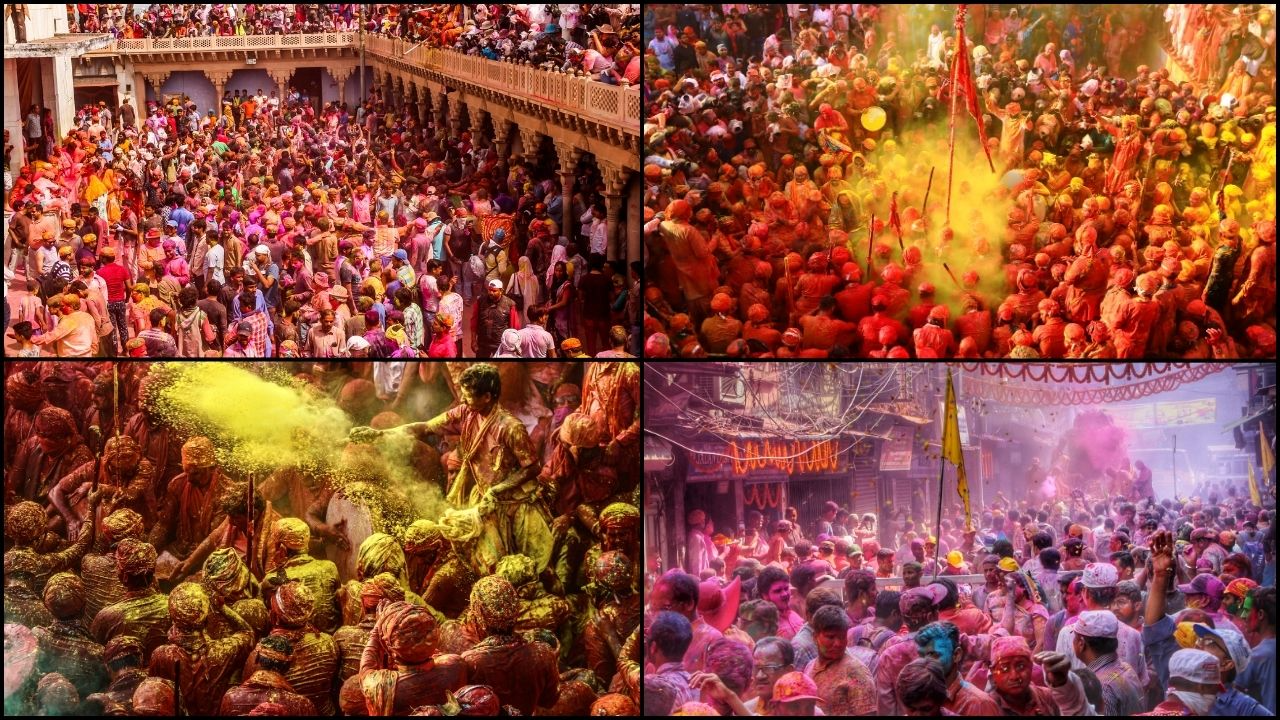
Holi is one of India’s most vibrant and joyful festivals — celebrated as the Festival of Colours, the Festival of Love, and the Triumph of Good over Evil. It marks the arrival of spring, the renewal of life, the end of winter’s gloom, and the strengthening of bonds among family and community members. In 2026, Holi will be celebrated with traditional fervour, colour fights, bonfires, cultural rituals, music, sweets, and deep symbolic meaning.


🗓️ Holi 2026: Date & Muhurat

According to the Hindu lunar calendar:

  • Holika Dahan (Chhoti Holi): Tuesday, March 3, 2026 (Evening) – sacred bonfire ritual.
  • Rangwali Holi (Main Festival of Colours): Wednesday, March 4, 2026 – joyful color play celebration.

Holi is traditionally observed over two days: the night before with bonfires that symbolize the destruction of negativity, and the next day with colours, music, dance, and celebration.


🔥 The Story Behind Holi

🛕 1. Holika and Prahlad — Triumph of Good over Evil

One of the most famous legends associated with Holi is that of Prahlad and Holika. The demon king Hiranyakashipu opposed his son Prahlad’s devotion to Lord Vishnu. To punish him, his sister Holika — who had a boon of fire immunity — sat on a pyre with Prahlad in her lap. But the fire consumed Holika while Prahlad remained unharmed due to his unwavering devotion, symbolizing the victory of righteousness over evil.

The next day, people play with colours to celebrate this victory and the triumph of faith and devotion.

🎨 2. Radha–Krishna and Love

Another beloved legend comes from the Braj region: the youthful Lord Krishna, with his dark complexion, was anxious whether his beloved Radha would accept him. Krishna’s mother suggested he playfully colour Radha’s face — and she did, marking the origin of colourful Holi celebrations that now commemorate divine love and unity.


🌈 Why Holi Is Celebrated—Deeper Meaning

Holi is more than colour throwing. Its deeper themes include:

🌼 1. Renewal & Spring

Holi welcomes the season of bloom, fertility, and growth, moving away from winter stagnation toward life’s vibrancy and renewal.

🤝 2. Unity & Social Harmony

During Holi, distinctions of caste, class, age, and gender blur. People forgive past grievances, strengthen friendships, and renew bonds of community and friendship.

🌞 3. Triumph of Good over Evil

Every bonfire on Holika Dahan represents the destruction of negativity, hatred, and ignorance — inviting purity, righteousness, and joy.

🧡 4. Divine Play & Love

Whether through the legends of Krishna and Radha or other regional stories, Holi reminds humanity of joy, love, devotion, and spiritual connection.


🎉 How Holi Is Celebrated in 2026

🔥 Holika Dahan (Chhoti Holi)

The festival begins with Holika Dahan on the evening of March 3, 2026 — bonfires lit in communities signify the burning of Holika and the victory of devotion and righteousness.

Families gather around flames, perform puja, sing devotional songs, and offer grains or coconuts into the sacred fire. Traditionally, this act is believed to purify the home and dispel negative forces.

🌈 Rangwali Holi — Colour Play Day

On March 4, 2026, the joyous colour play (also called Rangwali Holi or Dhulandi) begins:

  • People throw gulal (colored powders) and coloured water at each other.
  • Music, dance, riverside celebrations, and street parties fill the day with festive energy.
  • Traditional delicacies like gujiya, mathri, thandai, and sweets are shared with friends and family.

🍭 Food & Traditions

Food plays a big role in Holi celebrations:

  • Gujiya: Sweet dumplings filled with khoya and nuts.
  • Thandai: A refreshing spiced milk drink sometimes associated with festive tradition.
  • Festive Music and Dance: Holi songs (Holi geet), folk dances, and drumming traditions bring communities together.

🧠 Spiritual Significance of Colours

Each colour used during Holi carries symbolic meaning:

  • Red: Represents love and fertility.
  • Blue: Linked with Krishna, divine joy, and life force.
  • Green: Symbolises nature and new beginnings.

Throwing colours thus becomes a lived spiritual metaphor for dissolving ego, ignoring divisions, and celebrating life’s unity.


🪬 Regional Variations of Holi in India

While the core spirit of Holi remains the same across India, traditions vary by region:

🌼 Braj & Vrindavan (Uttar Pradesh)

Braj Holi begins early and lasts for weeks with events like Laddu Holi in Barsana and Lathmar Holi where playful stick duels take place.

🪶 North India

Cities like Delhi, Jaipur, and Agra host massive open celebrations with music, colour throws, and sweets.

🌍 International Celebrations

Holi’s spirit has spread globally and is celebrated in parts of the United States, Europe, and Asia as a cultural celebration of spring and unity.


Holi’s Social & Cultural Benefits

Holi has a strong societal impact:

  • It fosters community solidarity and breaks down barriers between people.
  • It celebrates renewal and optimism as winter gives way to spring.
  • It invites people to forgive past grievances and move forward with joy and compassion.

📿 Astrological & Spiritual Reflection

From an astrological perspective, Holi falls around the full moon (Purnima) of Phalguna — a time associated with illumination, emotional cleansing, and heightened intuitive awareness. Full Moon days are traditionally viewed as powerful for letting go of old patterns and aligning with positive energies.

Celebrating Holi consciously — with intention rather than just revelry — is believed to help release negative thought patterns and invite mental clarity, joy, and emotional growth.


🌺 Modern Practices & Safety Tips

To enjoy Holi safely in 2026:

✔ Use natural, herbal colours to protect skin and environment.
✔ Wear comfortable old clothes that can be stained without concern.
✔ Protect eyes and skin with sunscreen or oil before colour play.
✔ Stay hydrated amid outdoor activities.


Conclusion

Holi 2026 is not just a festival of colours but a sacred celebration of life, love, community, spiritual renewal, and the eternal victory of good over evil. Whether you embrace its ancient legends, participate in joyous colour play, or reflect on its deeper meanings, Holi invites us to celebrate unity, compassion, hope, and the joyful colours of life.

May your Holi be filled with laughter, harmony, and vibrant hues!

Mahashivratri 2026: Significance, Rituals, Story & Spiritual Benefits

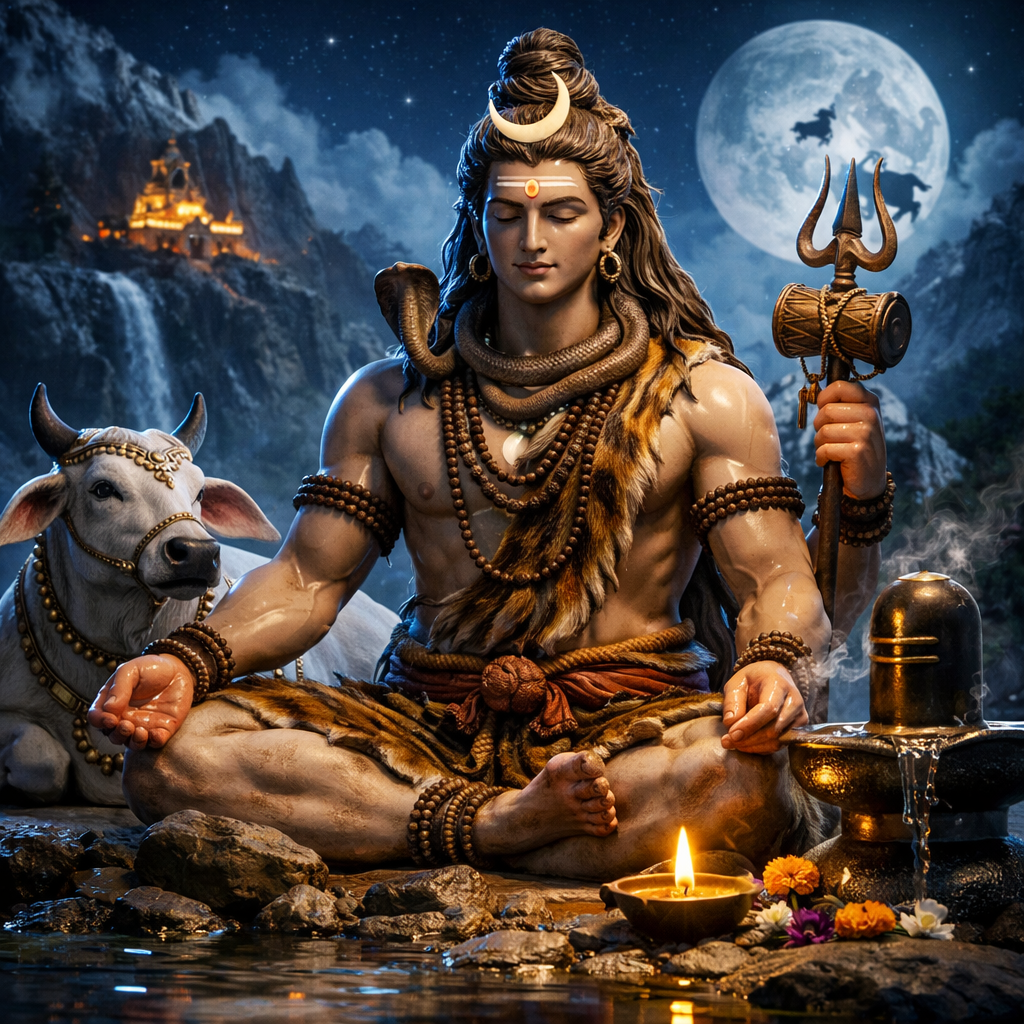
Mahashivratri is one of the most sacred and powerful festivals in the Hindu calendar — a night dedicated entirely to Lord Shiva, the divine embodiment of destruction, transformation, and supreme consciousness. Celebrated on the Chaturdashi (14th lunar day) of Krishna Paksha in Phalguna, Mahashivratri is a time for introspection, devotion, meditation, and spiritual awakening.

In 2026, devotees across India and around the world will observe Mahashivratri with deep reverence, chanting, fasting, and night-long worship — seeking Shiva’s blessings for peace, inner strength, and liberation.


🕉️ What Is Mahashivratri?

Mahashivratri literally means the “Great Night of Shiva.” It commemorates the union of Shiva and Shakti, representing the balance of masculine and feminine cosmic forces. Unlike most festivals marked by one day of celebration, Mahashivratri is observed through an entire night of worship, meditation, and vigil (jagran), signifying the transcendence of darkness and ego.

It’s believed that on this night:

• Shiva performs the Tandava — his cosmic dance of creation and destruction
• Sins are washed away
• Devotees attain spiritual elevation
• Karma cycles are eased

Devotees fast, chant mantras, and stay awake all night to honor Lord Shiva’s infinite power and grace.


🗓️ Mahashivratri 2026: Date & Muhurat

In 2026, Mahashivratri falls on:

🗓️ Date: TBD based on Panchang (check updated calendar as the Chaturdashi Tithi moves)
🌒 Best Puja Time (Shubh Muhurat): Specific timing based on local Panchang
📌 Fasting Begins: Morning before the Chaturdashi Tithi
📌 Fasting Ends: Next morning after sunrise

For exact Shubh Muhurat times according to your city and kundli details, consult an expert astrologer.


📜 The Legends Behind Mahashivratri

Mahashivratri is rooted in rich mythological stories, each symbolizing profound spiritual truths:

🔹 1. The Marriage of Shiva & Parvati

One tradition holds that Mahashivratri is the night when Lord Shiva and Goddess Parvati were married. This union represents the harmony of consciousness (Shiva) and energy (Shakti), reminding devotees that inner balance is essential for spiritual progress.

🔹 2. The Story of the Samudra Manthan (Churning of the Ocean)

During the churning of the ocean by Gods and demons (Samudra Manthan), a deadly poison (Halahala) emerged that threatened all existence. Lord Shiva drank this poison to save the world, holding it in his throat — turning it blue and earning him the name Neelkanth. Mahashivratri is celebrated in honor of this act of selfless protection and cosmic balance.


🌙 How Mahashivratri Is Observed

Mahashivratri is a deeply spiritual festival, and devotees observe it with specific rites and practices:

🛕 1. Fasting (Upavasa)

Most devotees observe a strict fast from sunrise to the next morning. Some eat fruits or milk; others undertake a full fast. The discipline of fasting purifies the body and mind, aiding spiritual focus.

🔔 2. Night-Long Worship (Jagran)

Devotees remain awake all night, chanting Shiva mantras, singing bhajans, and meditating on Lord Shiva’s form. Staying awake symbolizes vigilance against ignorance and attachment.

🪔 3. Abhishekam (Sacred Bath of Shiva Linga)

The Shiva Linga is bathed with:

• Water
• Milk
• Honey
• Yogurt
• Ghee
• Sugar
• Bel (Bilva) leaves

Each item has symbolic meaning — purity, nourishment, and devotion.

📿 4. Chanting Mantras

The most powerful mantra on Mahashivratri is:

🔹 “Om Namah Shivaya”
This five-syllable mantra is believed to cleanse the aura, calm the mind, and deepen spiritual awareness.


🪷 Bel (Bilva) Leaves & Their Importance

Offering Bel leaves to Shiva is considered highly sacred. Legend says the trifoliate leaf symbolizes:

Body
Mind
Soul

When offered with devotion, the leaf is believed to remove sins and invite divine blessings.


🌟 Spiritual Benefits of Mahashivratri

Mahashivratri is not just ritual — it is an opportunity for transformation.

💜 1. Removal of Sins

Devotees believe sincere worship on this night can help dissolve past negative karmas and elevate consciousness.

🧘 2. Inner Peace

Meditation and mantra chanting help calm the mind and reduce emotional turbulence.

🔥 3. Spiritual Awakening

The night symbolizes transcendence — moving beyond ego into higher awareness.

🌌 4. Strength & Courage

Lord Shiva is the embodiment of inner strength and fearlessness — qualities that devotees pray to imbibe.


🪄 Tips for Observing Mahashivratri 2026

✔ Begin the day with prayer and fasting
✔ Visit a Shiva temple for darshan during the evening
✔ Offer Bel leaves, fruits, and water to the Shiva Linga
✔ Chant “Om Namah Shivaya” continuously
✔ Meditate or sit in silence during the midnight hours


🧠 Mahashivratri & Astrology

From an astrological perspective, Mahashivratri falls under the influence of the Chaturdashi Tithi when introspection and surrender are energetically supported. Planetary alignments on this night are believed to enhance spiritual receptivity, making it an auspicious time for mantra chanting and meditation. For personalized benefits and ideal activities, a kundli consultation can offer deeper guidance.


Conclusion

Mahashivratri 2026 is more than a festival — it is a night of spiritual purification, courage, and awakening. By observing fasting, chanting, meditation, and night-long worship, devotees honor the infinite grace of Lord Shiva and invite peace, balance, and clarity into their lives.

May this Mahashivratri bring you strength, wisdom, and divine blessings.

When Hanuman Met Ganesha — A Story of Strength, Wisdom & Divine Harmony

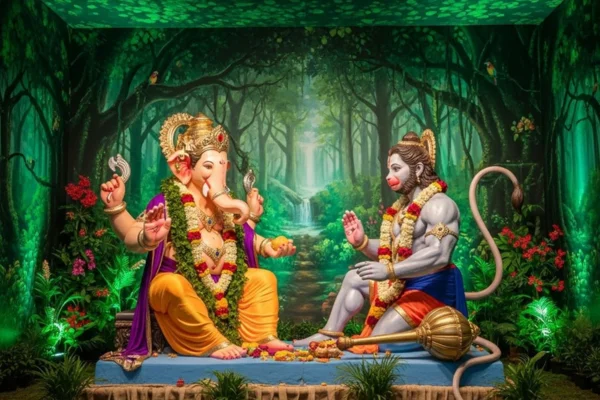
Hindu mythology is rich with stories that convey deep spiritual lessons through the lives and interactions of divine personalities. One of the most inspiring and lesser-known tales is about Lord Hanuman — the embodiment of courage, devotion, and strength — and Lord Ganesha — the remover of obstacles, the source of wisdom, and the harbinger of clarity. Their meeting symbolizes how strength and wisdom together create true success and balance in life.


🌟 Introduction: Two Divine Forces United in Purpose

Lord Hanuman is celebrated throughout Hindu tradition as the perfect devotee of Lord Rama — unwavering in loyalty, righteousness, and bravery. In contrast, Lord Ganesha, also known as Vighnaharta (remover of obstacles), represents intellect, planning, clarity of thought, and auspicious beginnings.

What happens when unparalleled strength meets supreme wisdom? This story reveals that neither power nor intellect alone is complete — and when they unite, higher dharma and harmony are perfectly fulfilled.


🕉️ Setting the Scene: Why the Meeting Occurred

After the legendary war of Lanka, where Hanuman’s valor helped Lord Rama defeat Ravana, Hanuman continued serving and chanting “Jai Shri Ram” with singular focus. His devotion and humility were unparalleled, and he became a symbol of unwavering courage and selfless service.

Meanwhile, from Mount Kailash, Lord Ganesha observed this devotion and reflected on a cosmic truth:

“Strength can inspire awe, but only wisdom can guide it.”

With this divine insight, Ganesha resolved to meet Hanuman — not to challenge him, but to show the world that true dharma arises when strength and wisdom walk together.


🏔️ The First Encounter

Hanuman arrived at Mount Kailash with tremendous zeal, leaping across mountains as though they were pebbles in his path. He bowed before Lord Ganesha with deep respect and humility, saying:

“O Vighnaharta, why have you called a humble sevak like me?”

Ganesha smiled and replied:

“Hanuman — you are strength and devotion. I am wisdom and clarity. The world must know that both complete each other.”

This gentle dialogue sets the tone for a meeting not of ego, but of mutual respect and divine harmony.


💪 A Test of Strength and Humility

To illustrate his point, Ganesha playfully asked Hanuman whether his famed strength could lift him. Using his powerful tail — the same tail that once burned Lanka — Hanuman lifted Ganesha without effort.

But instead of pride, Hanuman folded his hands and said:

“My strength is nothing without your wisdom. You are invoked first in every auspicious beginning. Without wisdom, effort does not succeed.”

This powerful moment shows that even supreme strength must bow to the guiding light of wisdom.


📜 The Lost Ramayana Story

A popular legend connected to this meeting tells that Hanuman once wrote his own version of the Ramayana on the walls of the Himalayas, full of devotion and poetic beauty.

When the sage Valmiki saw it, he felt overwhelmed — unsure whether his own rendition could compare. Respecting this, Hanuman erased his version, demonstrating that his devotion wasn’t for praise but for true service.

Seeing Hanuman’s selflessness, Ganesha blessed him:

“Your words may fade, but your devotion will live forever in the hearts of devotees.”

This part of the story reminds us that inner purity and devotion transcend fame or recognition.


🪔 Blessings for Devotees

Before parting, both Ganesha and Hanuman offered blessings that practitioners and devotees still cherish:

Ganesha’s blessing:

“Wherever my name is taken with devotion, Hanuman shall also be remembered. Together, we remove obstacles and fears.”

Hanuman’s vow:

“Before one remembers me, let them first remember Ganapati — for wisdom must always guide strength.”

These blessings emphasize that strength and wisdom are not rivals but partners in the spiritual and worldly journey.


🧠 Lessons from This Divine Encounter

This meeting is more than a mythological anecdote — it carries timeless life lessons:

🔹 Wisdom Without Strength Is Powerless

Without the courage to act, even the greatest wisdom may remain theoretical.

🔹 Strength Without Wisdom Is Dangerous

Power without insight can lead to imbalance, ego, and chaos.

🔹 Combined, They Create Dharma

It is only when strength is guided by clarity and wisdom that true righteousness (dharma) flourishes.

Together, Ganesha and Hanuman represent a holistic ideal for seekers, leaders, and every individual navigating life’s challenges.


🌼 Spiritual Significance Today

In daily practice, devotees often invoke Lord Ganesha first before beginning any work, ritual, or journey — seeking clarity and removal of obstacles. Similarly, Lord Hanuman is worshipped for courage, devotion, and inner strength.

Together, their combined energies help us cultivate:

• Discernment in decisions
• Courage in adversity
• Focus in action
• Devotion in spirit

This story reminds us that true success lies in balanced energy — a blend of heart, mind, and strength.


Conclusion

The divine meeting of Hanuman and Ganesha teaches us that life requires more than mere power or intelligence alone. It calls for wisdom to guide strength, devotion to anchor courage, and clarity to direct energy. Their union is a reminder that balance — not dominance — creates harmony in life’s journey.

Why Pluto Isn’t in Vedic Astrology — Simple Answers from Ancient Texts & Practice

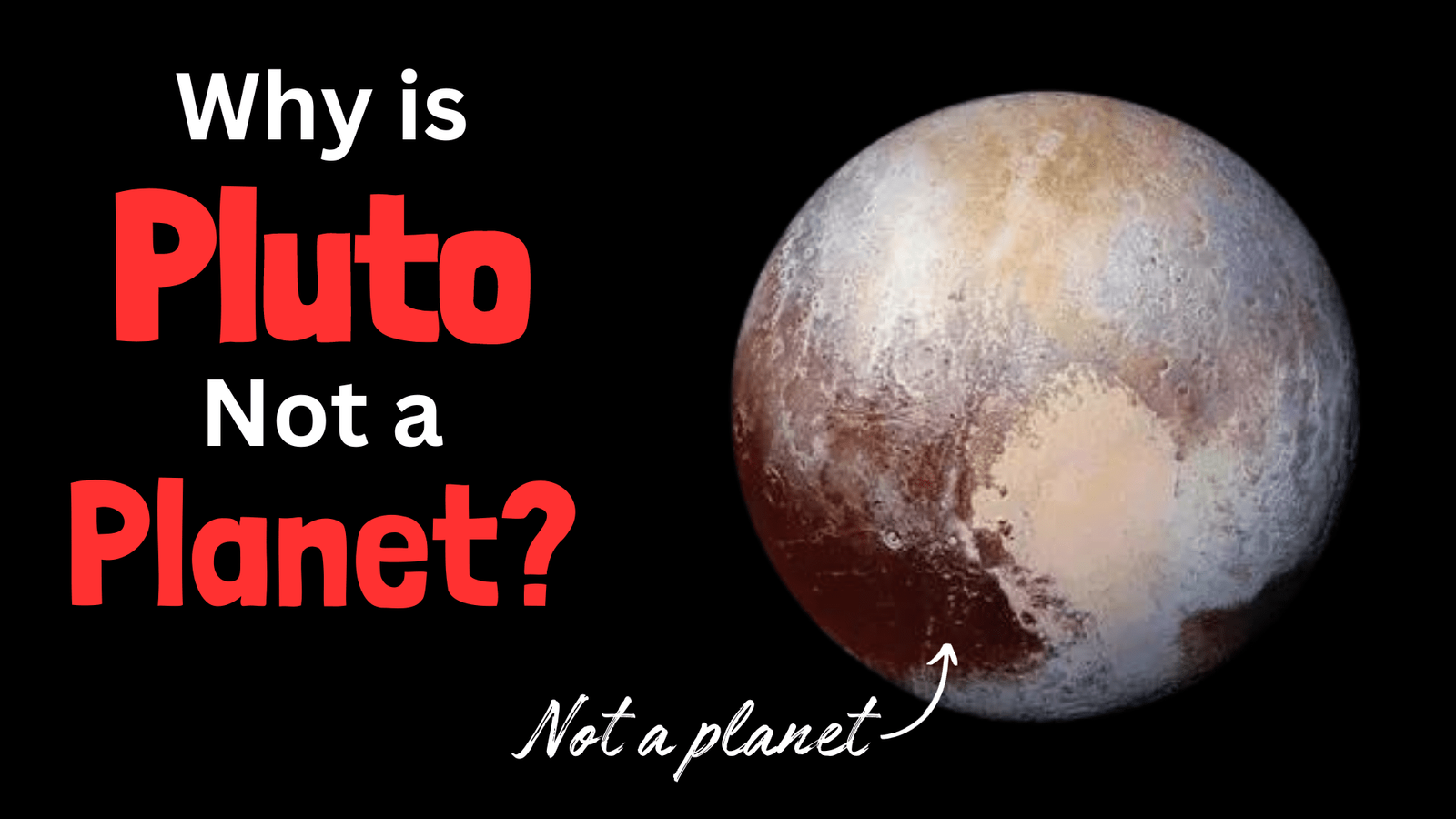
In modern astrology — especially Western astrology — Pluto is widely recognized as a powerful planet of transformation, subconscious forces, endings, rebirth, and deep psychological change. Yet in classical Vedic astrology (Jyotisha), Pluto is not traditionally included among the planets used for birth chart interpretation and predictions.

To understand why, we need to explore how Vedic astrology was formed, what celestial bodies it traditionally uses, and what deeper reasoning underlies the exclusion of Pluto.


🪐 The Core Planets in Vedic Astrology

In Vedic astrology, there are nine core “grahas” that form the foundation of predictions and life analysis:

  1. Sun
  2. Moon
  3. Mars
  4. Mercury
  5. Jupiter
  6. Venus
  7. Saturn
  8. Rahu (North Lunar Node)
  9. Ketu (South Lunar Node)

These planets are chosen based on visibility, influence on human cycles, and ancient astrological texts. Rahu and Ketu are included even though they are not physical planets but lunar nodes, because they carry strong karmic significance in Jyotisha.

Pluto — along with Uranus and Neptune — lies outside this classical grouping. It wasn’t known to ancient Indian seers because it was discovered only in 1930 by modern astronomy — long after Vedic astrology was established.


📜 Why Ancient Texts Didn’t Include Pluto

Vedic astrology was codified thousands of years ago in texts like the Brihat Parashara Hora Shastra and Brihat Jataka. These texts describe the nine grahas and their effects comprehensively — but Pluto is not mentioned anywhere because the ancients did not know of its existence.

This isn’t a simple omission due to ignorance. Instead, it reflects the way Vedic tradition:

  1. Bases planetary significations on direct observation
    The ancient seers worked with planets visible to the naked eye (Sun through Saturn) plus the lunar nodes. At that time, slow-moving distant bodies like Pluto were entirely unknown.
  2. Focuses on the planets that complete significant cycles within a human lifespan
    Pluto takes about 248 years to complete a full circuit of the zodiac, and stays in a single sign for 12–30+ years.
    Many traditional astrologers argue that if a planet does not transit multiple signs within normal human lifespans, its effects on individual life patterns are difficult to interpret reliably in classical Jyotisha charts.

This contrast with traditional planets like Saturn (about 29–30 years per cycle) or Jupiter (about 12 years). Their cycles align with observable life events and are easier to integrate into the dasha system (planetary timing method) that is central to Vedic predictive work.


🧠 Beyond Discovery — Philosophical & Practical Reasons

Even after Pluto was discovered by modern science, most classical Vedic astrologers continued to exclude it as a core graha for two interrelated reasons:

Traditional System Integrity

Vedic astrology’s predictive framework is built around the nine grahas and the dasha system tied to their cycles. Introducing a new slow outer planet disrupts the timing structure of predictions unless a new compatible timing system is developed.

Lack of Traditional Textual Basis

Classical texts define how planets are used: rulerships, aspects, yogas, and dashas — all without Pluto. Astrology rooted in ancient texts carries strong authority among Vedic practitioners, and innovations are usually grounded in clear scriptural support.


🌍 Modern Perspectives: Pluto in Neo-Vedic & Hybrid Astrology

While classical Jyotisha still rarely includes Pluto in primary charts, modern and hybrid astrology sometimes considers it as:

  • An outer influence interacting with traditional planets
  • A symbolic indicator of deep psychological transformation or generational themes
  • A secondary influence felt when it makes contact with dasha lords or natal planets

Some contemporary astrologers equate Pluto’s energy with themes already represented by Rahu, Ketu or Saturn — power, transformation, subconscious forces, and karmic endings — rather than assigning it independent rulership in the zodiac.

Other modern interpretations examine Pluto more symbolically rather than as a functional graha, suggesting it reflects deep generational trends, societal transformation, or subconscious patterns — matters that traditional planets already represent in different frameworks.


🔭 Why Some Still Study Pluto in Vedic Context

Even among Vedic astrologers who don’t use Pluto as a core graha:

✔ It may be considered when analyzing long-term generational effects
✔ Its transits can be observed when they make tight aspects to traditional planets
✔ It may symbolically represent intense transformational themes that overlap with spiritual growth or deep psychological forces

This cautious inclusion doesn’t replace traditional Jyotisha, but offers an expanded perspective for astrologers who wish to integrate newer astronomical knowledge with classical principles.


🧩 Summary: The Classical Vedic Position

Pluto isn’t part of traditional Vedic astrology principally because:

  1. It was unknown in ancient times and thus not described in classical texts.
  2. It does not complete significant cycles within typical human lifespans, making it less practical for Vedic predictive systems.
  3. Vedic astrology’s core structure and dasha systems are built around the nine fundamental grahas that were observed and described by seers.

This doesn’t mean Pluto is “unimportant” — it simply reflects different foundations in Vedic tradition compared with Western or hybrid astrology.


🌟 Conclusion

Pluto’s absence from traditional Vedic charts is rooted in history, methodology, and system coherence, not a denial of its symbolic power. For students of Jyotisha, recognizing this distinction helps maintain clarity between classical practice and modern astrological extensions.

Whether you approach astrology traditionally or explore modern adaptations, understanding why Pluto isn’t included in classical Vedic analysis deepens your appreciation for the structure and precision of ancient astrological systems.

9 Beautiful Rangoli Designs for Dhanteras, Roop Chaturdashi & Diwali 2026

Rangoli is an ancient Indian art form that holds deep cultural and spiritual significance, especially during major festivals like Dhanteras, Roop Chaturdashi (Narak Chaturdashi), and Diwali. These colorful patterns are created at the entrance of homes to welcome Goddess Lakshmi, remove negative energy, and invite prosperity, peace, and happiness.

In 2026, as families prepare to celebrate Diwali with devotion and joy, creating auspicious rangoli designs becomes an important part of festive rituals. Each rangoli symbolizes positivity, divine blessings, and harmony.

In this article, explore 9 stunning rangoli designs perfect for Dhanteras, Roop Chaturdashi, and Diwali 2026 — along with their meanings and spiritual benefits.


🌸 Importance of Rangoli During Diwali Festivals

Rangoli is believed to attract positive vibrations and divine energies into the home. According to Hindu traditions:

• Bright colors symbolize happiness and abundance
• Geometric patterns bring balance and harmony
• Floral designs represent purity and beauty
• Diya motifs invite prosperity and divine light

During Dhanteras and Diwali, rangoli is especially important as it is said to guide Goddess Lakshmi into the house.


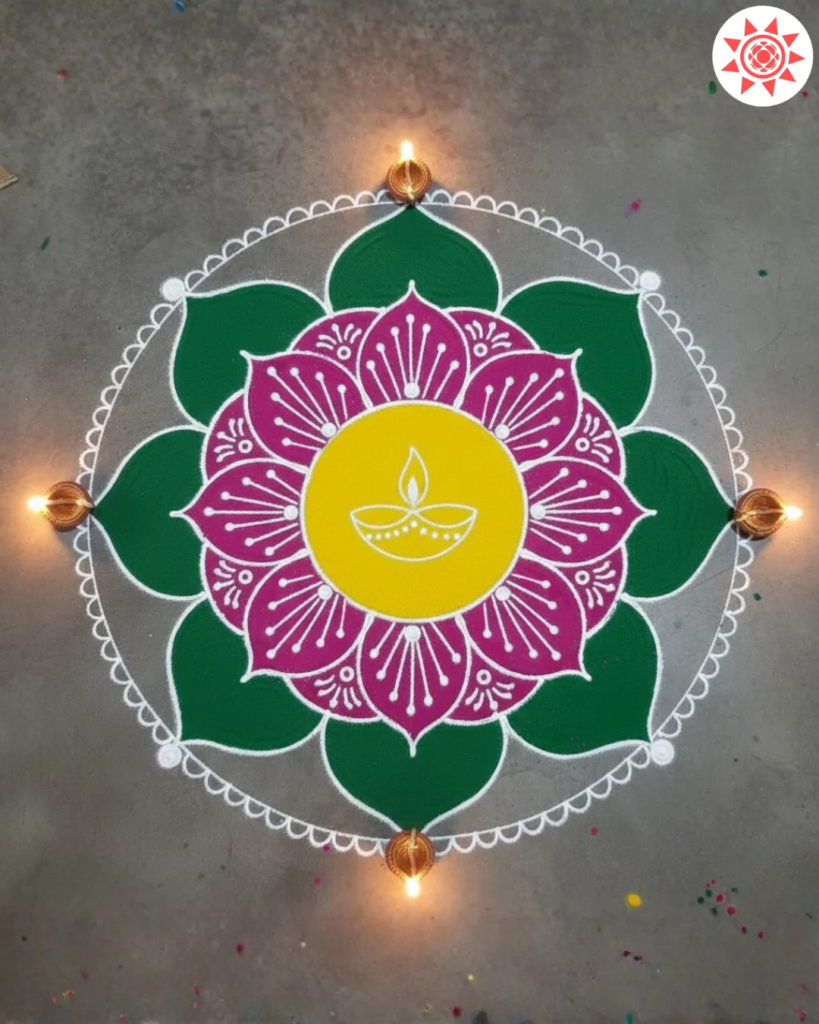
🎨 1. Traditional Lotus Rangoli

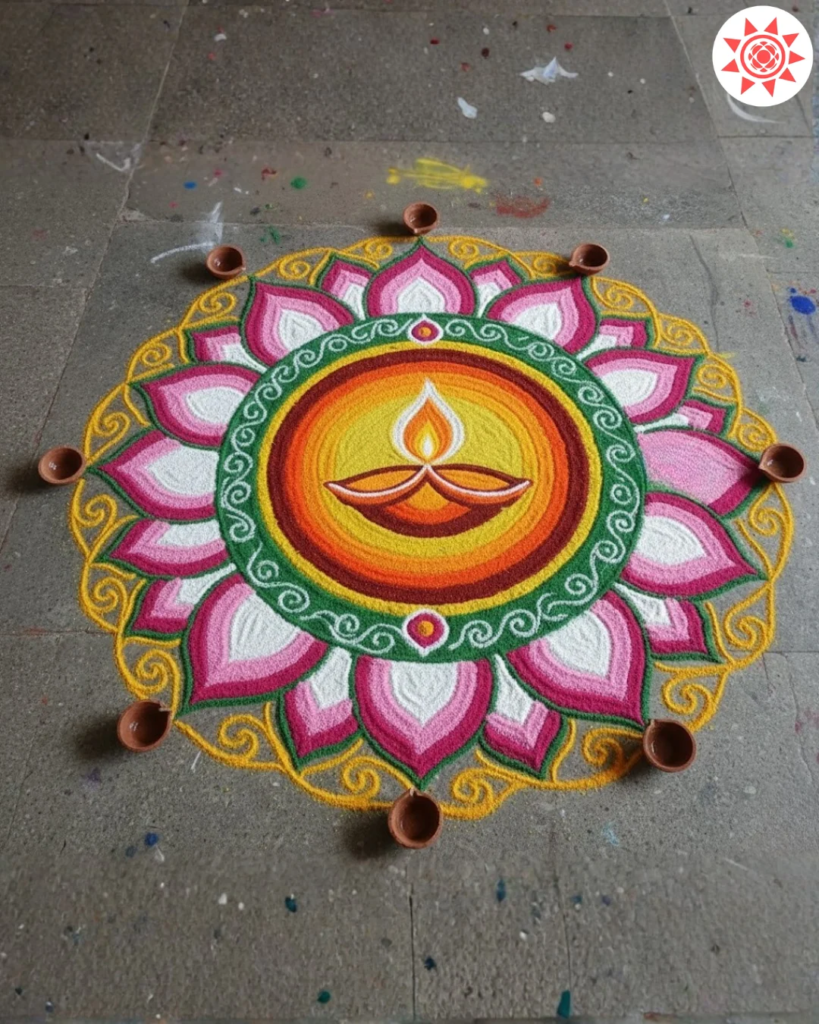
The lotus is a sacred symbol associated with Goddess Lakshmi. Creating a lotus-shaped rangoli in pink, white, and yellow shades brings:

✅ Wealth and prosperity
✅ Spiritual purity
✅ Positive energy

Place it near the main entrance or puja area for maximum benefit.


🪔 2. Diya Rangoli with Golden Borders

A rangoli featuring glowing diyas symbolizes victory of light over darkness.

Best colors: Orange, yellow, red, and gold
Benefits:
✨ Removes negativity
✨ Brings peace and prosperity
✨ Enhances festive beauty

Perfect for Diwali night celebrations.


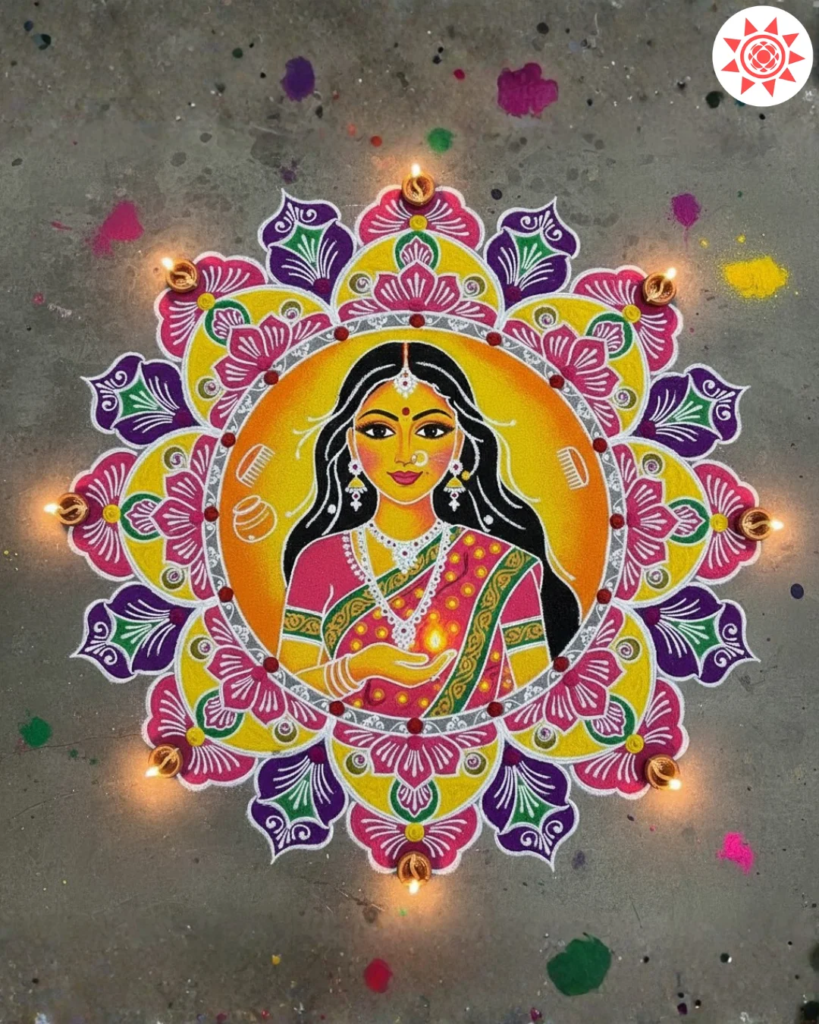
🌼 3. Floral Mandala Rangoli

Mandala designs are circular patterns that represent cosmic harmony.

Using flower petals or bright powders in circular layers creates a divine effect.

Benefits:
✔ Balance and positivity
✔ Spiritual focus
✔ Beautiful symmetry

Ideal for puja rooms and courtyards.


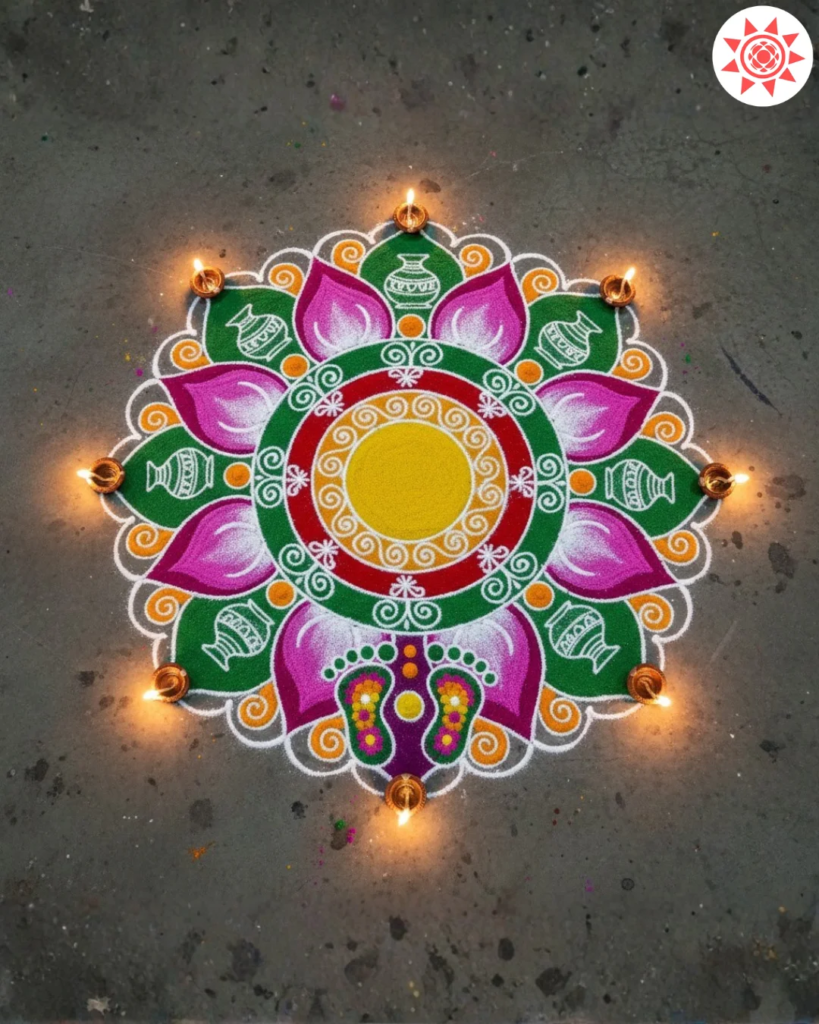
💰 4. Goddess Lakshmi Footprints Rangoli

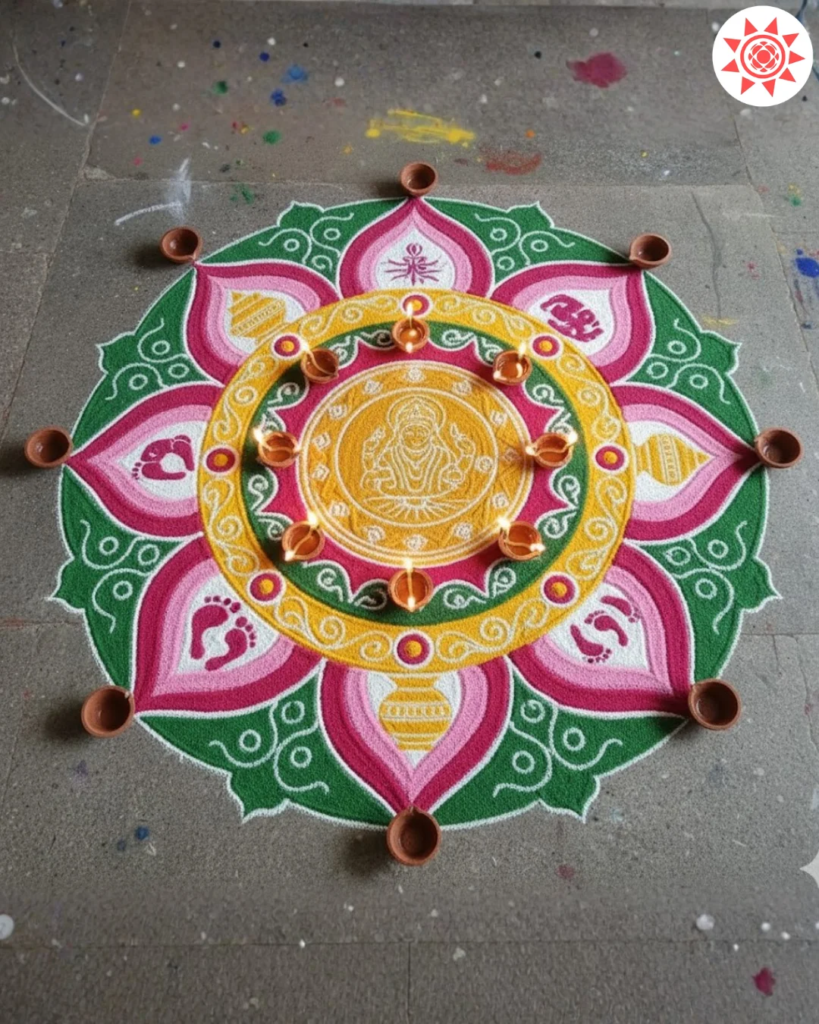
Small footprints of Lakshmi Mata moving into the house symbolize her arrival.

Use red, gold, and white colors to enhance auspiciousness.

Benefits:
🌟 Attracts wealth
🌟 Improves financial stability
🌟 Brings good luck

Commonly made on Dhanteras and Diwali morning.


🌟 5. Star and Geometric Rangoli

Simple star patterns with symmetrical shapes look elegant and modern.

Best for small spaces
Benefits:
✔ Quick to make
✔ Harmonizes energy flow
✔ Visually appealing

Combine bright contrasts for a festive look.


🕉️ 6. Om and Swastik Rangoli

Sacred symbols like Om and Swastik are highly auspicious.

Colors recommended: Red, yellow, and white.

Benefits:
🙏 Protects from negativity
🙏 Brings peace and divine blessings
🙏 Strengthens spiritual energy

Perfect for Roop Chaturdashi rituals.


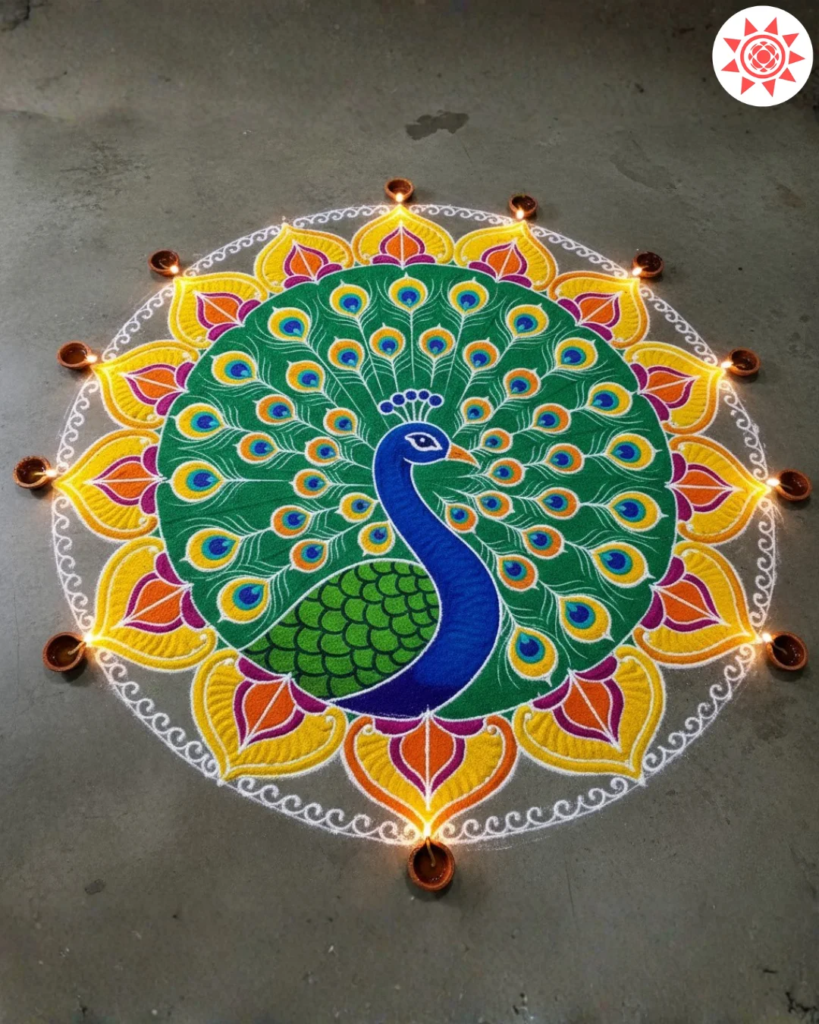
🌺 7. Peacock Feather Rangoli

Peacock designs symbolize beauty, grace, and Lord Krishna’s blessings.

Use green, blue, and golden shades for vibrant appeal.

Benefits:
✨ Enhances positivity
✨ Attracts happiness
✨ Creates festive charm


🪙 8. Dhanteras Special Pot (Kalash) Rangoli

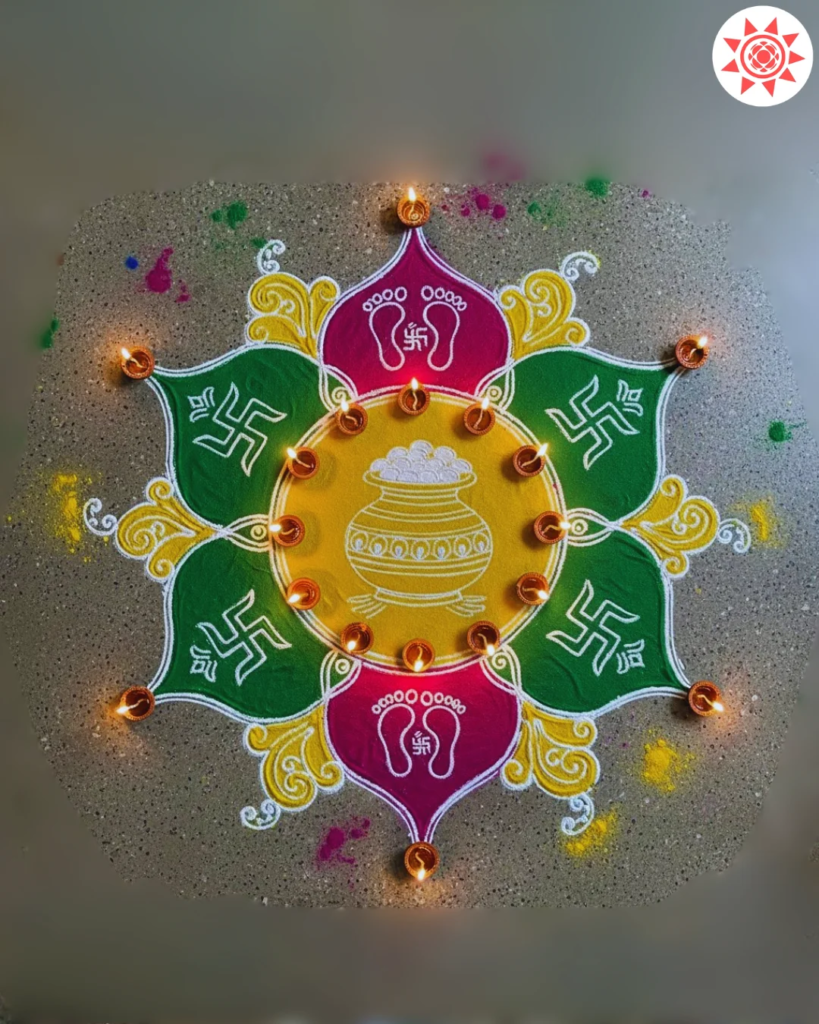
A kalash filled with coins, flowers, and coconut is a traditional prosperity symbol.

Benefits:
💎 Wealth attraction
💎 Good fortune
💎 Financial growth

Best placed near business entrances or shops.


🌈 9. Colorful Spiral Rangoli

Spiral designs symbolize life’s continuous flow of energy.

Mix multiple bright colors for a joyful festive look.

Benefits:
🎉 Cheerful atmosphere
🎉 Removes dullness
🎉 Welcomes positive vibes


🕯️ Tips for Long-Lasting Rangoli in 2026

✔ Clean floor properly before designing
✔ Use chalk outline first for neat patterns
✔ Mix little salt in rangoli powder for durability
✔ Avoid high foot traffic areas


🌟 Spiritual Benefits of Making Rangoli

Creating rangoli is not just decoration — it is a sacred act that:

• Invites Goddess Lakshmi
• Enhances peace and prosperity
• Brings happiness and success
• Removes negative energies

It is believed that homes with rangoli experience greater harmony during Diwali.


✨ Conclusion

Rangoli designs during Dhanteras, Roop Chaturdashi, and Diwali 2026 are a beautiful way to express devotion, creativity, and festive joy. Whether you prefer traditional lotus patterns, diya motifs, or modern geometric designs, each rangoli holds spiritual meaning and brings positivity.

Make your Diwali celebrations more colorful and auspicious by decorating your home with these 9 stunning rangoli ideas and welcoming prosperity into your life.

Unlucky Zodiac Signs in 2026 & The Luckiest Zodiac Sign of the Year — Astrology Predictions

Astrology offers a fascinating lens into how planetary movements influence our lives, shaping opportunities, challenges, emotional rhythms, relationships, career momentum, and personal growth. The year 2026 brings powerful celestial shifts — from Jupiter’s transitions to Saturn and Neptune alignments — that will affect each zodiac sign differently. Some signs may feel pressure and delays, while others will experience expansion and good fortune.

This comprehensive forecast explores the unlucky zodiac signs in 2026, the luckiest zodiac sign of the year, how mixed fortunes might play out, and practical astrology-based guidance to make the most of cosmic energies in 2026.


🌌 Astrology Outlook for 2026

Before identifying specific signs, let’s understand the key astrological dynamics shaping the year:

🌟 Major Planetary Movements

• Jupiter, the planet of growth, fortune, and expansion, transits through nurturing Cancer and later into bold Leo, influencing emotional growth and self-expression.
• Saturn and Neptune form significant alignments in Aries, blending discipline with spiritual insight.
• Uranus’s influence continues to bring unexpected transformation and shifts.

These movements set the stage for 2026 to be a year of growth through resilience, where challenges often have hidden lessons and luck can emerge through adaptability and self-awareness.


⚠️ Unlucky Zodiac Signs in 2026

Not every sign will enjoy smooth sailing in 2026. Some zodiac personalities may face emotional intensity, delays, uncertainty, or inner conflict. These challenging periods are not permanent bad luck — they signal periods where awareness, patience, and adaptability matter most.

1. Cancer

Cancer natives may feel emotionally sensitive throughout the year. Family dynamics, misunderstandings, and internal pressure could drain emotional energy, making it difficult to stay grounded. Challenges won’t last forever; they are opportunities to strengthen emotional resilience and define personal priorities with clarity.

2. Virgo

Perfectionists by nature, Virgos may find 2026 tests their capacity to deal with unpredictability. Overthinking, stress, and health concerns can surface if careful self-care isn’t prioritized. This year encourages Virgos to shift from perfectionism to progress-oriented action, transforming apparent “bad luck” into strategic growth.

3. Capricorn

Capricorns may experience delays in career progress, authority conflicts, and structural slowdowns that require patience and wise decision-making. Instead of rushing outcomes, Capricorn’s discipline can help build long-term stability even through temporary obstacles.

4. Pisces

Pisces may struggle with emotional ambiguity and unrealistic expectations, leading to confusion and vulnerability at critical moments. The key for Pisces lies in grounding creative energy and avoiding avoidance patterns — transforming uncertainty into intuitive insight.


🔄 Zodiac Signs With Mixed Luck in 2026

Some zodiac signs will experience both highs and lows, depending on how they respond to shifting energies. Choices, timing, emotional balance, and awareness will influence outcomes for these signs:

Aries

Bold and ambitious, Aries may find moments of acceleration followed by periods of reevaluation. Confidence and strategic action can turn even testing months into progress.

Libra

Libra may enjoy harmonious phases but also face indecision or relational challenges. Balance, communication, and self-leadership are key to turning mixed fortunes into growth.

Scorpio

Scorpio’s deep insights and intensity bring both breakthroughs and inner confrontations. Emotional acumen and slow refinement can shift pressure into power.


🍀 Luckiest Zodiac Sign in 2026

🌟 Sagittarius — The Star of the Year

Among all signs, Sagittarius stands out as the luckiest zodiac sign in 2026. Ruled by Jupiter — the planet of growth, abundance, and expansion — Sagittarius is destined for significant opportunities this year.

Why Sagittarius Is Favored in 2026:
Career Growth & Recognition – Favorable planetary alignment offers upward momentum and visibility.
Financial Opportunities – Smart investments and new avenues for wealth creation open.
Travel, Learning & Expansion – Sagittarius’s adventurous spirit aligns with growth in travel, education, and new experiences.
Confidence & Self-Expression – Natural optimism attracts support and opportunities throughout the year.

This alignment doesn’t guarantee automatic success — but it does offer the cosmic support Sagittarius natives can harness through bold choices, clarity of purpose, and consistent effort.


Other Zodiac Signs With Positive Energy in 2026

While Sagittarius may be the most fortunate overall, several other sun signs also enjoy strong supportive energy:

🔹 Leo

Leadership, creativity, and self-confidence are highlighted, bringing success in projects, public roles, and personal expression.

🔹 Taurus

Financial stability and emotional balance improve through grounded decision-making.

🔹 Aquarius

Innovation, networking, and personal growth bring upcoming opportunities.

🔹 Aries

Courage and resilience allow breakthroughs, especially in career and identity arenas.

These signs are likely to enjoy periods of luck and positive momentum, especially when they approach decisions with self-awareness and purpose.


💡 Astrology Tips to Improve Your Luck in 2026

Even if your zodiac sign appears among the “unlucky” ones, traditional astrology teaches that awareness and mindful action can shift outcomes. Here are general strategies:

🌙 1. Strengthen Emotional Awareness

Emotional intelligence helps reduce stress and increases resilience — especially for signs like Cancer and Pisces.

🔄 2. Avoid Impulsive Decisions

Take time to consider choices in finance, relationships, and career to minimize potential setbacks.

🔁 3. Embrace Patience and Timing

Some planetary transits favor slow and steady effort rather than rushed plans.

🧘‍♀️ 4. Invest in Inner Growth

Meditation, counseling, and creative focus can transform challenges into spiritual and psychological strengths.


🔮 Conclusion

The year 2026 promises a rich tapestry of astrological influences — some challenging, some supportive, and many transformative. While Cancer, Virgo, Capricorn, and Pisces may navigate obstacles at times, Sagittarius shines as the luckiest zodiac sign of the year. Other signs like Leo, Taurus, Aquarius, and Aries also enjoy strong phases, provided they act with strategy, awareness, and emotional balance.

Astrology is not a fixed destiny — it is a guiding framework that helps us understand when to take action, where to bolster strength, and how to navigate life with conscious awareness. Use 2026 as a year not just of luck but of learning, resilience, and inner growth.

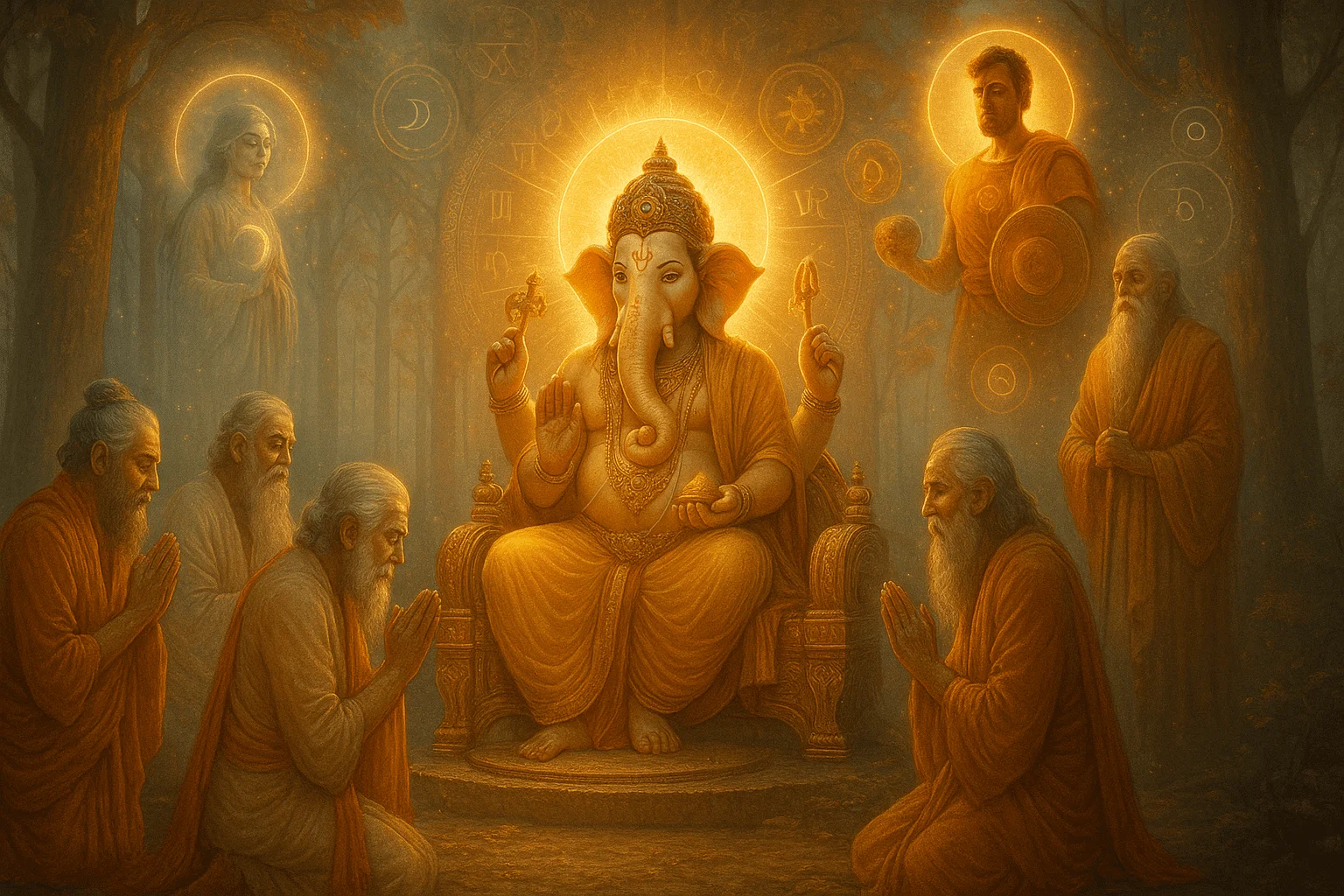
Lord Ganesha: The Patron of Astrology, Wisdom & Cosmic Intelligence

Lord Ganesha stands among the most universally revered deities in Hinduism — worshipped as the remover of obstacles, the bringer of prosperity, the god of intellect and wisdom, and the beginning of all auspicious ceremonies. Across centuries, his cosmic symbolism has also deeply influenced Vedic astrology (Jyotish), shaping spiritual practices, remedial rituals, and the way people understand destiny, karma, and cosmic intelligence.

In this detailed article, we explore Lord Ganesha’s divine essence, his astrological connections, his role in human life, and why worshipping Ganapati is considered essential before starting any spiritual or material enterprise.


Who is Lord Ganesha?

Lord Ganesha — also called Ganapati, Vinayaka, Vighnaraja, and Vighnaharta — is the elephant-headed son of Lord Shiva and Goddess Parvati. He is widely worshipped across India and beyond as the Lord of Beginnings and the Remover of Obstacles.

Unlike many deities whose roles are singular, Ganesha’s attributes are multifaceted:
Wisdom and intellect
Success and auspicious beginnings
Removal of spiritual and material obstructions
Cosmic balance and karmic understanding
Protection and good fortune

Ganesha’s distinctive elephant head symbolizes vast intelligence and the ability to think beyond the limits of ordinary thought. His large ears represent attentive listening and learning, while his trunk signifies adaptability, strength, and discriminative intelligence.


Ganesha and Vedic Astrology: A Deep Connection

While Ganesha is popularly known for removing obstacles, his relationship with Vedic astrology (Jyotish Shastra) goes much deeper — to the heart of how destiny, karmic cycles, and cosmic energies are interpreted.

1. Ganesha as the Cosmic Intelligence

According to Vedic tradition, Ganesha is not just a mythic figure — he embodies cosmic intelligence and Mahat Tattva, the universal principle underlying all creation and order. In this sense, he represents the source of universal laws, much like how astrology seeks to decode the cosmic influence on human life.

Astrologically, he is considered the ruler of Ketu, the south lunar node (a shadow planet associated with spiritual liberation, detachment, and subconscious energies). Worshipping Lord Ganesha is believed to help pacify the challenging influences of Ketu, bringing clarity and grounding.

2. Ganesha as the First Deity in Astrology Rituals

In classical Hindu rituals and astrological practices, Ganesha is invoked before beginning any significant event — including birth chart readings (kundli analysis), muhurat calculations, astrological remedies, education, business ventures, and important life transitions.

This tradition is rooted in the belief that Ganesha helps clear both internal and external obstacles that could obstruct the proper interpretation or application of astrological insights.

3. Symbolism Linked to Astrological Traits

Every aspect of Ganesha’s form has symbolic value in astrology:
Elephant head — symbolizes expansive intelligence and higher consciousness.
Single tusk (the other broken) — signifies the ability to overcome duality, focusing on wisdom.
Four arms — represent four parts of human existence: mind, intellect, ego, and self.
Mouse (his vehicle) — symbolizes humbleness, the conquest of ego, and the ability to journey through subtle layers of the psyche.

This deep symbolism reflects how astrology views the human psyche — not just as physical existence, but as a composite of cosmic energies and karmic lessons.


Ganesha in Karmic Astrology

Astrology doesn’t just map planets; it interprets how cosmic forces influence life paths, challenges, and growth. In this context, Ganesha is seen as a guide who helps the soul navigate the karmic terrain — whether removing obstructions (Vighnas) or guiding aspirants toward higher consciousness.

1. Remover of Obstacles and Karmic Blocks

Ganesha is popularly invoked to remove physical and spiritual hurdles. In astrology, planetary afflictions, especially from shadow planets like Rahu and Ketu, can create confusion, delays, and emotional turbulence in a person’s chart. Worshipping Ganesha is believed to help mitigate those influences, bringing clarity and focus.

2. Enhancing Wisdom & Mental Clarity

Astrologers often recommend Ganapati worship to strengthen Budhi (intellect) and Vivek (discernment) — key factors in astrological interpretation and decision-making. Ganesha is therefore seen as a deity who stimulates the mind and enhances intuitive understanding of planetary cycles.

3. Influence on Birth Charts

While there is no formal “birth chart” for Ganesha in Jyotish (since deities transcend human timelines), traditional interpretations symbolically associate him with Muladhara Chakra (root) — representing stability, grounding, and life-force energy.


Ganesha’s Spiritual Role Beyond Astrology

Lord Ganesha’s influence goes beyond astrological symbolism to touch many aspects of spiritual and day-to-day life:

1. Beginning of Auspicious Work

Hindus traditionally begin any new endeavor with prayers to Ganesha — whether it is a business, ceremony, or ritual — to secure success and remove potential blockages.

2. Festival of Ganesh Chaturthi

Ganesh Chaturthi, celebrated during the Shukla Paksha of Bhadrapada month, is one of Hinduism’s most popular festivals. It honors Ganesha’s birth and is a time when devotees seek his blessings for wisdom, prosperity, and removal of obstacles.

3. Ganesha in Daily Worship & Rituals

In astrology consultations, priests often recommend specific remedies involving Ganesha — such as chanting “Om Gan Ganapataye Namah”, offering modaks, and performing Ganesh pooja before muhurat calculations.


Astrological Remedies with Lord Ganesha

Astrology isn’t merely predictive; it proposes remedies. Many astrologers prescribe Ganesha-focused rituals to balance planetary disturbances:

• Chanting the Ganapati Mantra (108 times) to strengthen intellect and remove blockages.
• Offering modaks / laddus — considered Ganesha’s favorite — for prosperity and harmony.
• Performing Ganesh Pooja before astrological remedies for Rahu/Ketu pacification.
• Lighting lamps and chanting during Sankashti Chaturthi for clarity and emotional balance.

Such rituals are believed to help align personal energy with the cosmos, balancing karmic influences and refining intuition.


Why Astrologers Invoke Ganesha First

In Vedic astrology, no reading or muhurat calculation begins without invoking Lord Ganesha. This reflects an inherent belief that spiritual intelligence must guide cosmic interpretation — that understanding destiny isn’t purely analytical, but inherently spiritual.

Ganesha is thus seen as the bridge between cosmic forces and human consciousness, ensuring that astrological insights benefit the seeker without interference from mental obstructions or karmic noise.


Conclusion: Ganesha — The Cosmic Guide

Lord Ganesha’s significance transcends mythology, ritual, and cultural celebration — he symbolizes the union of cosmic intelligence, spiritual wisdom, and karmic clarity. In the realm of astrology, he is more than a figure of worship — he embodies the principles that make Jyotish a guide to life’s deeper meanings.

Whether you seek success in your personal endeavors, clarity in your birth chart interpretation, or harmony with the cosmos, Ganesha’s presence in astrological practices strengthens intuition, removes obstacles, and brings profound understanding.

Dwarka: The Lost City of Lord Krishna — History, Myth, Archaeology & Spiritual Legacy

For millennia, the legendary city of Dwarka has captured the imagination of devotees, historians, and explorers alike. Revered as the divine kingdom of Lord Krishna, one of the most beloved incarnations of Vishnu in Hindu tradition, Dwarka is a place where mythology and material evidence intersect in extraordinary ways. Today, the city stands not only as a sacred pilgrimage center but also as a focus of archaeological investigation that seeks to uncover a chapter of ancient Indian civilization buried under the Arabian Sea.


📖 Mythology & Scriptural Foundations

According to ancient Hindu scriptures — especially the Mahabharata, Bhagavata Purana, and Harivamsa — Dwarka was founded by Lord Krishna after he left Mathura. In these texts, Krishna chooses a coastal site in present-day Gujarat, transforming it into a magnificent fortified city that served as the capital of the Yadava dynasty.

The spectacular descriptions of Dwarka’s palaces, gardens, wide streets, and grand fortifications reflect not only its political importance but also its spiritual prominence. The Mahabharata narrates that after Krishna’s departure from the mortal world, Dwarka and its inhabitants were engulfed by the sea, a cataclysmic event symbolic of the transition into Kali Yuga — the age of discord and decline.

In religious tradition, Dwarka is also part of the Sapta Puri — the seven most sacred pilgrimage sites in Hinduism — and forms an integral element of the Char Dham circuit, revered for granting spiritual liberation (moksha).


📍 The Geography of Ancient Dwarka

Dwarka is located on the western tip of the Okhamandal Peninsula along the Gujarat coast, near the mouth of the Gomti River where it meets the Arabian Sea. Today’s city of Dwarka stands on what is believed to be the heritage site of Krishna’s ancient capital. Adjacent to it lies Bet Dwarka, an island traditionally regarded as Krishna’s actual residence, where many temples dedicated to Krishna and his companions testify to the region’s deep religious history.

The vibrant culture of prayer, festivals like Janmashtami, and festive pilgrimages draw millions of devotees every year — a testament to Dwarka’s undiminished spiritual magnetism.


🏛️ Modern Dwarka: Temples & Pilgrimage

Central to the spiritual landscape is the Dwarkadhish Temple, dedicated to Krishna as the “King of Dwarka.” While archaeological evidence suggests the earliest structures may date back to several centuries BCE, the temple has undergone numerous renovations and reconstructions through the centuries.

In addition to Dwarkadhish Temple, the region is dotted with other significant sacred sites:

  • Rukmini Devi Temple: Dedicated to Krishna’s principal consort, reflecting ancient lore and architectural elegance.
  • Shri Keshavraiji Temple in Bet Dwarka: One of the oldest centers of devotion dedicated to Krishna.
    These sites, coupled with the devotional rituals practiced by pilgrims, reinforce Dwarka’s role as a living spiritual hub where ancient beliefs and community practices flourish.

🧭 Archaeological Exploration: Myth Meets Material Evidence

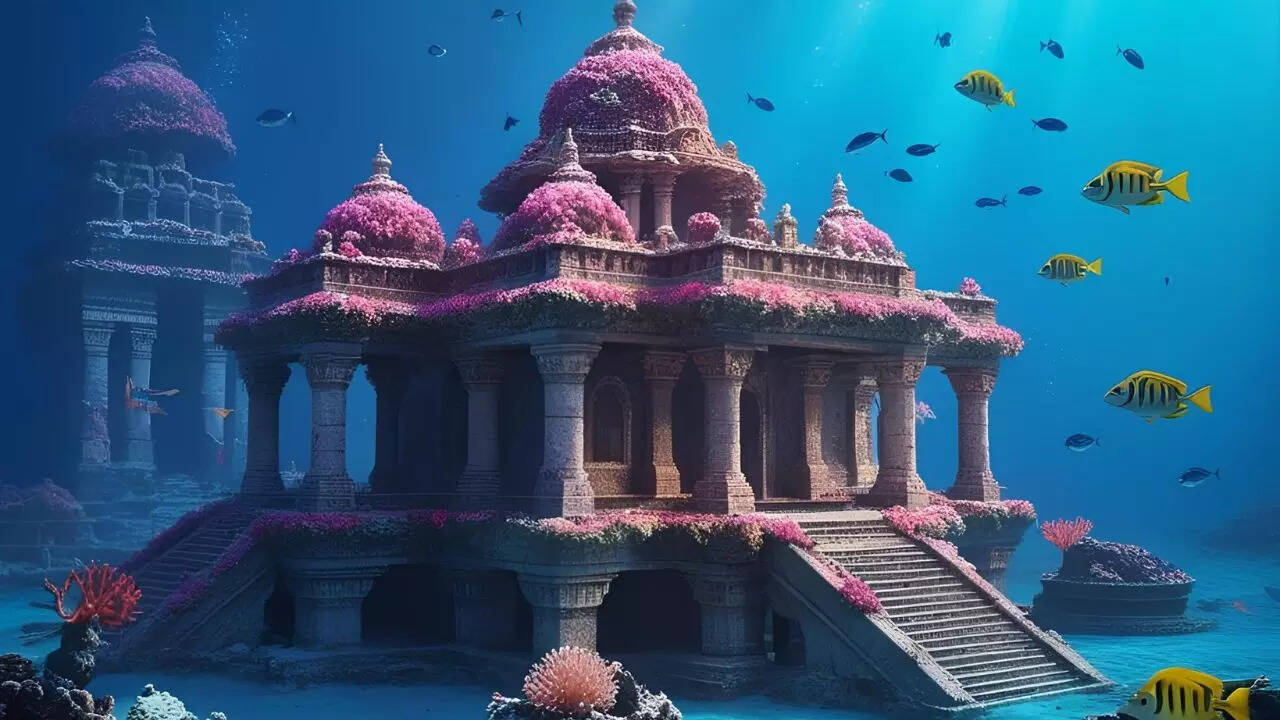
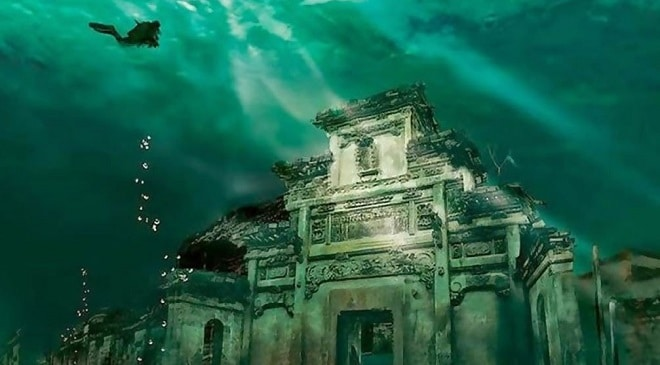
For decades, the belief in a sunken Dwarka remained within the realms of mythology and folklore — until modern science began probing beneath the waves. Marine archaeological surveys off the Gujarat coast have revealed submerged structures, stone anchors, pottery shards, and architectural fragments that suggest the existence of a once-flourishing coastal settlement.

Early Discoveries & S.R. Rao’s Expedition

In the late 1980s and early 1990s, pioneering Indian marine archaeologist S.R. Rao led several underwater explorations near Dwarka. These investigations identified stone walls, structural blocks, and other artifacts submerged beneath the Arabian Sea — indicative of organized urban planning. Some dates from recovered materials pointed to ancient habitational layers that correlate with periods described in historical and scriptural timelines.

Structural Evidence

Sonar surveys and underwater dives have uncovered remnants of large stone structures and man-made formations off the coast of modern Dwarka. These submerged features lie at varying depths — often between 6 to 40 meters — and include building blocks, possible roadways, and other traces of human settlement.

Some research even suggests that underlying deposits could date back to the Harappan era or earlier, hinting at a civilization that thrived long before conventional historical timelines.


🌊 Why Did Dwarka Submerge?

The reasons behind the submergence of ancient Dwarka remain complex, blending geological, climatic, and mythic narratives. Several possibilities are considered:

  • Natural coastal changes: Shifts in sea level, subsidence of land, or tectonic activity could have gradually inundated the low-lying coastal region.
  • Cataclysmic flooding: Ancient texts describe dramatic events connected with Krishna’s departure, often interpreted metaphorically or symbolically to signify endings.

While the exact cause remains a subject of debate, the archaeological evidence confirms that significant human settlements once existed near the present shoreline — some of which may have been submerged over time.


🔍 New Research & Ongoing Excavations

In recent months, the Archaeological Survey of India (ASI) has announced plans for renewed and deeper excavations, both on land and underwater, to investigate previously unexplored areas of the Dwarka region. These efforts aim to gather more comprehensive data using modern technology to better understand the city’s ancient past and its connections to the Krishna legends.

The use of advanced marine survey equipment, sediment analysis, and underwater mapping could potentially provide new insights into the extent and organization of ancient Dwarka.


🧠 What Scholars Believe vs. Mythic Interpretations

The debate around Dwarka’s historical reality involves scholars from different disciplines:

  • Traditionalists emphasize the strong alignment between scriptural descriptions and archaeological features.
  • Conservative archaeologists argue that while underwater ruins reflect human settlement, directly equating them with Krishna’s mythical city requires caution.
  • Some researchers suggest the city was once a thriving maritime port long before historical records, possibly dating as far back as the late Harappan period or earlier.

Thus, Dwarka occupies a unique zone between faith and empirical inquiry, inviting both devotion and scientific curiosity.


💫 Dwarka in Spiritual Consciousness

For devotees worldwide, Dwarka is not merely an archaeological site but a living embodiment of Krishna’s life and teachings. Pilgrimages to Dwarkadhish Temple, celebrations of Krishna Janmashtami, and ritual practices all reinforce a deep spiritual connection that transcends empirical evidence.

At its core, Dwarka symbolizes divine governance, eternal friendship, and the cyclic nature of life and time — themes that resonate deeply in Hindu philosophy.


🌟 Visiting Dwarka: Pilgrimage & Experience

Today, pilgrims and travelers can explore both the spiritual and cultural heritage of Dwarka:

  • Dwarkadhish Temple — The focal point of devotion and worship.
  • Bet Dwarka — Island retreat linked with Krishna’s earthly life.
  • Rukmini Devi Temple — Honoring Krishna’s queen and her spiritual significance.

Sunset views over the Arabian Sea, evening aarti ceremonies, and the rhythmic chants of temple bells all contribute to an experience that blends history with living tradition.


🧡 Conclusion: The Legendary Lost City

Dwarka is arguably one of India’s most intriguing intersections of myth, history, and archaeology. Its mention in ancient scriptures, combined with underwater discoveries and ongoing explorations, makes it a subject of international fascination. Whether viewed through the lens of faith or science, Dwarka’s story continues to challenge and expand our understanding of ancient civilizations.

For spiritual seekers, historians, archaeologists, and curious minds alike, Dwarka remains a city of profound mystery — where the echoes of Lord Krishna’s legacy still ripple through time and tide.

Roop Chaudas 2026: Rituals, Remedies & The Secret of Inner and Outer Beauty

Roop Chaudas, also known as Narak Chaturdashi, is an auspicious Hindu festival celebrated a day before Diwali. It symbolizes the victory of light over darkness and purity over negativity. This sacred day is specially associated with enhancing beauty, removing negative energies, and inviting positivity into life.

In 2026, Roop Chaudas will be observed with traditional rituals that promote both inner peace and outer glow.


🌼 Spiritual Significance of Roop Chaudas

Roop Chaudas is dedicated to Lord Krishna’s victory over the demon Narakasura. Spiritually, it represents cleansing the soul and body from negativity, stress, and harmful influences.

On this day, people perform holy baths, prayers, and remedies believed to:

• Improve physical glow and health
• Remove negative energies and doshas
• Bring prosperity and happiness
• Enhance mental peace and confidence


📅 Roop Chaudas 2026 Date & Muhurat

Roop Chaudas falls on the Chaturdashi Tithi of Krishna Paksha during the Diwali festival period.

(For exact date, time, and personalized muhurat based on your horoscope, consult an expert astrologer.)


🛁 Traditional Rituals of Roop Chaudas

  1. Early Morning Abhyanga Snan
    Take a sacred bath using warm water, sesame oil, and herbal powders before sunrise.
  2. Prayer to Lord Krishna & Goddess Lakshmi
    Offer lamps, flowers, and sweets for blessings of beauty, health, and prosperity.
  3. Home Cleansing
    Light diyas to remove negative vibrations from the house.
  4. Charity & Kindness
    Donating food, clothes, or money increases positive karma.

🌿 Powerful Remedies for Beauty & Positivity

✨ Apply ubtan made of turmeric, sandalwood, and gram flour before bathing
✨ Chant Krishna mantra or Vishnu Sahasranama
✨ Light a mustard oil diya at the main entrance
✨ Wear clean, bright clothes after bath

These remedies are believed to bring glowing skin, confidence, and inner peace.


🌟 Benefits of Observing Roop Chaudas

✅ Enhances physical beauty and health
✅ Removes negativity and stress
✅ Attracts prosperity
✅ Strengthens spiritual energy
✅ Brings happiness and harmony


📞 Get Personalized Ritual Guidance

For exact Roop Chaudas 2026 muhurat, remedies, and horoscope-based advice, visit astrologermanisha.in or consult an expert astrologer for personalized solutions.

🌬️ Aquarius Horoscope 2026 – Innovation, Freedom & Visionary Growth

Aquarius, 2026 is your year to break boundaries, champion ideas, and ignite change—in your life and in the world around you. With Uranus, Saturn, and Jupiter bringing powerful planetary alignments, your individuality, innovation, and global connections become your greatest assets. Every area of life—career, money, love, wellness—gets a wind of fresh, liberating energy. Get ready to reimagine what’s possible.


🚀 Career & Business: Leading the Future

2026 is the year to embrace your role as a changemaker.

  • January–March: Brainstorm, plan, and launch. Tech, media, science, consulting, digital startups, or humanitarian projects get a push. You attract attention for researching the “next big thing.”
  • April–August: Network expansively—join masterminds, collaborate worldwide, and don’t fear out-of-the-box pitches. Promotions, project launches, or offers from across the globe become real.
  • September–December: Lead teams, mentor peers, or start your own creative venture. Your unique approach makes you invaluable!

Entrepreneurs: Online platforms, community-building, and educational products see major success.

Astro-Remedy: Place a piece of amethyst or a silver object on your work desk to enhance intuition and teamwork.


💸 Financial Forecast: Unconventional Gains & Smart Innovation

Aquarius, 2026 brings new avenues of income, investments in tech or networks, and international opportunities.

  • Early year: Side hustles, online business, or royalties start supplementing steady income.
  • Mid-year: Jupiter brings lucrative collaborations; brainstorm with friends about digital products, crypto, or passive income. Diversify!
  • Year-end: Rebalance investments and review online security. Consider green tech, digital real estate, or social-impact ventures.

Astro-Remedy: Donate gadgets or technology to students in need; keep a green plant near your ledger or wallet.


💙 Love & Relationships: Friendship, Uniqueness & Togetherness

Aquarius, your ideal partner is both friend and lover. In 2026, friendships become love, love becomes deeper friendship.

  • Singles: Look for romance via group activities, clubs, activism, or virtual spaces. Someone eccentric, independent, or from another culture may steal your heart (March, June, or November are strong).
  • Couples: Reinvent routines, travel, or learn together. Talk openly about dreams for the future; shared causes or volunteer work bond you tighter.
  • Social: Wider circles expand your understanding—support networks, platonic soulmates, or collaborative living could show up.

Astro-Remedy: Meditate with blue sodalite, or wear silver jewelry for peace and attraction.


🏡 Family & Social Life: New Traditions, Chosen Family

2026 redefines “family”—expect more time with chosen friends, online groups, or community projects.

  • Host potlucks, co-working brunches, or themed house parties.
  • If tensions with relatives surface, practice detachment—but always be the first to support in a true crisis.

Tip: Document family/tribe rituals in photos or a blog; your memories will inspire others.


💪 Health & Wellness: Whole-Self Vitality

Aquarius, energy runs high—balance is your challenge.

  • Physical: Try group fitness, team sports, cycling, or tech-based workouts for motivation.
  • Mental: Balance screen time with nature, music, and conversation.
  • Mid-year: Take breaks from activism or networking to recharge alone. Creativity and intuition spark when you unplug.
  • Nutrition: Add legumes, seeds, and “air foods” like leafy greens.

Astro-Remedy: Chant “Om Namah Shivaya” or simple mantras while walking in open air; try water infusions with mint or lime for cooling.


🌐 Learning & Travel: Expanding Your Universe

  • Best months for travel: February, July, September, and November—especially for conferences, workshops, or humanitarian trips.
  • Consider online degrees, certifications, or building a teaching/coaching side business.
  • Learn a new language—or collaborate in international teams that stretch your worldview.

🛠️ Aquarius Success Blueprint for 2026

  1. Be authentic—unapologetically.
  2. Stay nimble; adapt as tech and trends shift.
  3. Lead with collaboration, not exclusion.
  4. Share your wisdom online—write, teach, vlog.
  5. Trust both friendship and love.

📞 Unlock Your Visionary Aquarius Potential in 2026!

For a next-level, personalized guide to career, wealth, love, and health—

recent

Categories