loading

Category: Festival

  • Home
  • Category: Festival

Saraswati Puja: What is the Significance of Basant Panchami?

The Celebration of Basant Panchami/Saraswati Puja

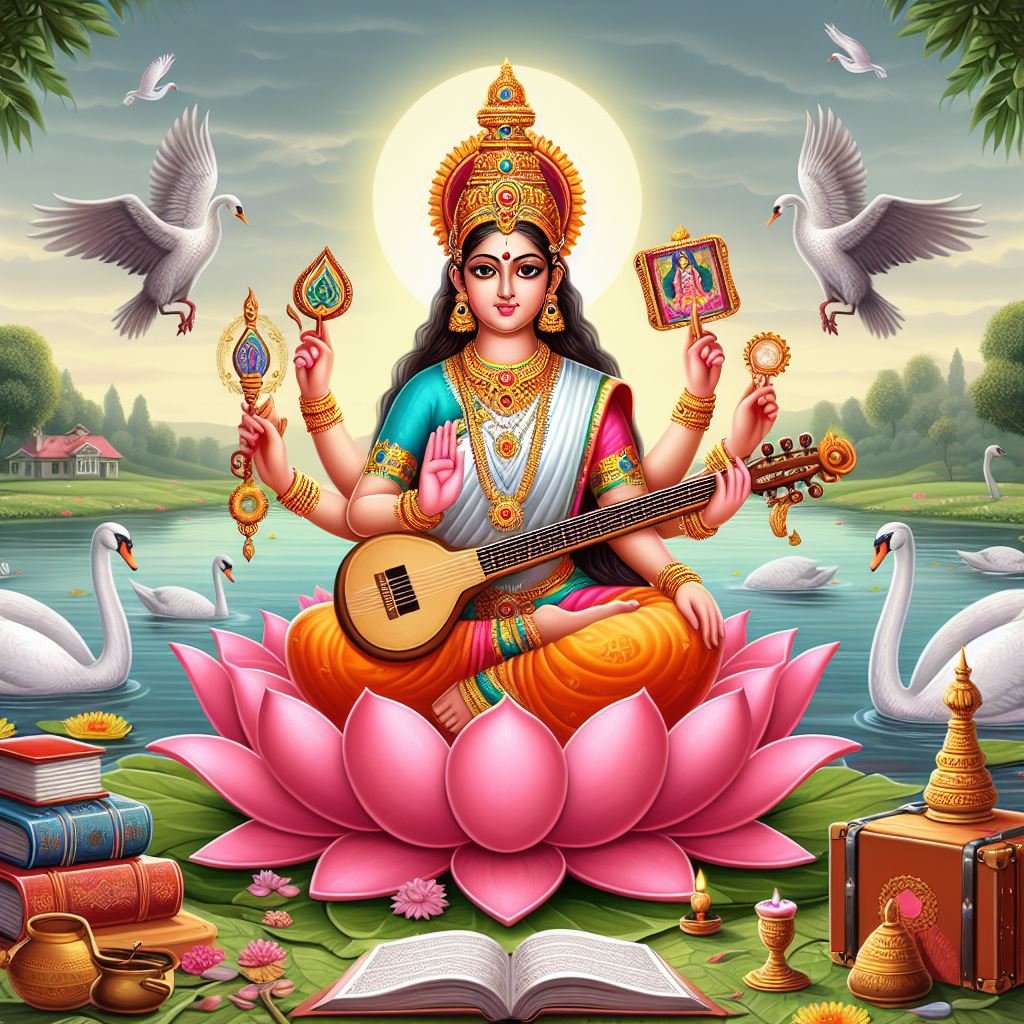
This is the day when the education and books are celebrated and revered. Basant Panchami is celebrated every year in the month of Magh & is dedicated to Goddess Saraswati.

Why is Basant Panchami Celebrated?

Basant Panchami means the ‘Fifth Day of the Spring Season’. It is believed to be the birthday of Goddess Saraswati that is the Goddess of knowledge, wisdom, and music. Hence, the spirit of knowledge and wisdom have special importance on the day of Vasant Panchami. This day is also considered very auspicious for Gupta Navaratri. The story of Basant Panchami is also observed in Puranas. The lore of Goddess Saraswati is described in the 10th Mandala of Rig Veda. In Indian culture, this day is considered very auspicious.

Shri Panchami

The goddess of wealth, Lakshmi (also called Shri) and Lord Vishnu are also worshiped on this day. Some people worship Goddess Lakshmi and Goddess Saraswati together. Generally, people from the business class worship Goddess Lakshmi. Recitation of Sri Sukta and worshipping Goddess Lakshmi is considered very auspicious and beneficial.

The Significance and Celebration of Basant Panchami

This day is considered very auspicious in Hinduism. ‘Basant Panchami’ is the fifth day of the ‘Spring Season’ and hence the aura of the Basant or Spring is totally different with flowers starting to blossom and a different vibrancy in the atmosphere.

Goddess Saraswati is worshipped on this day, and it is celebrated with great enthusiasm by students in schools & colleges. This day is also considered very well for any kind of auspicious work or an event. A start a new business on this day is also considered very beneficial. It is believed by Vedic Astrologers, that the day of ‘Basant Panchami’ is very auspicious for the start of something new. Hence, that is especially important in Hinduism. The season of spring is denoted with yellow color. People often wear yellow colored clothes on the day of Basant Panchami, especially in North India. The mustard crops get ready for harvest in this season and thus, the yellow color is also associated with the day of Basant Panchami. The vibes on this day are full of enthusiasm and the weather is neither extremely cold nor extremely warm. Goddess Saraswati is worshipped on this day, and hence, this day is also observed in various educational fields such as science, art, literature, etc. The schools also observe this festival and encourage children to focus on studies.

The Story of Basant Panchami

The story of basant panchami is very deeply associated with the Indian Mythology & folklore.

It is believed that Lord Vishnu ordered Lord Brahma to create the universe. Lord Brahma created the Universe and then went on to create humans very meticulously. But, even this creation could not satisfy Lord Brahma. He felt that there is something amiss in this world for everything was so silent.

Lord Brahma decided to share his observation with Lord Vishnu. Hearing this, Lord Vishnu gave Lord Brahma permission to make changes to the Universe. Lord Brahma sprinkled water on Earth which gave birth to Goddess Saraswati. She was born with Sitar in one hand, books in the other, and since became the epitome of knowledge and wisdom in the Hindu mythology. With her birth, every matter on earth received the power of sound for the winds started to whistle, the water started to splash and the leaves started to rustle, creating a beautiful harmony. This enlivens the Earth & ever since, the Goddess Saraswati is worshipped on the day of Basant Panchami.

The Auspicious Time for Basant Panchami/Saraswati Pooja

Dishes Cooked on Basant Panchami

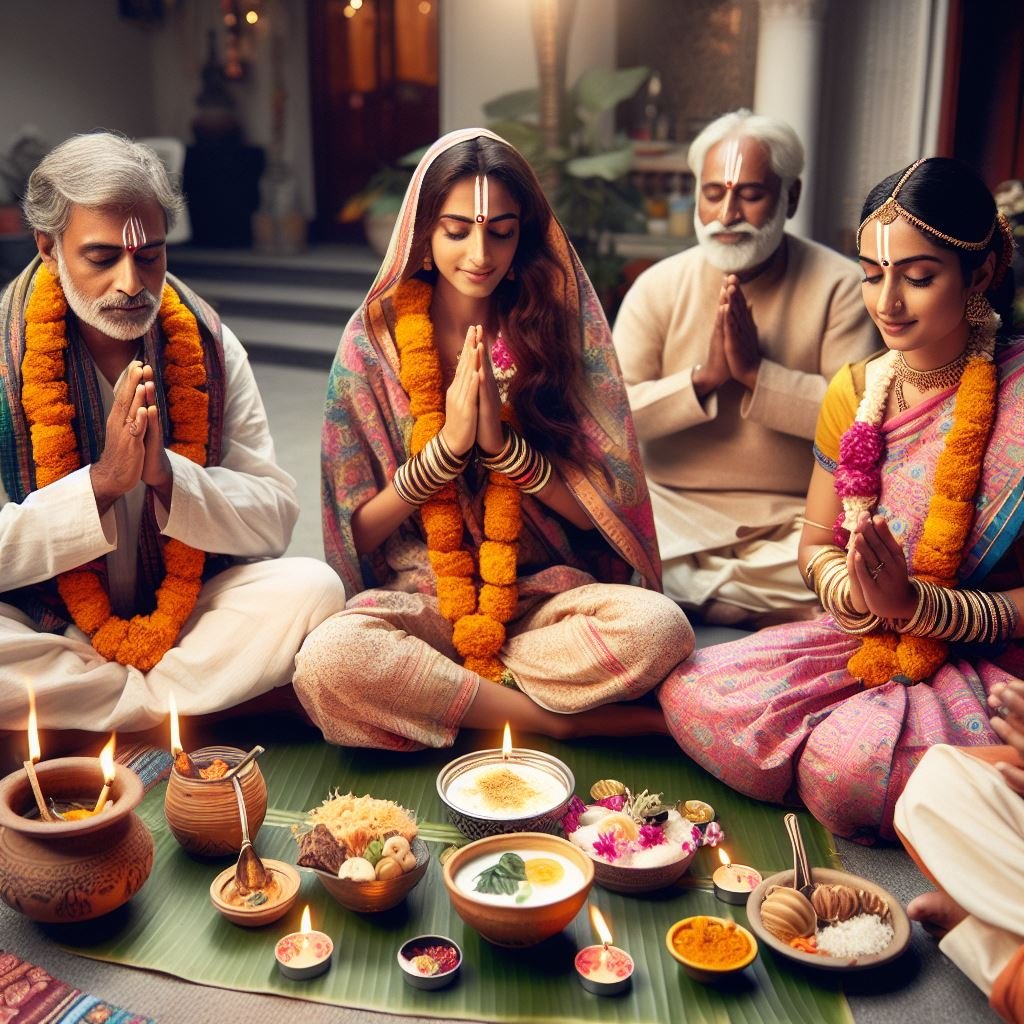
Sweet dishes are definitely made in every household on the day of Basant Panchami. The offerings of sweets made with milk are offered to Goddess Saraswati. Many people also offer yellow colored sweets made with milk to Goddess Saraswati. Yellow-colored food made with pulses and lentils is also preferred on this day.
The Fasting of Aja Ekadashi

Aja Ekadashi Fast

Aja Ekadashi comes on the day of Shravana Krishna Paksha means it comes on the 26th day of Shravana Month. Aja Ekadshi comes exactly after Shravan Poornima. In some parts of India it is celebrated In Bhado month. This Ekadashi has the story of King Harishchandra who was famous for his truthfulness. He was the person of SATYA i.e. TRUTH. In his whole life, he had never uttered a single wrong word.

Aja Ekadashi is done for Lord Vishnu. The person who fasts on this day get blessings from both Lord Vishnu and Goddess Lakshmi. This Ekadashi is also known by the name of Annada Ekadashi.

Aja Ekadashi Katha

When Dharmaraja Yudhishthir asks to Lord Krishna about Aja Ekadashi. He explained the story of King Harishchandra. It is said that King Harishchandra was known for his honesty and truthfulness. One day, Gods decided to test King Harishchandra. The King saw in his dream that he has donated his kingdom to Rishi Vishwamitra.

When the next day, King Harishchandra handed over all his kingdom to Vishwamitra, Rishi Vishwamitra also asked King Harishchandra to gave him 500 gold coins as donation. He told Rishi Vishwamitra that he could ask him for more than just 500 gold coins. On this discussion, Rishi Vishwamitra laughed and reminded him that he has already donated his treasury along with his kingdom, so donation once made cannot be donated again.

Then, the King sold his wife and son to obtain gold coins, but it wasn’t enough, so he sold himself as well and donated all gold coins to Vishwamitra. The person to whom he sold himself was the Chandala of a Crematorium. He assigned his task of collecting taxes for cremation to King Harishchandra.

When many years passed in this way, he was feeling very sad at such type of responsibility and karma. He was started looking for ways to get rid of it. He always started worrying about what should I do? How can I get rid of this evil act? Once upon a time, he was in same tension with the same concern. That time Gautam Rishi reached him. Harishchandra bowed him down and started narrating his sad story.

One day, King Harishchandra fasted for Ekadashi. It was midnight and he was guarding the entrance of Crematorium. The night was completely dark when a crying helpless woman carrying dead body of her son, Rohitashva came there. She was King Harishchandra’s wife, Taramati and son Rohitashwa was King Harishchandra’s own son.

Although by following his duty, King Harishchandra demanded tax from his wife Taramati for cremating their son Rohitashwa. As she had not the money to pay tax, she tore down a piece of her saree and gave it to the King Harishchandra. At the same time the God appeared and blessed, “Dear KIng Harishchandra! You have established the best example of following truth and honesty in life. Your commitment is noble and you will always be remembered.” At that time, the King’s son Rohitash came back to life. With God’s permission, Vishwamitra also returned Harishchandra’s kingdom to him.

When many years passed in this way, he felt very sad at this lowly deed and started looking for ways to get rid of it. He always started worrying about what should I do? How can I get rid of this evil act? Once upon a time, he was seated with the same concern that Gautam Rishi reached him. Harishchandra saluted him and started narrating his sad story.

Hearing the sad story of King Harishchandra, Maharishi Gautama was also very sad and he said to the king: Dear King, The name of Ekadashi of Krishna Paksha of Shravan/Bhadon month is Aja. You should fast on that Ekadashi and awaken at night. This will destroy all your sins. Maharishi Gautam became aloof by saying so.

On the day of Ekadashi named Aja, King Harishchandra performed a fast and nightly awakening according to Maharishi’s instructions. All the sins of the king were destroyed by the effect of this fast. At that time, the drums began to ring in heaven and flowers started to rain. He found Brahma, Vishnu, Mahesh and so many Gods standing in front of him. He saw his deceased son, Rohitashwa alive and his wife, Taramati full of royal clothes i.e. robes and heavy jewellery.

The king regained his kingdom with the effect of fasting. In fact, a sage had done all this to test the king, but with the effect of fasting of Aja Ekadashi, all the illusion created by the sage ended and in the end Harishchandra went to heaven with his family.

The devotee who keeps fasting on Aja Ekadashi, must donate grains to the needy people or Brahmin on Dwadashi. One must perform fasting with devotion. On Ekadashi day, only falahar is done. No grains can be taken. ‘OM NAMO BHAGAWATE VASUDEVAY’ must be chanted.

Why is Varaha Jayanti Celebrated?

Varaha Jayanti Vrat & Katha

Why is Varaha Jayanti Celebrated?

According to Hinduism, Varaha Jayanti festival is celebrated on Tritiya Tithi of Shukla Paksha of Bhadrapada month. On this day, Lord Vishnu worships the third avatar, Varaha Avatar. On the occasion of Varaha Jayanti, devotees follow the hymns of Lord Vishnu – Kirtan, fasting and fasting etc. and wish for happiness and prosperity.

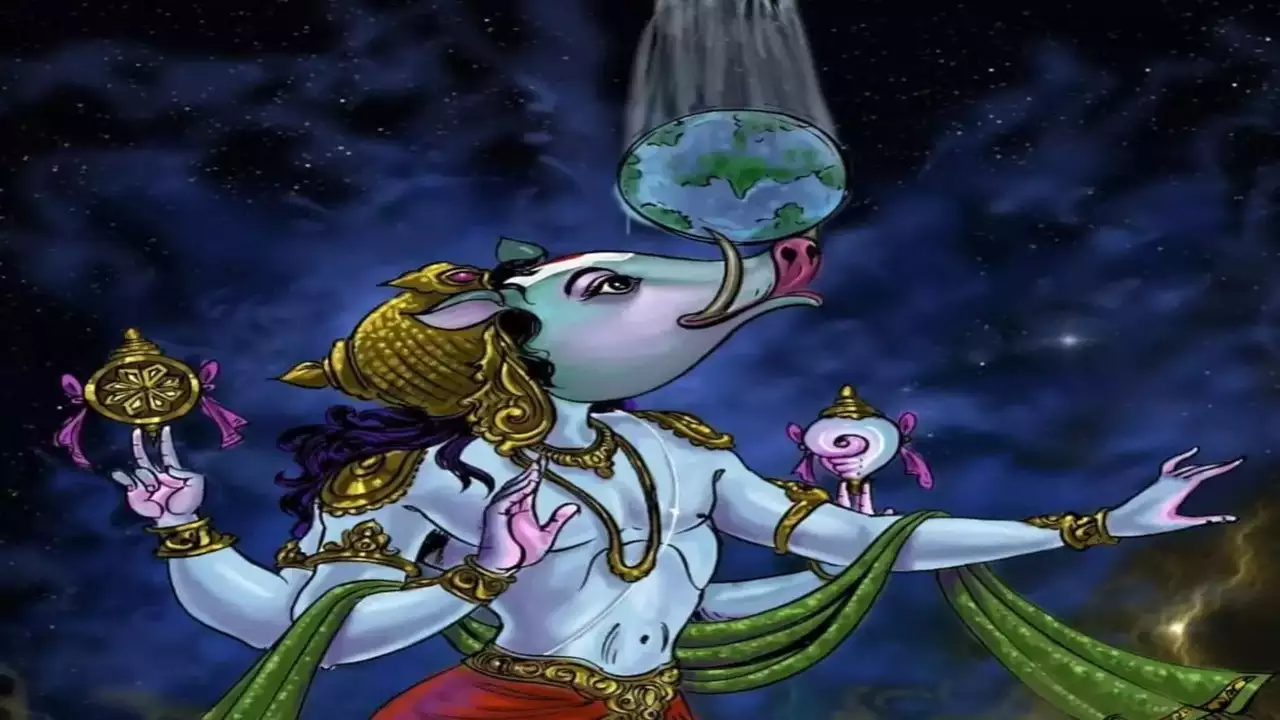
Lord Vishnu was incarnated as half human and half pig. His entire body was blue and his eyes were huge. Lord Varaha defeated Hiranyaksha. Therefore, devotees worship Lord Varaha on this day and pray to get rid of all evils.

Story of Varaha Jayanti

Varaha Jayanti festival

According to Padam Purana, there used to be two gatekeepers named Jai and Vijay in Baikuntha Dham. Once, Sanakadi Yogishwar went to Baikunth Dham with the desire to see Lord Vishnu along with Shri Lakshmi. The gatekeepers named Jai and Vijay intercepted him and treated him indecently.

Sanakadi became very angry with this and cursed both of them – Dwarpals, both of you abandon this abode of God and go to the death world and be born as an asura. With the effect of curse, Kashyapa sage and his wife Diti’s Hiranyaksha. And there were two great sons named Hiranyakashipu.

The tendencies of both were extremely devilish and they had pleased Brahmaji by performing rigorous penance and attained immense powers. On the strength of Hiranyaksha powers, panic started spreading around, his body had become very big. He destroyed this earth with thousands of arms, mountains, seas, islands and whole creatures, and by lifting his power, he took the earth and hid it in the abyss, and then even Varun Dev for war. Varun Dev challenged where Lord Sri Hari is Vishnu who has the ability to fight with you.

Hearing this, Hiranyaksha came out in search of Lord Vishnu, and Shri Hari brought Lord Vishnu from the abyss on his teeth and set him back on Sheshnag. On the other hand Hiranyaksha approached Shri Hari and started to fight for the war, there was a fierce war between Lord Vishnu and that monster. God defeated Hiranyaksha and killed him.

Method of Worship and Mantra

The idol of Lord Vishnu or Lord Varaha is kept in a sacred metal urn and the urn is filled with water, later decorated with mango leaves with coconut, then all these things are donated to the Brahmin by doing pooja etc.

On this day, bathing etc. is done in the morning and donations are given to the needy and fasting is done.

Lord Varaha is pleased by offering butter, honey, milk and yogurt.

Varaha Jayanti Mantra

  • Om Varahay Namaha
  • Om Sukrai Namah
  • ॐ Dhritsukararupa Keshvay Namah

Why to Celebrate Hartalika Teej?

Hartalika Teej

Haritalika Teej is celebrated on 3rd day of Bhado month. Bhado Shukla Paksha 3rd day is called Haritalika Teej. This festival comes before one day of Ganesh Chaturthi. Haritalika Teej has different names in different states. In Karnataka, Tamilnadu and Andhra Pradesh, this Teej festival is called Gouri Habba. In Gujarat this Teej is called Kevada Trij. The Teej festival is celebrated in different parts of India.

According to Hindu mythology, Goddess Parvati found Lord Shiva as her husband on the fortunate day of Hartalika Teej. This is the day that celebrates her exceptional devotion and penance for 108 consecutive births following which Lord Shiva became her partner.

For the same reason, the day is considered auspicious for women and girls alike. On the eve of Hartalika Teej, women worship Goddess Parvati to seek her blessings for a successful married life. The statues of Goddess Parvati and Lord Shiva are made with sand and are worshipped for wellbeing of spouses and blessing for healthy children.

It refers to the event that took place before Mata Parvati got married to Lord Shiva. According to a legend associated with this Teej, Mata Parvati’s father had chosen Lord Vishnu for her, but since she wanted to get married to Lord Shiva, she sought help from one of her friends. Hartalika is a combination of two Sanskrit words Harat (kidnap) + Aalika (female friend). It refers to the event that took place before Mata Parvati got married to Lord Shiva.

According to a legend associated with this Teej, Mata Parvati’s father had chosen Lord Vishnu for her, but since she wanted to get married to Lord Shiva, she sought help from one of her friends. Mata Parvati’s friend “abducted” her and took her to a thick forest where she could hide. The word ‘abduction’ shouldn’t be misinterpreted here because it is not actually abduction. In this context, it is a gesture of lending help to a friend who wished to marry the man of her choice.

On the day of Hartalika Teej, women prepare clay idols of Lord Shiva and Mata Parvati and worship them for a blissful married life. This ritual is similar to the Hariyali Teej festivities. Haritalika Teej which is also called Kewda Trij, is a Hindu ritual observed mainly in Gujarat on the third day of the Shukla Paksha of Bhadarvo in Gujarat. Married and unmarried women observe a fast on the day and offer Kewda flower to Goddess Parvati and Lord Shiva.

Married women observe the Kevada Trij Vrat for a prosperous and happy married life and for the well-being of their husbands. Unmarried women observe it for getting a good husband. Flowers of Kevada are offered to Lord Shiva and Goddess Parvati on the day.

Women also offer special prayers in Lord Shiva Temples. Some women keept for complete fast others observe a partial fast on the day. Some part of India, women celebrate this festival without water in a day. Some part of India, women celebrate this festival with only bananas. Some part of India, Women celebrate this festival with falahar. On haritalika Teej or Kevada Trij, grains should not be taken at all. Kevada plant is popularly known as fragrant screw pine.

The flower is known Kevada ( Gujarati and Hindi), Thazhampoo (Tamil), Ketaki / Dhuli Pushpam (Sanskrit).

It must be noted here that Kevada flower was cursed by Lord Shiva and is only used in Shiva puja on very special occasion of Kevada Trij. There is the reason behind it. Goddess Parvati has stopped taking food, fruits and water etc. and started tough fasting VRATAM till so many days. Goddess Parvati had started offerings flowers from jungle. So many thorny flowers, bilvapatra, Kevada flower and Kevada patra on Shivlinga. This was a very tough Vratam of Goddess Parvati so Lord Shiva was pleased and became ready to marry her afterwards.

But that was the day of Bhado Shukla Paksha Teej and Nakshatra was Hasta. By mistake Goddess Parvati had offered Kevado also. So only on this day Kevado is offered to Lord Shiva. Women in Gujarat who keeps fasting on Trij, can take water or banana after smelling Kevada patra. In some parts of India, Haritalika Vrat puja is done for four prahars means four times in a day. Morning, Noon, Evening and Night. On Ganesh Chaturthi the Visarjan is done with Puja.

recent

Categories