loading

Category: Festival

  • Home
  • Category: Festival

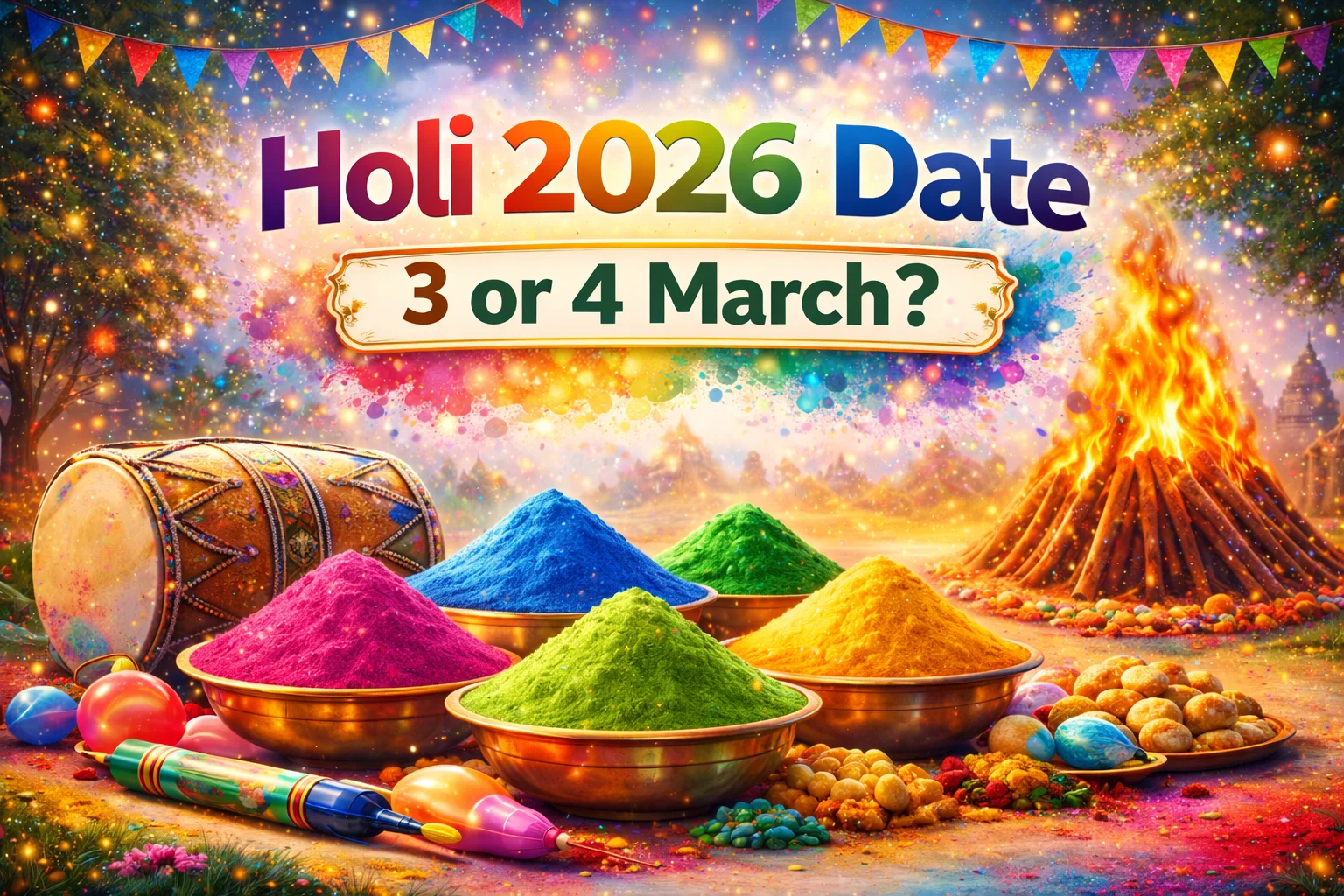
Holi 2026 Date: Will Holika Dahan Be on 3rd or 4th March? (Complete Astrological Guide)

Holi is not just a festival of colors — it is a deeply significant Hindu festival that is governed by precise Panchang calculations and astronomical timings. Every year, confusion arises regarding the correct date of Holika Dahan and Rangwali Holi because these rituals depend on the alignment of Tithi, Nakshatra, and most importantly, Bhadra Kaal.

In 2026, many devotees are asking an important question:

Will Holika Dahan be celebrated on 3rd March or 4th March 2026?

If you are planning your Holika Dahan Puja Muhurat or simply want to observe the festival according to Vedic astrology and Shastra-approved timing, this detailed guide will clarify the exact Holi 2026 date with astrological reasoning.


Holi 2026: Important Dates

  • Holika Dahan: 3rd March 2026 (Tuesday)
  • Rangwali Holi (Dhulandi): 4th March 2026 (Wednesday)

But why is Holika Dahan not on 4th March when Purnima Tithi extends into that day? The answer lies in the concept of Bhadra.


Understanding the Role of Purnima Tithi in Holika Dahan

Holika Dahan is always performed on the night of Phalguna Purnima. However, performing the ritual simply because Purnima exists is not sufficient. According to Dharmashastra and Muhurat Chintamani, Holika Dahan must meet the following conditions:

  1. Purnima Tithi should prevail during Pradosh Kaal (after sunset).
  2. Bhadra should not be present during the Holika Dahan Muhurat.
  3. Nighttime is preferred for the ritual as it symbolizes the destruction of negativity.

In 2026, Purnima Tithi begins before sunset on 3rd March and continues into 4th March. But the presence and timing of Bhadra determines whether the ritual is Shubh or Ashubh.


What is Bhadra and Why Should Holika Dahan Avoid It?

Bhadra is a period associated with the Vishti Karana, which is considered inauspicious for performing sacred rituals, especially those involving Agni (fire). Since Holika Dahan is a fire ritual, performing it during Bhadra Kaal is strictly prohibited in traditional Vedic practices.

Shastra clearly states:

शुभ कार्याणि भद्रायां न कुर्वीत कदाचन

Meaning, auspicious works should never be performed during Bhadra.

If Holika Dahan is performed during Bhadra, it is believed to bring obstacles, disputes, and negative outcomes for the household or community conducting the ritual.


Holika Dahan Muhurat 2026 (As Per Panchang)

On 3rd March 2026, Purnima Tithi will be present during Pradosh Kaal and Bhadra will not prevail during the suitable nighttime window for Holika Dahan.

Therefore, the most Shubh Muhurat for Holika Dahan in 2026 falls on the evening of 3rd March after sunset when:

  • Purnima Tithi is active
  • Bhadra is not influencing the Muhurat
  • Pradosh Kaal is present

Performing Holika Dahan on 4th March would either fall outside the ideal Pradosh Kaal or may coincide with unfavorable Karana influence, making it less appropriate according to Vedic Muhurat rules.


Why Rangwali Holi is Celebrated on 4th March 2026

The festival of colors — also known as Dhulandi or Rangwali Holi — is always celebrated on the day following Holika Dahan. Since Holika Dahan will take place on the night of 3rd March 2026, Rangwali Holi will naturally be observed on 4th March 2026.

This follows the traditional sequence:

  • Night: Symbolic burning of Holika (evil)
  • Next Morning: Celebration of victory of devotion and righteousness with colors

Spiritual Significance of Holika Dahan

Holika Dahan commemorates the victory of Prahlad’s devotion over the arrogance of Hiranyakashipu and the evil intentions of Holika. From an astrological perspective, the ritual is believed to:

  • Burn accumulated negative energies
  • Remove planetary afflictions
  • Reduce the impact of malefic grahas
  • Neutralize evil eye and doshas
  • Bring peace and prosperity

Many astrologers recommend specific remedies on Holika Dahan night such as:

  • Offering coconut in the sacred fire
  • Burning mustard seeds or black sesame
  • Parikrama of Holika for family well-being
  • Chanting Narasimha Mantra for protection

These remedies are especially beneficial for individuals experiencing Rahu, Ketu, or Shani-related challenges in their horoscope.


Astrological Remedies to Perform on Holika Dahan Night

To maximize the spiritual benefits of Holika Dahan 2026, you may perform the following Vedic remedies:

1. Financial Stability Remedy

Offer 7 Gomti Chakras into the Holika fire while praying for removal of financial blockages.

2. Protection from Negative Energies

Burn camphor, cloves, and guggul in the fire to eliminate negativity and vastu dosha from your surroundings.

3. Career Growth Remedy

Take 11 betel nuts (supari) and offer them into the fire while chanting your Ishta Devata mantra.

4. Family Harmony Remedy

Perform 7 circumambulations (Parikrama) of Holika with family members for peace and unity.


Panchang-Based Festival Observance: Why It Matters

Observing Holika Dahan according to Panchang ensures that your rituals align with cosmic rhythms. In Vedic astrology, timing is not symbolic — it is functional. Performing a ritual at the wrong Muhurat may reduce or negate its intended spiritual effect.

That is why accurate festival timing based on:

  • Tithi n- Karana
  • Nakshatra
  • Pradosh Kaal
  • Bhadra presence

is essential for achieving desired outcomes from spiritual practices.


Final Verdict: Holi 2026 Date

After analyzing Panchang calculations and Muhurat principles:

  • Holika Dahan should be performed on 3rd March 2026 (Tuesday).
  • Rangwali Holi will be celebrated on 4th March 2026 (Wednesday).

Devotees are advised to avoid performing Holika Dahan during Bhadra and strictly follow the evening Muhurat on 3rd March for best results.


If you wish to know the exact Holika Dahan Muhurat for your city or want personalized astrological remedies based on your birth chart, you may consult a qualified Vedic astrologer for accurate guidance.

Celebrate Holi 2026 with the right Muhurat and invite positivity, prosperity, and spiritual protection into your life.

Happy Holi!
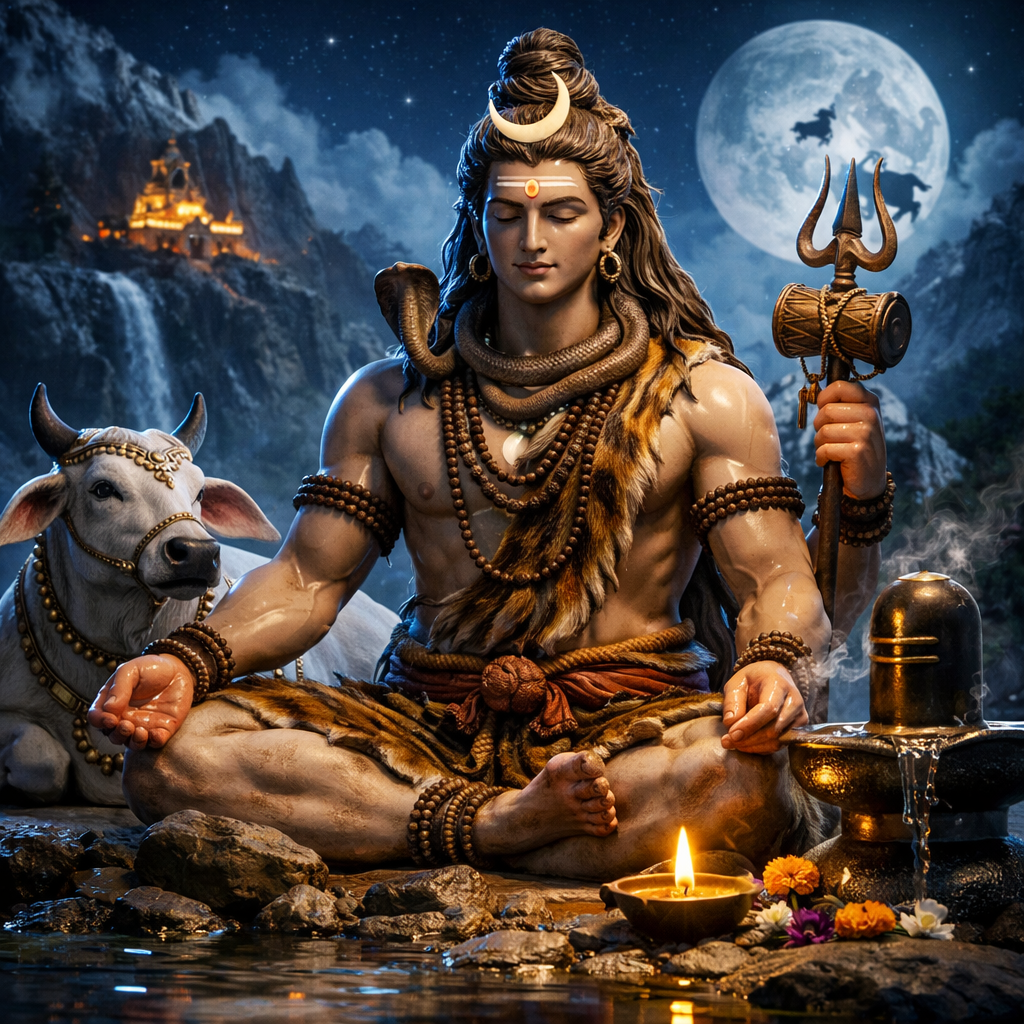
Mahashivratri 2026 — Complete Guide: Meaning, Date, Celebration, Puja Vidhi & Auspicious Muhurat

Mahashivratri is one of the most sacred and spiritually profound festivals in the Hindu tradition. Dedicated to Lord Shiva — the Supreme Destroyer of ego, remover of sins, and the cosmic dancer — Mahashivratri symbolizes the eternal cycle of creation, preservation, dissolution, and rebirth. It is a night of meditation, introspection, divine remembrance, and devotion.

In 2026, devotees across India and the world will observe Mahashivratri with deep reverence through fasting, night-long worship (jagran), mantra chanting, and traditional Shiva puja. This festival is not merely ritualistic — it embodies deep spiritual meanings and offers seekers transformative experiences when observed with devotion and consciousness.

This comprehensive guide explores Mahashivratri 2026 — its meaning, significance, history, rituals (puja vidhi), festive practices, auspicious timings (muhurat), and profound spiritual insights.


1. What Is Mahashivratri?

Mahashivratri 2026 — Complete Guide: Meaning, Date, Celebration, Puja Vidhi & Auspicious Muhurat

Mahashivratri (महाशिवरात्रि) literally means “The Great Night of Shiva.” It is observed on the Chaturdashi (14th lunar day) of Krishna Paksha (the waning moon) in the month of Phalguna according to the Hindu calendar. This places Mahashivratri typically in February or March each year.

Unlike other festivals celebrated in daylight or throughout the day, Mahashivratri is observed throughout the night, symbolizing deep inner reflection, spiritual awakening, and the transcendence of mind’s darkness into divine light.

The festival honors Lord Shiva’s cosmic roles:
Destroyer of ego and illusion (Maya)
Remover of sins and obstacles
Embodiment of supreme consciousness
Lord of meditation and inner silence
Harbinger of eternal peace and liberation


2. Mahashivratri 2026 — Date & Auspicious Timings

For 2026, the key details are:

🗓️ Mahashivratri Date: Tuesday, March 17, 2026

🌒 Chaturdashi Tithi Begins: Evening of March 16, 2026
🌒 Chaturdashi Tithi Ends: Night of March 17, 2026

📿 Shubh Muhurat for Shiva Puja:
Evening / Night Hours — cherished for Shiva worship
✔ Exact muhurat times vary by location

Since Mahashivratri is observed through the night, devotees begin Shiva puja after sunset and continue until the early hours of the next morning.

For location-based precise muhurat timing (especially for your city or birth chart), it’s recommended to consult a qualified astrologer or use a detailed Panchang.


3. Why Is Mahashivratri Celebrated? Legends & Meaning

Mahashivratri has deep mythological roots and spiritual symbolism that enrich the festival’s meaning.


Legend 1: The Marriage of Shiva and Parvati

One of the most beloved beliefs is that Mahashivratri marks the divine union of Lord Shiva and Goddess Parvati. In this tradition, their cosmic marriage represents:
• Balance of masculine and feminine energies
• Union of consciousness (Shiva) and energy (Shakti)
• Harmony of the inner and outer worlds

The convergence of these opposites symbolizes harmony, wholeness, and the source of creation itself.


Legend 2: Shiva Drinks the Poison from Samudra Manthan

During the mythological event of Samudra Manthan (churning of the ocean), a deadly poison (Halahala) emerged that threatened all life. To save existence, Lord Shiva drank the poison. His throat turned blue — earning him the name Neelkanth (the blue-throated one).

Mahashivratri is celebrated as an homage to Shiva’s selfless act — a reminder that:
• True strength lies in self-sacrifice
• Courage is essential for spiritual growth
• Divine grace protects the universe


Symbolic Meaning of Mahashivratri

Mahashivratri is not just a festival — it is a spiritual observance representing:
✔ Victory over ego and ignorance
✔ Triumph of consciousness over illusion
✔ Deep inner silence and meditation
✔ Alignment with the cosmic truth

Fasting, night-long vigil, and chanting on this day reflect a seeker’s intention to conquer primal impulses and uplift the soul.


4. How Mahashivratri Is Celebrated in 2026

Mahashivratri celebrations combine devotion, ritual discipline, and spiritual focus.


A. Fasting (Upavasa)

A central feature of Mahashivratri is fasting. Devotees observe either:
Full fast (no food, only water)
Partial fast (fruit, milk, or light offerings)

The fast is observed from sunrise on the day of Mahashivratri until the next morning, symbolizing purity, self-control, and spiritual discipline.


B. Night-Long Worship (Jagran)

Staying awake all night in Shiva’s remembrance is a key practice. Devotees:
✔ Chant Shiva mantras (especially Om Namah Shivaya)
✔ Sing devotional bhajans
✔ Meditate in silence
✔ Visit temples for darshan

Remaining awake signifies full alertness of consciousness, a symbolic rejection of sleep (ignorance) and embrace of divine awareness.


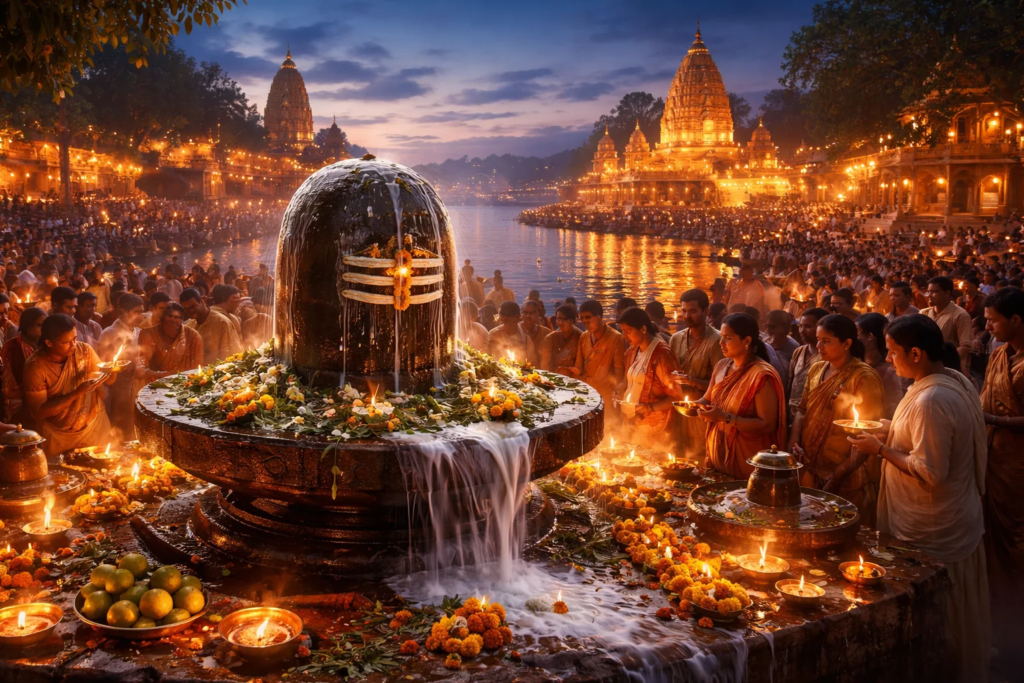
C. Shiva Puja & Abhishekam Rituals

Puja rituals performed on this day often include:

1. Shiva Linga Abhishekam

The Shiva Linga (symbol of Shiva consciousness) is bathed sequentially with:
• Water
• Milk
• Honey
• Yogurt
• Sugarcane juice
• Ghee (clarified butter)
• Bel (Bilva) leaves

Each offering represents purification and devotion. Bel leaves, especially, are considered the most sacred offering to Shiva.


2. Chanting Sacred Mantras

Devotees chant powerful mantras such as:

Om Namah Shivaya — The most sacred Shiva mantra
Maha Mrityunjaya Mantra — For protection and liberation
Rudram Chamakam — Ancient Vedic hymn for spiritual elevation


D. Temple Visits & Community Celebrations

Mahashivratri brings temples alive with:
✔ Processions
✔ Sacred chants
✔ Lingam pujas
✔ Devotional gatherings
✔ Community feasts (after the fast)

Major temples like Kedarnath, Varanasi, Somnath, Mahakaleshwar, and Amarnath see large pilgrimages with deep spiritual resonance.


E. Meditation & Inner Reflection

While rituals focus outwardly, Mahashivratri is ultimately a night of inner silence and introspection — a time to:
• Reduce distraction
• Focus on breath and mantra
• Let go of past burdens
• Experience inner stillness

This inward shift transforms Mahashivratri into not just a festival, but a life-changing observance.


5. Puja Vidhi — How to Perform Mahashivratri Worship

Here’s a step-by-step guide to observing Mahashivratri puja at home:


Step 1: Cleanse the Space

• Wash hands and feet
• Light incense and lamps
• Place a clean cloth for Shiva puja


Step 2: Prepare Shiva Linga

• Place a Shiva Linga (stone or metal idol)
• Decorate with flowers


Step 3: Begin with Ganesh Puja

Invoke Lord Ganesha first — the remover of obstacles — and seek his blessings for successful puja.


Step 4: Chanting & Offerings

• Start chanting Om Namah Shivaya
• Offer clean water first
• Then perform Abhishekam with milk, honey, curd, sugarcane juice, and ghee
• Place fresh Bel leaves
• Offer flowers and fruits


Step 5: Evening Aarti and Night Puja

Perform aarti in the evening. Continue chanting through the night with devotion and focus.


Step 6: Breaking the Fast

The fast may be broken the next morning after Shiva puja is complete.


6. Mahashivratri & Astrology — Why This Night Is Special

Astrologically, Mahashivratri falls on the Chaturdashi Tithi of Krishna Paksha during the month of Phalguna — a time when lunar energies are in transition. This alignment is believed to:
✔ Amplify inner intuition
✔ Deepen meditation
✔ Accelerate spiritual growth
✔ Reduce karmic blockages

The night symbolizes the confluence of cosmic energies — a moment when spiritual aspiration is highly receptive.

Many astrologers advise:
• Chant mantras after sunset through midnight
• Focus on inner silence between 10pm–2am

These hours are considered especially powerful for prayer and meditation.


7. Spiritual Benefits of Observing Mahashivratri

Mahashivratri is far more than ritual — when observed with devotion and sincerity, it is believed to bring:

💜 Inner Peace & Balance
🔱 Release from Ego & Attachments
🌙 Heightened Spiritual Awareness
🔥 Cleansing of Past Sins (Karma)
🧘 Strengthened Meditation & Focus
🌟 Guidance from Lord Shiva’s Conscious Presence

Lord Shiva is often described as the ultimate yogi — calm, still, and untouched by worldly disturbance. On Mahashivratri, devotees seek to align their own consciousness with this peaceful state.


8. Frequently Asked Questions (FAQ)

Q: Is fasting mandatory on Mahashivratri?

A: Fasting is highly recommended, though the type of fast (full or partial) can vary according to personal capacity and health.

Q: When should the puja be started?

A: The puja is traditionally started after sunset and continued through the night.

Q: Why stay awake all night?

A: Staying awake symbolizes vigilance over the mind and surrender to Shiva’s consciousness.

Q: What should be offered to Lord Shiva?

A: Bel leaves, milk, water, honey, yogurt, flowers, fruits, and incense.


9. Conclusion

Mahashivratri 2026 is a night of deep significance, spiritual awakening, and divine remembrance. Whether you observe it through fasting, puja, mantra chanting, meditation, or temple visits, the festival invites you to let go of ego and align with the silent, eternal presence of Lord Shiva.

On this sacred night, may you find peace in stillness, clarity in silence, and strength through surrender.

Holi 2026 – Date, Significance, Rituals & Spiritual Meaning

Holi is one of India’s most vibrant and joyful festivals — celebrated as the Festival of Colours, the Festival of Love, and the Triumph of Good over Evil. It marks the arrival of spring, the renewal of life, the end of winter’s gloom, and the strengthening of bonds among family and community members. In 2026, Holi will be celebrated with traditional fervour, colour fights, bonfires, cultural rituals, music, sweets, and deep symbolic meaning.


🗓️ Holi 2026: Date & Muhurat

According to the Hindu lunar calendar:

  • Holika Dahan (Chhoti Holi): Tuesday, March 3, 2026 (Evening) – sacred bonfire ritual.
  • Rangwali Holi (Main Festival of Colours): Wednesday, March 4, 2026 – joyful color play celebration.

Holi is traditionally observed over two days: the night before with bonfires that symbolize the destruction of negativity, and the next day with colours, music, dance, and celebration.


🔥 The Story Behind Holi

🛕 1. Holika and Prahlad — Triumph of Good over Evil

One of the most famous legends associated with Holi is that of Prahlad and Holika. The demon king Hiranyakashipu opposed his son Prahlad’s devotion to Lord Vishnu. To punish him, his sister Holika — who had a boon of fire immunity — sat on a pyre with Prahlad in her lap. But the fire consumed Holika while Prahlad remained unharmed due to his unwavering devotion, symbolizing the victory of righteousness over evil.

The next day, people play with colours to celebrate this victory and the triumph of faith and devotion.

🎨 2. Radha–Krishna and Love

Another beloved legend comes from the Braj region: the youthful Lord Krishna, with his dark complexion, was anxious whether his beloved Radha would accept him. Krishna’s mother suggested he playfully colour Radha’s face — and she did, marking the origin of colourful Holi celebrations that now commemorate divine love and unity.


🌈 Why Holi Is Celebrated—Deeper Meaning

Holi is more than colour throwing. Its deeper themes include:

🌼 1. Renewal & Spring

Holi welcomes the season of bloom, fertility, and growth, moving away from winter stagnation toward life’s vibrancy and renewal.

🤝 2. Unity & Social Harmony

During Holi, distinctions of caste, class, age, and gender blur. People forgive past grievances, strengthen friendships, and renew bonds of community and friendship.

🌞 3. Triumph of Good over Evil

Every bonfire on Holika Dahan represents the destruction of negativity, hatred, and ignorance — inviting purity, righteousness, and joy.

🧡 4. Divine Play & Love

Whether through the legends of Krishna and Radha or other regional stories, Holi reminds humanity of joy, love, devotion, and spiritual connection.


🎉 How Holi Is Celebrated in 2026

🔥 Holika Dahan (Chhoti Holi)

The festival begins with Holika Dahan on the evening of March 3, 2026 — bonfires lit in communities signify the burning of Holika and the victory of devotion and righteousness.

Families gather around flames, perform puja, sing devotional songs, and offer grains or coconuts into the sacred fire. Traditionally, this act is believed to purify the home and dispel negative forces.

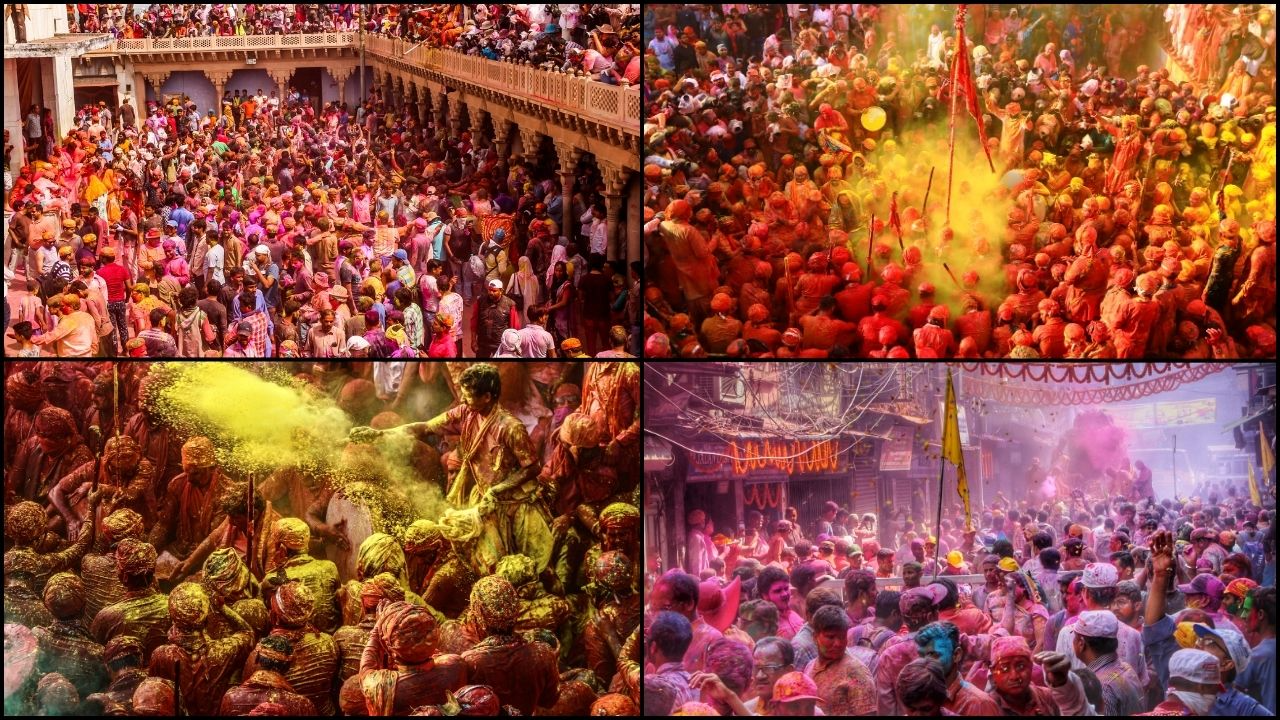
🌈 Rangwali Holi — Colour Play Day

On March 4, 2026, the joyous colour play (also called Rangwali Holi or Dhulandi) begins:

  • People throw gulal (colored powders) and coloured water at each other.
  • Music, dance, riverside celebrations, and street parties fill the day with festive energy.
  • Traditional delicacies like gujiya, mathri, thandai, and sweets are shared with friends and family.

🍭 Food & Traditions

Food plays a big role in Holi celebrations:

  • Gujiya: Sweet dumplings filled with khoya and nuts.
  • Thandai: A refreshing spiced milk drink sometimes associated with festive tradition.
  • Festive Music and Dance: Holi songs (Holi geet), folk dances, and drumming traditions bring communities together.

🧠 Spiritual Significance of Colours

Each colour used during Holi carries symbolic meaning:

  • Red: Represents love and fertility.
  • Blue: Linked with Krishna, divine joy, and life force.
  • Green: Symbolises nature and new beginnings.

Throwing colours thus becomes a lived spiritual metaphor for dissolving ego, ignoring divisions, and celebrating life’s unity.


🪬 Regional Variations of Holi in India

While the core spirit of Holi remains the same across India, traditions vary by region:

🌼 Braj & Vrindavan (Uttar Pradesh)

Braj Holi begins early and lasts for weeks with events like Laddu Holi in Barsana and Lathmar Holi where playful stick duels take place.

🪶 North India

Cities like Delhi, Jaipur, and Agra host massive open celebrations with music, colour throws, and sweets.

🌍 International Celebrations

Holi’s spirit has spread globally and is celebrated in parts of the United States, Europe, and Asia as a cultural celebration of spring and unity.


Holi’s Social & Cultural Benefits

Holi has a strong societal impact:

  • It fosters community solidarity and breaks down barriers between people.
  • It celebrates renewal and optimism as winter gives way to spring.
  • It invites people to forgive past grievances and move forward with joy and compassion.

📿 Astrological & Spiritual Reflection

From an astrological perspective, Holi falls around the full moon (Purnima) of Phalguna — a time associated with illumination, emotional cleansing, and heightened intuitive awareness. Full Moon days are traditionally viewed as powerful for letting go of old patterns and aligning with positive energies.

Celebrating Holi consciously — with intention rather than just revelry — is believed to help release negative thought patterns and invite mental clarity, joy, and emotional growth.


🌺 Modern Practices & Safety Tips

To enjoy Holi safely in 2026:

✔ Use natural, herbal colours to protect skin and environment.
✔ Wear comfortable old clothes that can be stained without concern.
✔ Protect eyes and skin with sunscreen or oil before colour play.
✔ Stay hydrated amid outdoor activities.


Conclusion

Holi 2026 is not just a festival of colours but a sacred celebration of life, love, community, spiritual renewal, and the eternal victory of good over evil. Whether you embrace its ancient legends, participate in joyous colour play, or reflect on its deeper meanings, Holi invites us to celebrate unity, compassion, hope, and the joyful colours of life.

May your Holi be filled with laughter, harmony, and vibrant hues!

Mahashivratri 2026: Significance, Rituals, Story & Spiritual Benefits

Mahashivratri is one of the most sacred and powerful festivals in the Hindu calendar — a night dedicated entirely to Lord Shiva, the divine embodiment of destruction, transformation, and supreme consciousness. Celebrated on the Chaturdashi (14th lunar day) of Krishna Paksha in Phalguna, Mahashivratri is a time for introspection, devotion, meditation, and spiritual awakening.

In 2026, devotees across India and around the world will observe Mahashivratri with deep reverence, chanting, fasting, and night-long worship — seeking Shiva’s blessings for peace, inner strength, and liberation.


🕉️ What Is Mahashivratri?

Mahashivratri literally means the “Great Night of Shiva.” It commemorates the union of Shiva and Shakti, representing the balance of masculine and feminine cosmic forces. Unlike most festivals marked by one day of celebration, Mahashivratri is observed through an entire night of worship, meditation, and vigil (jagran), signifying the transcendence of darkness and ego.

It’s believed that on this night:

• Shiva performs the Tandava — his cosmic dance of creation and destruction
• Sins are washed away
• Devotees attain spiritual elevation
• Karma cycles are eased

Devotees fast, chant mantras, and stay awake all night to honor Lord Shiva’s infinite power and grace.


🗓️ Mahashivratri 2026: Date & Muhurat

In 2026, Mahashivratri falls on:

🗓️ Date: TBD based on Panchang (check updated calendar as the Chaturdashi Tithi moves)
🌒 Best Puja Time (Shubh Muhurat): Specific timing based on local Panchang
📌 Fasting Begins: Morning before the Chaturdashi Tithi
📌 Fasting Ends: Next morning after sunrise

For exact Shubh Muhurat times according to your city and kundli details, consult an expert astrologer.


📜 The Legends Behind Mahashivratri

Mahashivratri is rooted in rich mythological stories, each symbolizing profound spiritual truths:

🔹 1. The Marriage of Shiva & Parvati

One tradition holds that Mahashivratri is the night when Lord Shiva and Goddess Parvati were married. This union represents the harmony of consciousness (Shiva) and energy (Shakti), reminding devotees that inner balance is essential for spiritual progress.

🔹 2. The Story of the Samudra Manthan (Churning of the Ocean)

During the churning of the ocean by Gods and demons (Samudra Manthan), a deadly poison (Halahala) emerged that threatened all existence. Lord Shiva drank this poison to save the world, holding it in his throat — turning it blue and earning him the name Neelkanth. Mahashivratri is celebrated in honor of this act of selfless protection and cosmic balance.


🌙 How Mahashivratri Is Observed

Mahashivratri is a deeply spiritual festival, and devotees observe it with specific rites and practices:

🛕 1. Fasting (Upavasa)

Most devotees observe a strict fast from sunrise to the next morning. Some eat fruits or milk; others undertake a full fast. The discipline of fasting purifies the body and mind, aiding spiritual focus.

🔔 2. Night-Long Worship (Jagran)

Devotees remain awake all night, chanting Shiva mantras, singing bhajans, and meditating on Lord Shiva’s form. Staying awake symbolizes vigilance against ignorance and attachment.

🪔 3. Abhishekam (Sacred Bath of Shiva Linga)

The Shiva Linga is bathed with:

• Water
• Milk
• Honey
• Yogurt
• Ghee
• Sugar
• Bel (Bilva) leaves

Each item has symbolic meaning — purity, nourishment, and devotion.

📿 4. Chanting Mantras

The most powerful mantra on Mahashivratri is:

🔹 “Om Namah Shivaya”
This five-syllable mantra is believed to cleanse the aura, calm the mind, and deepen spiritual awareness.


🪷 Bel (Bilva) Leaves & Their Importance

Offering Bel leaves to Shiva is considered highly sacred. Legend says the trifoliate leaf symbolizes:

Body
Mind
Soul

When offered with devotion, the leaf is believed to remove sins and invite divine blessings.


🌟 Spiritual Benefits of Mahashivratri

Mahashivratri is not just ritual — it is an opportunity for transformation.

💜 1. Removal of Sins

Devotees believe sincere worship on this night can help dissolve past negative karmas and elevate consciousness.

🧘 2. Inner Peace

Meditation and mantra chanting help calm the mind and reduce emotional turbulence.

🔥 3. Spiritual Awakening

The night symbolizes transcendence — moving beyond ego into higher awareness.

🌌 4. Strength & Courage

Lord Shiva is the embodiment of inner strength and fearlessness — qualities that devotees pray to imbibe.


🪄 Tips for Observing Mahashivratri 2026

✔ Begin the day with prayer and fasting
✔ Visit a Shiva temple for darshan during the evening
✔ Offer Bel leaves, fruits, and water to the Shiva Linga
✔ Chant “Om Namah Shivaya” continuously
✔ Meditate or sit in silence during the midnight hours


🧠 Mahashivratri & Astrology

From an astrological perspective, Mahashivratri falls under the influence of the Chaturdashi Tithi when introspection and surrender are energetically supported. Planetary alignments on this night are believed to enhance spiritual receptivity, making it an auspicious time for mantra chanting and meditation. For personalized benefits and ideal activities, a kundli consultation can offer deeper guidance.


Conclusion

Mahashivratri 2026 is more than a festival — it is a night of spiritual purification, courage, and awakening. By observing fasting, chanting, meditation, and night-long worship, devotees honor the infinite grace of Lord Shiva and invite peace, balance, and clarity into their lives.

May this Mahashivratri bring you strength, wisdom, and divine blessings.

9 Beautiful Rangoli Designs for Dhanteras, Roop Chaturdashi & Diwali 2026

Rangoli is an ancient Indian art form that holds deep cultural and spiritual significance, especially during major festivals like Dhanteras, Roop Chaturdashi (Narak Chaturdashi), and Diwali. These colorful patterns are created at the entrance of homes to welcome Goddess Lakshmi, remove negative energy, and invite prosperity, peace, and happiness.

In 2026, as families prepare to celebrate Diwali with devotion and joy, creating auspicious rangoli designs becomes an important part of festive rituals. Each rangoli symbolizes positivity, divine blessings, and harmony.

In this article, explore 9 stunning rangoli designs perfect for Dhanteras, Roop Chaturdashi, and Diwali 2026 — along with their meanings and spiritual benefits.


🌸 Importance of Rangoli During Diwali Festivals

Rangoli is believed to attract positive vibrations and divine energies into the home. According to Hindu traditions:

• Bright colors symbolize happiness and abundance
• Geometric patterns bring balance and harmony
• Floral designs represent purity and beauty
• Diya motifs invite prosperity and divine light

During Dhanteras and Diwali, rangoli is especially important as it is said to guide Goddess Lakshmi into the house.


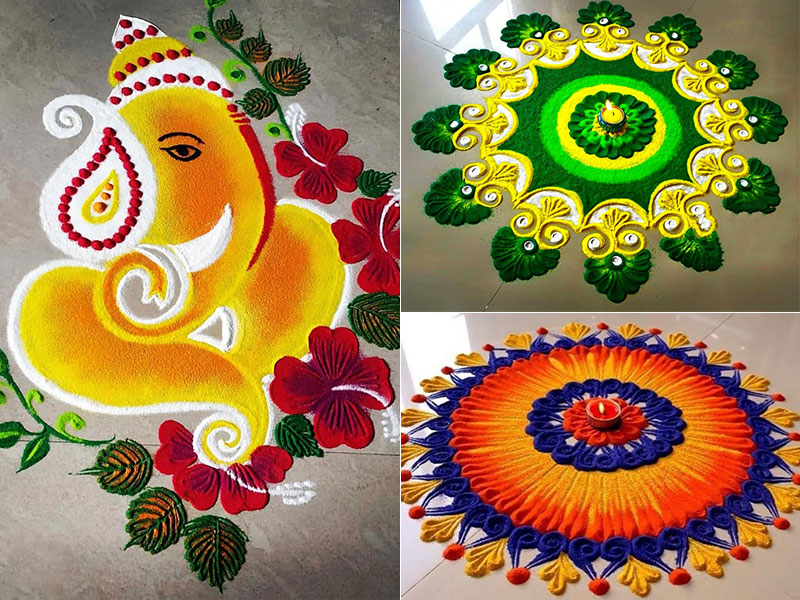
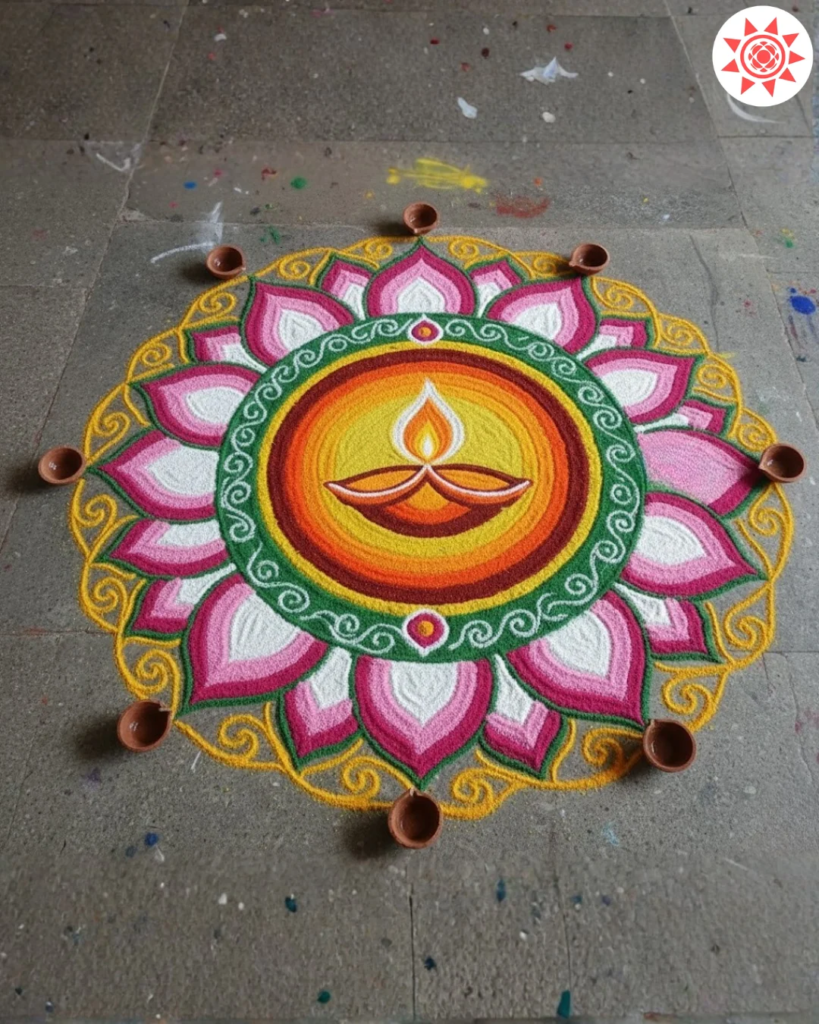
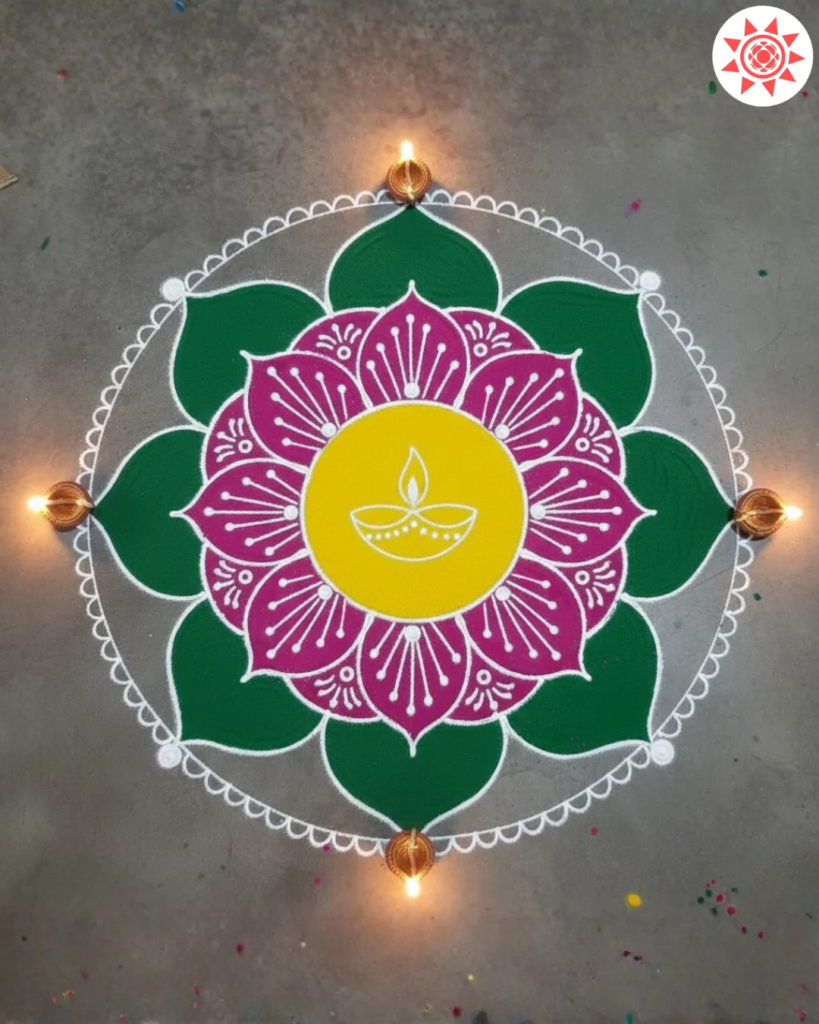
🎨 1. Traditional Lotus Rangoli

The lotus is a sacred symbol associated with Goddess Lakshmi. Creating a lotus-shaped rangoli in pink, white, and yellow shades brings:

✅ Wealth and prosperity
✅ Spiritual purity
✅ Positive energy

Place it near the main entrance or puja area for maximum benefit.


🪔 2. Diya Rangoli with Golden Borders

A rangoli featuring glowing diyas symbolizes victory of light over darkness.

Best colors: Orange, yellow, red, and gold
Benefits:
✨ Removes negativity
✨ Brings peace and prosperity
✨ Enhances festive beauty

Perfect for Diwali night celebrations.


🌼 3. Floral Mandala Rangoli

Mandala designs are circular patterns that represent cosmic harmony.

Using flower petals or bright powders in circular layers creates a divine effect.

Benefits:
✔ Balance and positivity
✔ Spiritual focus
✔ Beautiful symmetry

Ideal for puja rooms and courtyards.


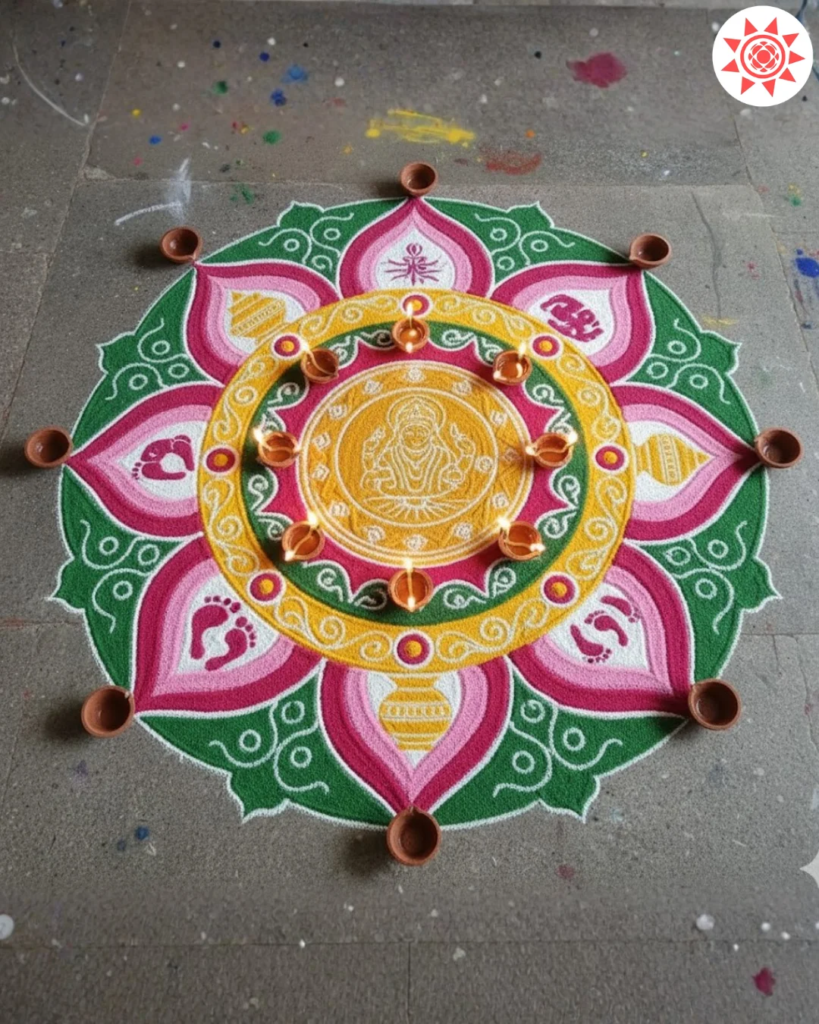
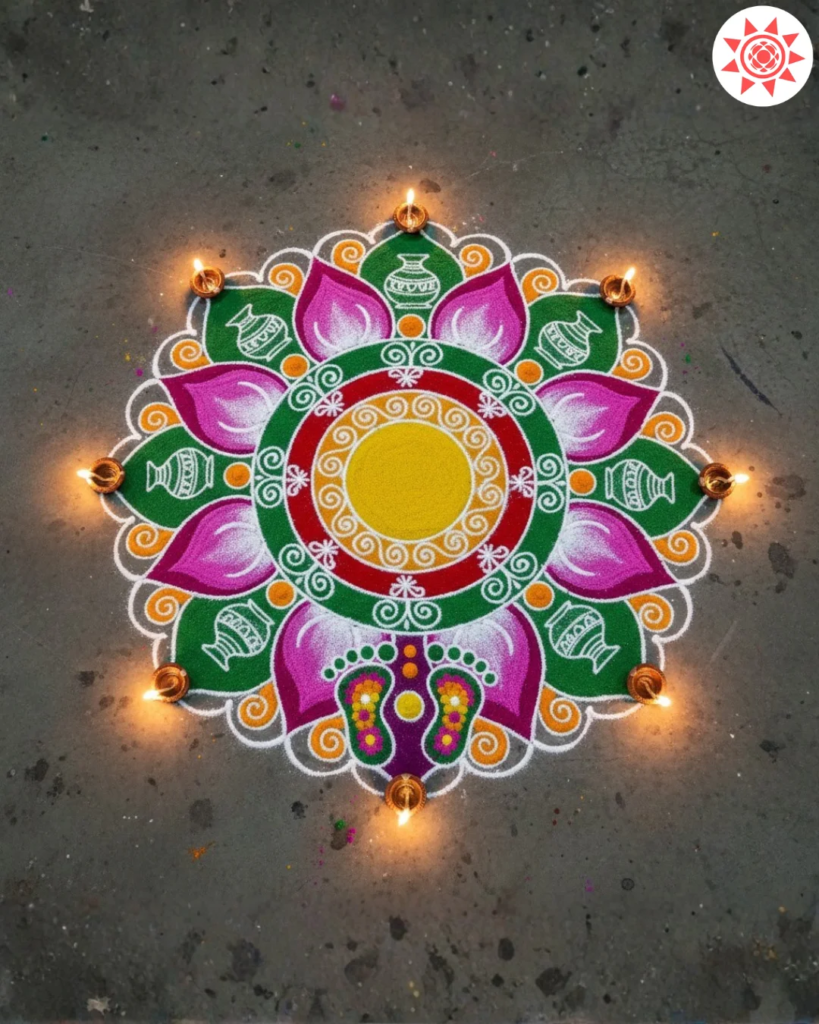
💰 4. Goddess Lakshmi Footprints Rangoli

Small footprints of Lakshmi Mata moving into the house symbolize her arrival.

Use red, gold, and white colors to enhance auspiciousness.

Benefits:
🌟 Attracts wealth
🌟 Improves financial stability
🌟 Brings good luck

Commonly made on Dhanteras and Diwali morning.


🌟 5. Star and Geometric Rangoli

Simple star patterns with symmetrical shapes look elegant and modern.

Best for small spaces
Benefits:
✔ Quick to make
✔ Harmonizes energy flow
✔ Visually appealing

Combine bright contrasts for a festive look.


🕉️ 6. Om and Swastik Rangoli

Sacred symbols like Om and Swastik are highly auspicious.

Colors recommended: Red, yellow, and white.

Benefits:
🙏 Protects from negativity
🙏 Brings peace and divine blessings
🙏 Strengthens spiritual energy

Perfect for Roop Chaturdashi rituals.


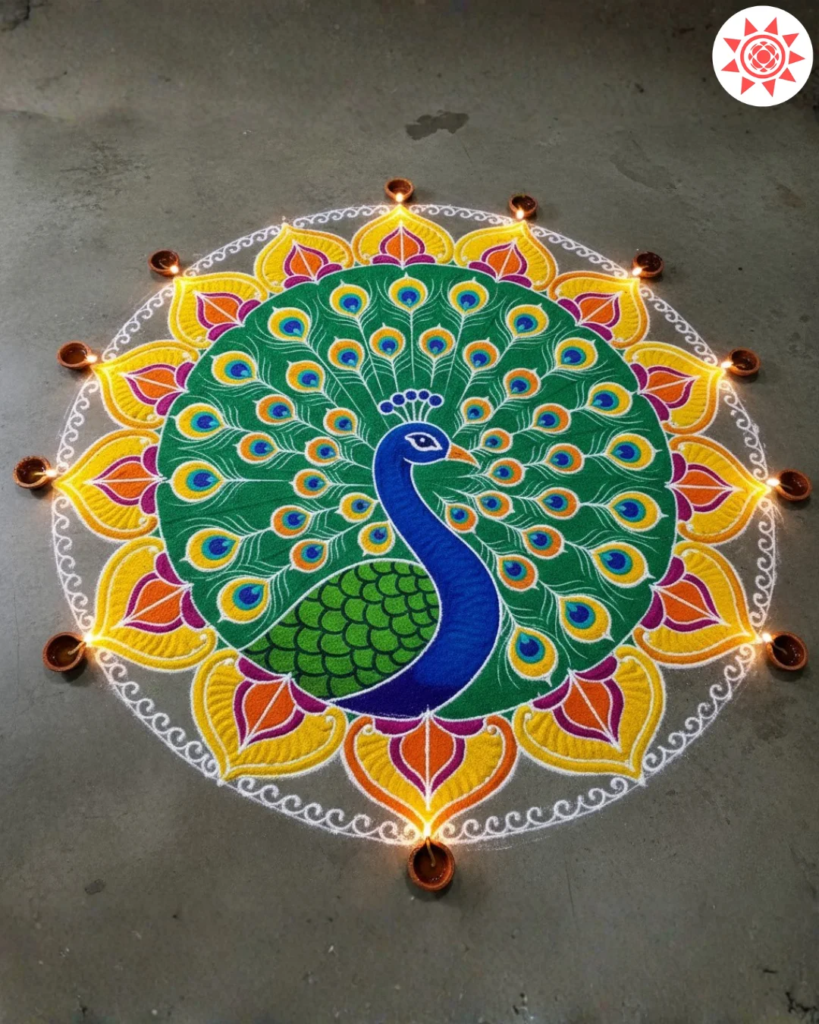
🌺 7. Peacock Feather Rangoli

Peacock designs symbolize beauty, grace, and Lord Krishna’s blessings.

Use green, blue, and golden shades for vibrant appeal.

Benefits:
✨ Enhances positivity
✨ Attracts happiness
✨ Creates festive charm


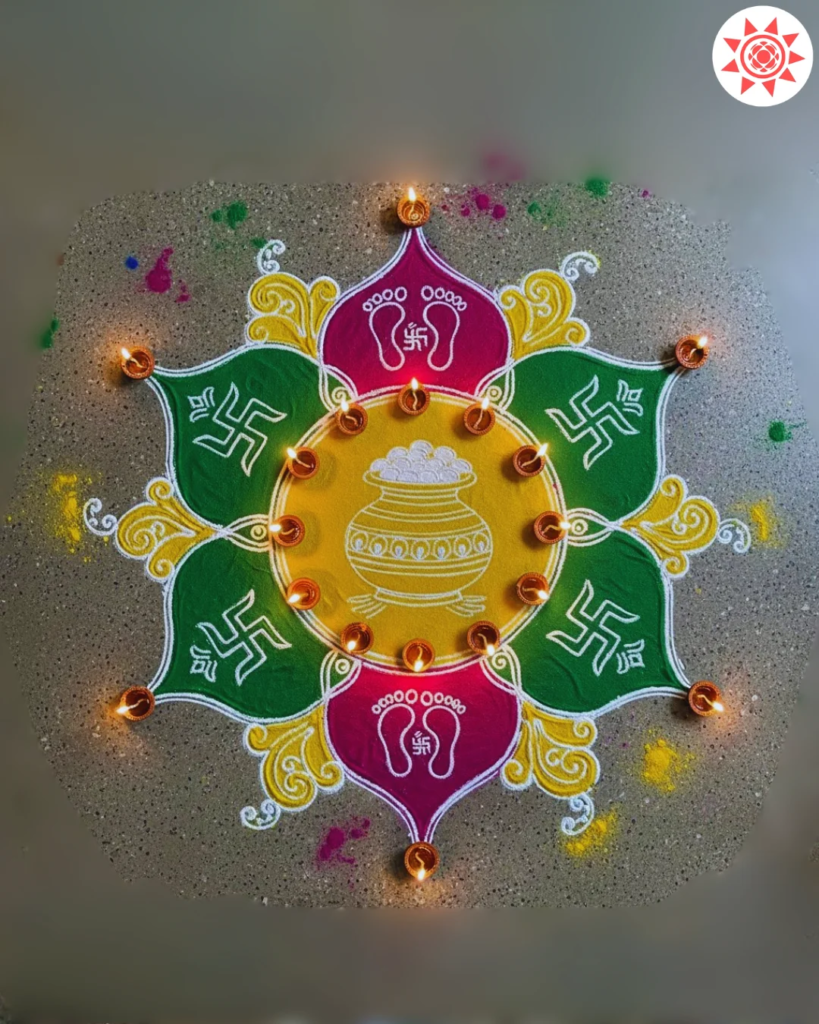
🪙 8. Dhanteras Special Pot (Kalash) Rangoli

A kalash filled with coins, flowers, and coconut is a traditional prosperity symbol.

Benefits:
💎 Wealth attraction
💎 Good fortune
💎 Financial growth

Best placed near business entrances or shops.


🌈 9. Colorful Spiral Rangoli

Spiral designs symbolize life’s continuous flow of energy.

Mix multiple bright colors for a joyful festive look.

Benefits:
🎉 Cheerful atmosphere
🎉 Removes dullness
🎉 Welcomes positive vibes


🕯️ Tips for Long-Lasting Rangoli in 2026

✔ Clean floor properly before designing
✔ Use chalk outline first for neat patterns
✔ Mix little salt in rangoli powder for durability
✔ Avoid high foot traffic areas


🌟 Spiritual Benefits of Making Rangoli

Creating rangoli is not just decoration — it is a sacred act that:

• Invites Goddess Lakshmi
• Enhances peace and prosperity
• Brings happiness and success
• Removes negative energies

It is believed that homes with rangoli experience greater harmony during Diwali.


✨ Conclusion

Rangoli designs during Dhanteras, Roop Chaturdashi, and Diwali 2026 are a beautiful way to express devotion, creativity, and festive joy. Whether you prefer traditional lotus patterns, diya motifs, or modern geometric designs, each rangoli holds spiritual meaning and brings positivity.

Make your Diwali celebrations more colorful and auspicious by decorating your home with these 9 stunning rangoli ideas and welcoming prosperity into your life.

Roop Chaudas 2026: Rituals, Remedies & The Secret of Inner and Outer Beauty

Roop Chaudas, also known as Narak Chaturdashi, is an auspicious Hindu festival celebrated a day before Diwali. It symbolizes the victory of light over darkness and purity over negativity. This sacred day is specially associated with enhancing beauty, removing negative energies, and inviting positivity into life.

In 2026, Roop Chaudas will be observed with traditional rituals that promote both inner peace and outer glow.


🌼 Spiritual Significance of Roop Chaudas

Roop Chaudas is dedicated to Lord Krishna’s victory over the demon Narakasura. Spiritually, it represents cleansing the soul and body from negativity, stress, and harmful influences.

On this day, people perform holy baths, prayers, and remedies believed to:

• Improve physical glow and health
• Remove negative energies and doshas
• Bring prosperity and happiness
• Enhance mental peace and confidence


📅 Roop Chaudas 2026 Date & Muhurat

Roop Chaudas falls on the Chaturdashi Tithi of Krishna Paksha during the Diwali festival period.

(For exact date, time, and personalized muhurat based on your horoscope, consult an expert astrologer.)


🛁 Traditional Rituals of Roop Chaudas

  1. Early Morning Abhyanga Snan
    Take a sacred bath using warm water, sesame oil, and herbal powders before sunrise.
  2. Prayer to Lord Krishna & Goddess Lakshmi
    Offer lamps, flowers, and sweets for blessings of beauty, health, and prosperity.
  3. Home Cleansing
    Light diyas to remove negative vibrations from the house.
  4. Charity & Kindness
    Donating food, clothes, or money increases positive karma.

🌿 Powerful Remedies for Beauty & Positivity

✨ Apply ubtan made of turmeric, sandalwood, and gram flour before bathing
✨ Chant Krishna mantra or Vishnu Sahasranama
✨ Light a mustard oil diya at the main entrance
✨ Wear clean, bright clothes after bath

These remedies are believed to bring glowing skin, confidence, and inner peace.


🌟 Benefits of Observing Roop Chaudas

✅ Enhances physical beauty and health
✅ Removes negativity and stress
✅ Attracts prosperity
✅ Strengthens spiritual energy
✅ Brings happiness and harmony


📞 Get Personalized Ritual Guidance

For exact Roop Chaudas 2026 muhurat, remedies, and horoscope-based advice, visit astrologermanisha.in or consult an expert astrologer for personalized solutions.

Vijaya Ekadashi – Story and Rituals 

Hindu religion is the most diversified religion with various manner of atonement and methods of fasting. Ekadashi is also one of the most important fasts in Hinduism.

Vijaya Ekadashi is falling on February 19, 2020. This Ekadashi falls during the Krishna Paksha of the Phalgun month. Vijaya means ‘victory’ and this Ekadashi is all about being victorious. It is one of the most widely observed Ekadashi fast in India. As per the Padma Purana & Skanda Purana, observing the fast of ‘Vijaya Ekadashi’ can help an individual achieve victory against evil and all the obstacles that may come in life. It is believed that people who keep ‘Vijaya Ekadashi’ fast conquer all the obstacles that they may face in life. Hence, the reason this Ekadashi is widely known as ‘Vijaya Ekadashi’.

Our ancestors used to observe the ‘Vijaya Ekadashib’ fast for good luck and victory during the countless wars that they fought. By observing this fast, they have managed to garner various victories on the battlefield. It is believed that a person fasting on this day gets success in every task and gets the desired results. Apart from this, this Ekadashi has also been considered an Ekadashi, which can eliminate all sins.

The Puja Vidhi & Other Rituals, Traditions of ‘Vijaya Ekadashi’

On the first day of Ekadashi i.e. on Dashami, make an altar and keep ‘saptdhana’ on it, then according to your ability, make an urn of gold, silver, copper or clay and install it on it. On the day of Ekadashi, establish the idol of Lord Vishnu by placing it in the ‘Panchapallava Kalash’ and worship with incense, lamp, sandalwood, fruits, flowers, and basil. Along with fasting, recite and listen to the Lord Vishnu Katha and at night do bhajan awakening in the Lord Vishnu’s name. On the day of Dwadashi, give food, etc. to the Brahmin. Then observe the fast. On the first night of fast, only sattvic food should be taken and celibacy should also be observed. In this way, by fasting methodically, the worshiper gets the victory over the most difficult situations.

The Story of Vijaya Ekadashi

Once upon a time, Narada Muni pleaded with his father Brahma, “O Brahma! Please tell me the importance of Vijaya Ekadashi and the method of worship. After listening to Narad Muni, Brahmaji opens his eyes, “O son! The fast of Vijaya Ekadashi has the power to defeat the sins of a person’s previous birth, by observing this fast and worshiping, one gets the victory in all the difficult situations & get over any obstacles.

Then, Lord Brahma narrated the story of Lord Rama to Narada Muni.

Lord Rama, along with wife Sita and brother Lakshman were exiled for fourteen years to follow the words of father Dasharatha. Lord Ram, along with his wife and brother, started living in huts near Panchvati River. The demon king Ravana heard about the beauty of Goddess Sita in Lanka, he reaches Panchavati with the aim of abducting Sita.

Ravana takes the help of maternal uncle Maricha to get Ram away from the hut and Sita is abducted by Demon King Ravan and taken to Lanka. After not finding Sita in the hut, Lord Rm started vigorously looking for Sita throughout the forest. While wandering the jungle, they reach the dying Jatayu. Jatayu narrates the entire story to him and departs towards heaven leaving his life in the lap of Shri Ram. Extremely saddened by this incident, Lord Ram made started towards Lanka and together with Sugriva and Hanuman, built an army. When Lord Ram arrives at the seashore with an army of apes, he faces the challenge of crossing the vast sea. Ram says to Laxman – “O Laxman! How will we cross this vast sea filled with many crocodiles and other dangerous creatures?”

Listening to Lord Ram, Lakshman said, “Brother, you are omniscient, nothing is hidden from you. Half a day away from here is the ashram of Kadalbhya Muni on the island of Kumari. He will surely help us and pave the way to victory. ”Lord Ram did the same and went to the ashram of sage Kadalbhya and begged him. Vakdalbhya Muni asked- ‘O Ram! For what purpose have you sanctified my hut, please say your purpose, Lord. ”Hearing the sweet words of the sage, Ram said,“ O sage! Ravana has taken my wife Sita to Lanka. I want to cross the sea with my army of monkeys. Please tell me any way to cross the sea.”

Maharishi Vakdalbhya says, “I will tell you about a fast that can help you win over this obstacle and reach Lanka. Maharishi Vakdalbhya told Ram gives about the importance of Vijaya Ekadashi and the rituals and traditions to observe the fast. After observing the fast, Lord Ram found a way to reach Lanka and also won the mighty battle with Ravan and also rescued Sita.

Talk to our Expert Astrologers on Phone and get guidance for all your problems.

Papmochani Ekadashi Vrat & Katha

Papmochani Ekadashi

There are 24 Ekadashis in a year. The belief behind Papmochani Ekadashi is that those who believe in this Ekadashi and observe a fast may find respite from all sorts of sins from previous and present lifetimes. People worship Lord Vishnu on Papmochani Ekadashi. This falls in the Krishna paksha and has greater significance than other Ekadashis that fall in a month.

Papmochani Ekadashi Vrat & Pooja

On the day of Papmochani Ekadashi, one should worship Lord Vishnu and should also meditate on it. In the morning, light earthen lamps in front of the idol of Lord Vishnu. Pray to Lord Vishnu on Papmochani Ekadashi to absolve you of all the sins. Listen to Papmochani Ekadashi Vrat Katha, and break your fast on the next day of Papmochani Ekadashi.

In addition to this, devotees on Papmochani Ekadashi also have sattvic food on the tenth day of the Chaitra month. Shower on the 12th day of the month and resume your food.

Importance of Papmochani Ekadashi

Papmochani Ekadashi falls between Holika Dahan and the Navaratri of Chaitra Month. The ancient Hindu mythologies and Puranas say that if the people are looking to seek the absolution of their sins, then this is the day that can help them achieve it. It is also believed that whosoever observes a fast on Papmochani Ekadashi achieves salvation. On the day of Papmochani Ekadashi grace of Lord Vishnu is achieved. Papmochani Ekadashi is derived from the narrative fiction of Arjuna and King Mandhata. He was sage from when asked that the Lord it indicates that humans who go inadvertently sinning, karma have their own way of absolution. Hence, Papmochani Ekadashi should be observed to gain absolution from all the suns.

Papmochani Ekadashi Vrat Katha

Dharma raja Yudhishthir said – O Janardan! What is the name of Ekadashi of Krishna Paksha of Chaitra month and what is its method? Please tell me. Sri Bhagavan said, O Rajan, the name of Ekadashi of Krishna Paksha of Chaitra month is Papamochani Ekadashi. With the effect of its fast, all the sins of man are destroyed. This is the best fast of all fasts. All sins are eradicated by listening and reading the greatness of this Papamochani Ekadashi. At one time, Devarshi Naradji said to Lord Brahma, Maharaj! Tell me Ekadashi Vidhan of Krishna Paksha of Chaitra month. Brahma started saying, O Narada! Ekadashi of Krishna Paksha of Chaitra month is celebrated as Papamochani Ekadashi. Lord Vishnu is worshiped on this day. According to its legend, in ancient times there was a delightful forest called Chitraratha. Devraj Indra Gandharva used to live in this forest with girls and gods. Once a sage named Medhavi was also doing penance there. They were sage Shiva worshipers and apsaras Shiva Drohini Anang Maid (Anuchari). Once Cupid sent an apsara named Manjughosha to him to dissolve the asceticism. The young Muni Apsara was fascinated by the work on her expressions, dances, songs, and sarcasm. 57 years passed while playing. One day Manjughosha asked for permission to go to Devaloka. When he asked for permission, Muni was aware and realized that the only reason to take me to the abyss is Apsara Manjugosha. Enraged, he cursed Manjugosha to be a vampire. Listening to the curse, Manjugosha shook and asked the sage the remedy of salvation. Then Munishree asked to observe the fast of Papamochani Ekadashi. And telling Apsara the way of salvation, the father went to Chyavan’s ashram. Hearing the curse on the face of the son, Chyavan Rishi condemned the son and ordered him to fast for the Papamochani Chaitra Krishna Ekadashi. Manughosh Apsara freed from the vampire body due to the effect of the fast and went to heaven. So O Narada! Any person who will perform this fast lawfully, his sins are sure to be redeemed. And whoever reads and hears the greatness of this fast gets freedom from all the troubles.

Gudi Padwa – Celebration & Tradition

Gudi Padwa or Samvatsar Padavo is celebrated by the Marathi and Konkani community as the first day of the year. From this day the new Samvatsara, which is a cycle of sixty years, also begins. All sixty Samvatsaras are identified by a different name. Gudi Padwa is celebrated as Ugadi in Karnataka and Andhra Pradesh.

Chaitra Navratri, Gudi Padwa and Ugadi are all celebrated on the same day. Gudi Padwa is a Marathi New Year according to the Ludi-Solar calendar. The luni-solar calendar is known to divide the position of the moon and the sun into months and days. The separate side of this is the solar calendar which considers only the position of the sun to divide the year into months and days. For this reason the Hindu New Year is celebrated twice with different names and at two different times of the year. The Hindu New Year based on the solar calendar is known as Puthandu in Tamil Nadu, Bihu in Assam, Vaisakhi in Punjab, Paan Sankranti in Orissa and Naba Barsa in West Bengal.

Chaitra is described as the first month of the year, based on the Hindu calendar. It was Chaitra Pratipada who inspired Brahma to create the universe and from this day itself is considered to be the beginning of creation, hence it is also considered as the beginning of new year. On this day, the great mathematician Bhaskaracharya prepared the almanac by calculating the day, month and year from sunrise to sunset. Therefore, Panchang is also worshiped on this day.

History of Ugadi or Gudi Padwa Festival

Gudi Padwa - Celebration & Tradition

Gudi is basically decorated with fresh mango buds with brightly colored cloth on a wood. It is also made by wrapping cloth using other types of things like sugar crystals, neem leaves, mango leaves and garlands of red flowers. A silver or copper vessel is placed inverted on wood and cloth, forming a gudi. Gudi is placed on the right side of the house in a high place, from where everyone can see it. This festival symbolizes victory against evil, including good luck and prosperity. Beautiful flowers of red and yellow color are used to decorate the rangoli at the entrance.

Recipe and special dish for Ugadi Pujan

On this day, those who celebrate Gudi Padwa pray to Lord Bhaskar and wish for happiness, peace and prosperity at home. On the day of Ugadi Puja, people take bath and get ready in the morning. On this day special dishes are made in homes. Of which, especially Ugadi Pachadi, which is the name of the dish of Telangana, it is made. The ingredients used to make it are neem, good, green chillies, salt, turmeric etc. It is made by mixing all these. People there believe that such a mixed dish, which tastes salty, sweet, sour and spicy, like sour, sweet, pungent taste in life and especially on New Year’s day is a joy of sorrow. Arrival keeps on happening. Puran Poli is one of the most special delicacies of Andhra Pradesh and Telangana.

What is Gudi Padwa?

Gudi is planted in Maharashtra. For this, a bamboo, urn of silver, copper or brass is placed inverted and decorated with saffron color or silk cloth. After this Gudi is decorated with gathi, neem leaves, mango stalks and red flowers. Gudi is placed in a high place, so that it can be seen even from a distance.

It is believed that after the defeat of Shakas by Emperor Shalivahana, people expressed happiness by putting Gudi on the houses. Gudi is also commemorated in the victory of Chhatrapati Shivaji. It is believed that Brahma Ji created the universe on this day. That is why Gudi is also considered Brahmadhvaj. Somewhere, the festival of Gudi Padwa is celebrated in the joy of coming back to Ayodhya by Lord Rama after completing 14 years of exile. It is believed that applying Gudi brings prosperity to the house.

Farmers celebrate this festival in the joy of sowing again after harvesting the rabi crop. Three and a half Muhurats are considered auspicious during the whole year among Hindus, Gudi Padwa is also one of them. Apart from this, Akshaya Tritiya and Dussehra are considered as Purna and Diwali as Ardh Muhurta.

Gudi Padwa Mythology

It is believed that on this day Maryada Purushottam Lord Rama had liberated the people of the South from the tyrannical rule of Bali. After Bali was freed from the tragedy, people celebrated in their homes and all hoisted the Gudi (flag) in the courtyard of their house. Gudi is decorated in every house in Maharashtra as a symbol of victory on this day. It is also believed that a potter boy named Shalivahana formed an army of mud soldiers and sprinkled water on it and burnt life in them and defeated powerful enemies with the help of this army.

The Maha Shivratri Fast

Benefit of Maha Shivaratri Fast

It is said in the Skanda Purana that any who is a devotee of Lord Shiva and observes the Maha Shivratri fast becomes divine. He consumes all the great pleasures and finally attains salvation. According to Ishaan Samhita, it annihilates the sins of 12 years or 24 years. This fast gives complete enjoyment and salvation.

Maha Shivratri is called the night of union of Shiva and Shakti. There are 12 Shivaratris in a year. But Shivaratri which falls in Phalgun month is given more importance in Hinduism and it is also known as Maha Shivratri. On this day people observe fast to get blessings of Lord Shiva. It is believed that worshiping Lord Shiva with a true heart on this day removes all the troubles of life and Shiva devotees get all the comforts of life.

On the day of Maha Shivratri, a large crowd of Shiva devotees visit the temples to see their deities. Chanting of songs in temples begin from mornings. In many places, cannabis is distributed as Prasad on this day because hemp is very dear to Lord Shiva. On the day of Maha Shivratri, all types of doshas end in the horoscope and troubles related to the planets also end. According to the scriptures, Lord Shiva wanders all over the world on the day of Maha Shivaratri and whoever wakes up at night on this day and worships Lord Shiva; receives the infinite grace of Lord Shiva.

Maha Shivratri – Festival

The Maha Shivratri Fast

This Hindu festival is celebrated with great enthusiasm and pious spirit by all ardent devotees of Lord Shiva. The festival of Maha Shivaratri starts from early morning and continues till late night. Devotees observe a day-long fast and spend their time in worship and remembrance of Lord Shiva. It is believed that worshiping Shiva and his emblem can overcome one of his past sins and help him attain salvation. People flock to temples on this day to worship God.

How to worship on Maha Shivratri as per your Zodiac Sign?

  • Aries: For Aries people, it is of special importance to anoint them with honey, jaggery, sugarcane juice and to offer red flowers after consecration.
  • Taurus: It is of special importance for Taurus people to anoint with raw milk, curd and white flower for consecration.
  • Gemini: For Gemini people, it is of special importance to anoint the green fruit juice, anointed with lentil, and after the ablation of bael leaves.
  • Cancer: For Cancer sign, anointing with raw milk, butter, lentil and bael leaves anointing has special significance.
  • Leo: For Leo zodiac signs, consecration with honey, jaggery, pure ghee and offering red flowers after consecration is of special importance.
  • Virgo: For the Virgo zodiac, it is of special importance to anoint with green fruit juice, bael leaves, lentil and to offer green and blue flowers after consecration.
  • Libra: For Libra people, it is of special importance to anoint with milk, curd, ghee, butter, sugar candy and post bael leaves after consecration.
  • Scorpio: For Scorpio people, it is of special importance to offer honey, pure ghee, anointing with dolls, and to increase the bael leaves, red flowers after consecration.
  • Sagittarius: For Sagittarius people, anointing with pure ghee, honey, sugar, almonds and offering yellow flowers, yellow fruits after consecration is of special importance.
  • Capricorn: For the Capricorn sign, anointing should be done with mustard oil, sesame oil, raw milk as well as anointing with berries is considered auspicious. Also offering blue flowers, Bael leaves after consecration are of special importance for Capricorn people.
  • Aquarius: For the Aquarius sign, it is of special importance to anoint with raw milk, mustard oil, sesame oil and to offer blue flowers, Bael leaves after consecration.
  • Pisces: For Pisces people, anointing with sugarcane juice, honey, almonds are very auspicious. It is also considered auspicious that you planet yellow flowers, yellow fruits after consecration. They are considered of special importance.

recent

Categories