loading

Category: Blog

Navratri 2025 Colors, Garba Muhurth & Lehengas That Tell a Story

Navratri is one of the most vibrant and culturally rich festivals celebrated across India every year. Marking the victory of good over evil, Navratri is dedicated to Goddess Durga and her nine divine forms. The festival in 2025 will be observed from September 22 to October 1, culminating in Dussehra or Vijayadashami on October 2.

This festive season is not only about devotion and rituals but also a grand celebration of colors, music, dance, and traditional attire. Here’s everything you need to know about Navratri 2025 colors, Garba muhurth, and lehenga trends that beautifully narrate the festival’s spirit.


Navratri spans nine nights, each dedicated to a specific form of Goddess Durga. The festival signifies the triumph of divine feminine power over demonic forces. People observe fasting, perform pujas, and participate in nightly Garba and Dandiya dances, creating lively atmospheres filled with energy and devotion.

Day-wise Goddess and Color Significance for Navratri 2025

Each day of Navratri associates with a goddess and color symbolizing her qualities:

DayDateGoddessColorSignificance
1Sept 22, MonMaa ShailputriWhitePurity, Peace
2Sept 23, TueMaa BrahmachariniRedEnergy, Passion
3Sept 24, WedMaa ChandraghantaRoyal BlueCourage, Strength
4Sept 25, ThuMaa KushmandaYellowCreativity, Happiness
5Sept 26, FriMaa SkandamataGreenCompassion, Growth
6Sept 27, SatMaa KatyayaniGreyPower, Courage
7Sept 28, SunMaa KaalratriOrangeFearlessness, Protection
8Sept 29, MonMaa Maha GauriPinkGrace, Tranquility
9Sept 30, TueMaa SiddhidatriPeacock GreenWisdom, Fulfillment

Wearing these colors on the corresponding days is believed to please the goddess and attract her blessings.


Garba Muhurth for Navratri 2025

Garba is a traditional folk dance performed during Navratri, especially in Gujarat and western India. Dancing Garba is not just entertainment—it is a prayer in motion, a devotional offering to Goddess Durga’s energy.

The auspicious muhurt (timing) for Garba holds great significance. For Navratri 2025, devotees often choose to perform Garba post-sunset, around 7 PM to 10 PM, aligning with the lunar calendar to maximize spiritual benefits.


Lehengas That Tell a Story for Navratri 2025

Navratri fashion has evolved to blend traditional craftsmanship with contemporary styles. Lehengas chosen for Navratri 2025 are vibrant, elegant, and rich in symbolism — a sartorial tribute to each goddess’s persona.

  • White lehenga for Maa Shailputri’s day brings a calm, serene aura.
  • Red lehenga for Maa Brahmacharini radiates energy and devotion.
  • Royal blue outfits for Maa Chandraghanta infuse courage into your steps.
  • Yellow lehengas for Maa Kushmanda inspire joy and creativity.
  • Rich textures, mirror work, embroidery, and traditional prints dominate the collection, ensuring every woman tells her Navratri story in style.

Tips to Celebrate Navratri 2025 with Devotion and Style

  • Plan your outfits according to the daily color themes to align your celebrations with the goddess’s blessings.
  • Attend community Garba nights to experience the festival’s joyous energy and deepen your connection with tradition.
  • Maintain the spiritual focus by observing fasts, performing daily pujas, and reciting hymns like Durga Saptashati alongside dance and festivity.
  • Capture your Navratri moments in traditional lehengas that reflect the day’s goddess to share the vibrant spirit on social media.

Conclusion: Navratri 2025—A Festival of Spirit, Color, and Story

Navratri 2025 promises to be a memorable celebration of strength, devotion, and dazzling hues. By honoring each goddess through colors, dancing Garba in auspicious timings, and wearing lehengas that tell stories, devotees blend faith with festivity.

This Navratri, embrace the divine energy with tradition, style, and wholehearted devotion.

Muhurth of Navratri (Day 1–Day 9)

Muhurth means auspicious timing. Worship during these periods invites maximum divine energy.

Day 1 – Pratipada: Kalash Sthapana, Maa Shailputri’s blessings
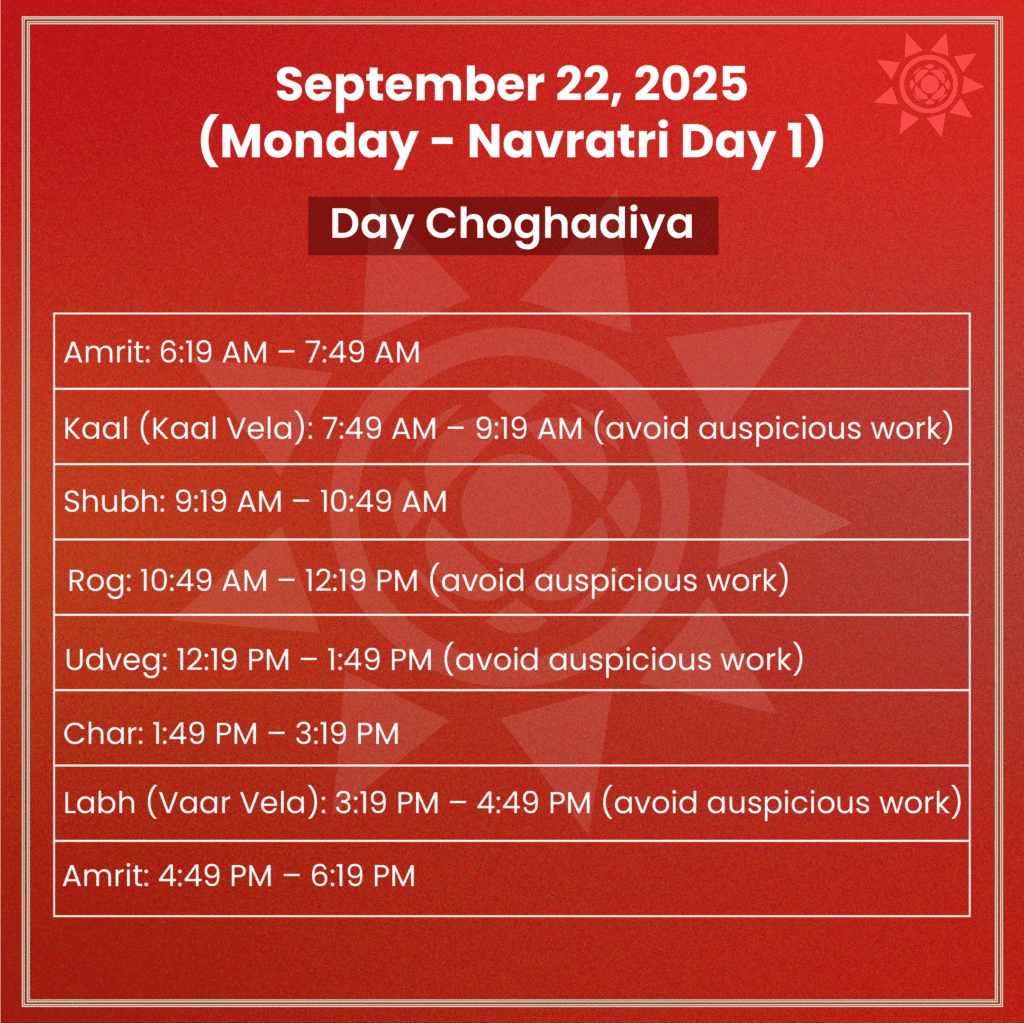
Day Muhurth for Navratri Day 1 September 22 2025
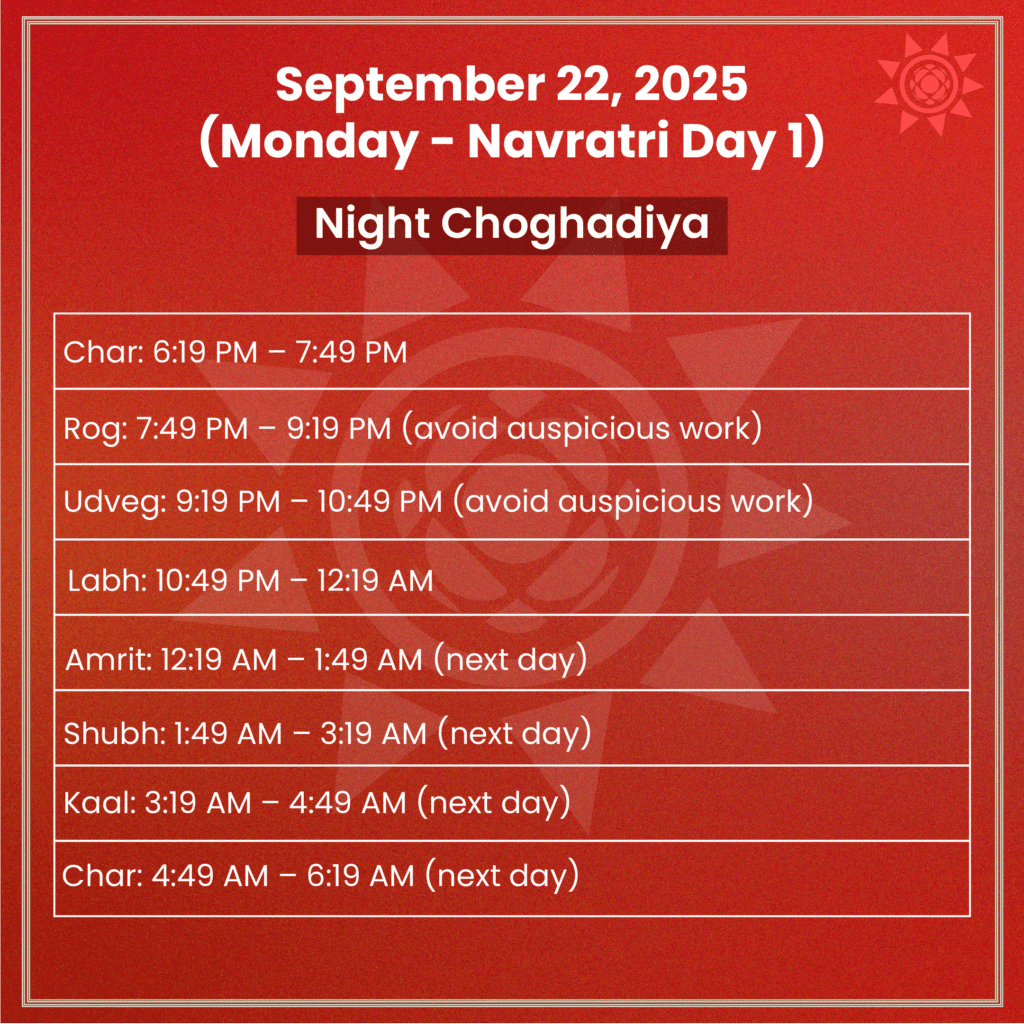
Night Muhurth for Navratri Day 1 September 22 2025

Day 2 – Dwitiya: Devotion to Maa Brahmacharini
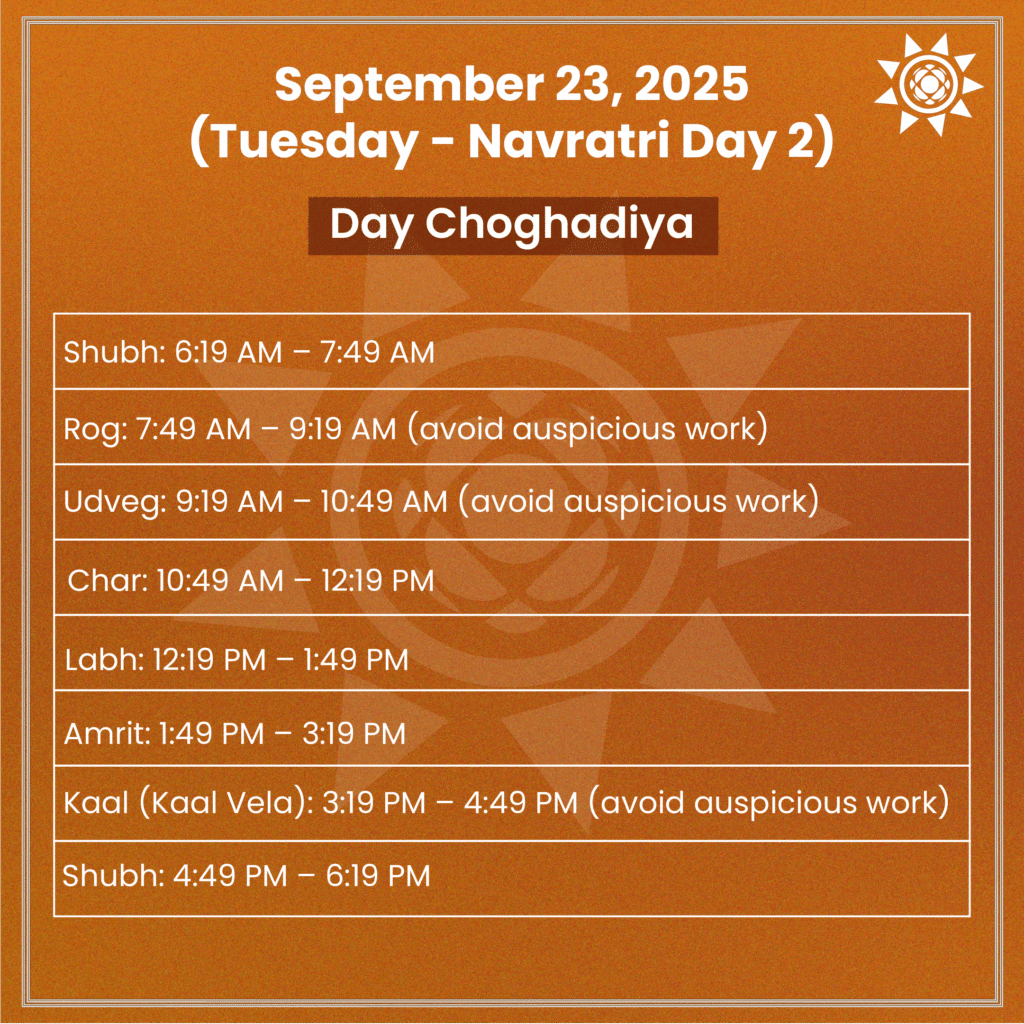
Day Muhurth for Navratri Day 2 September 23 2025
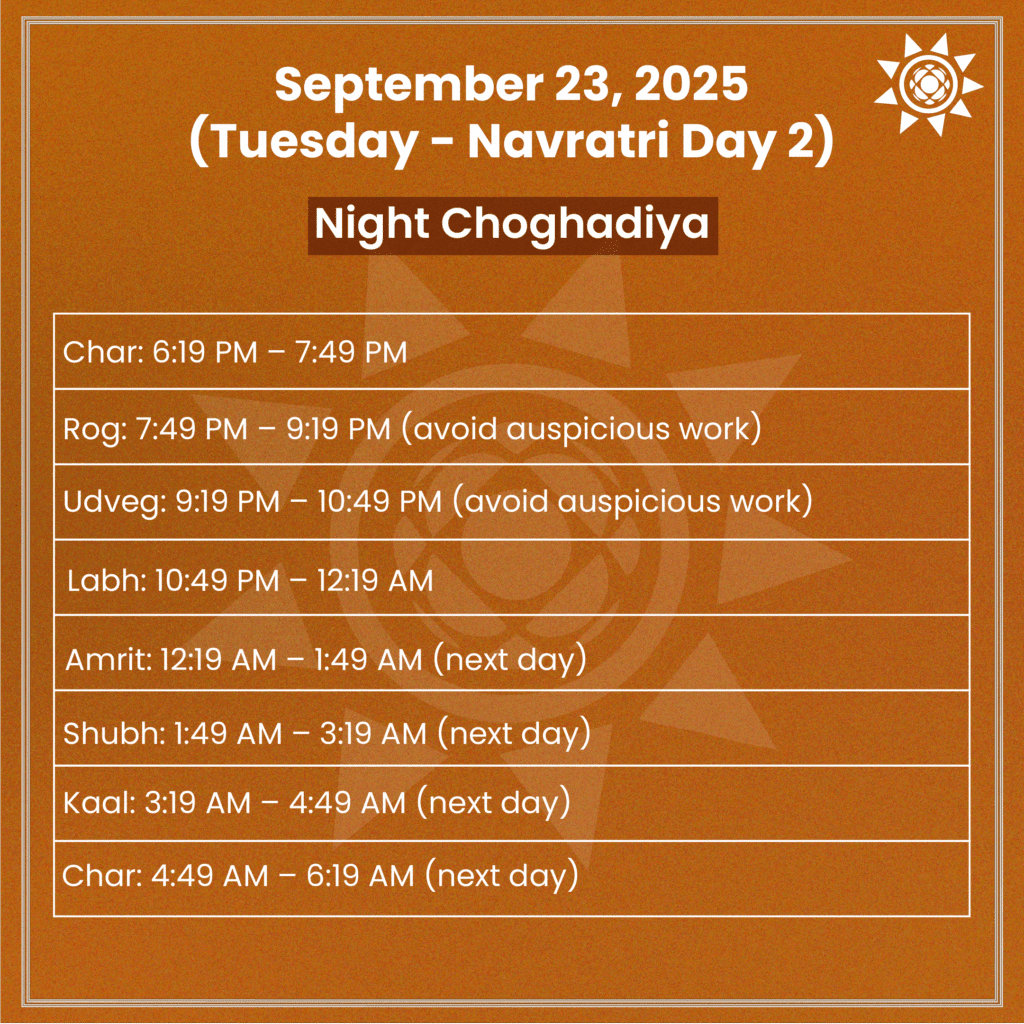
Night Muhurth for Navratri Day 2 September 23 2025

Day 3 – Tritiya: Protection from Maa Chandraghanta
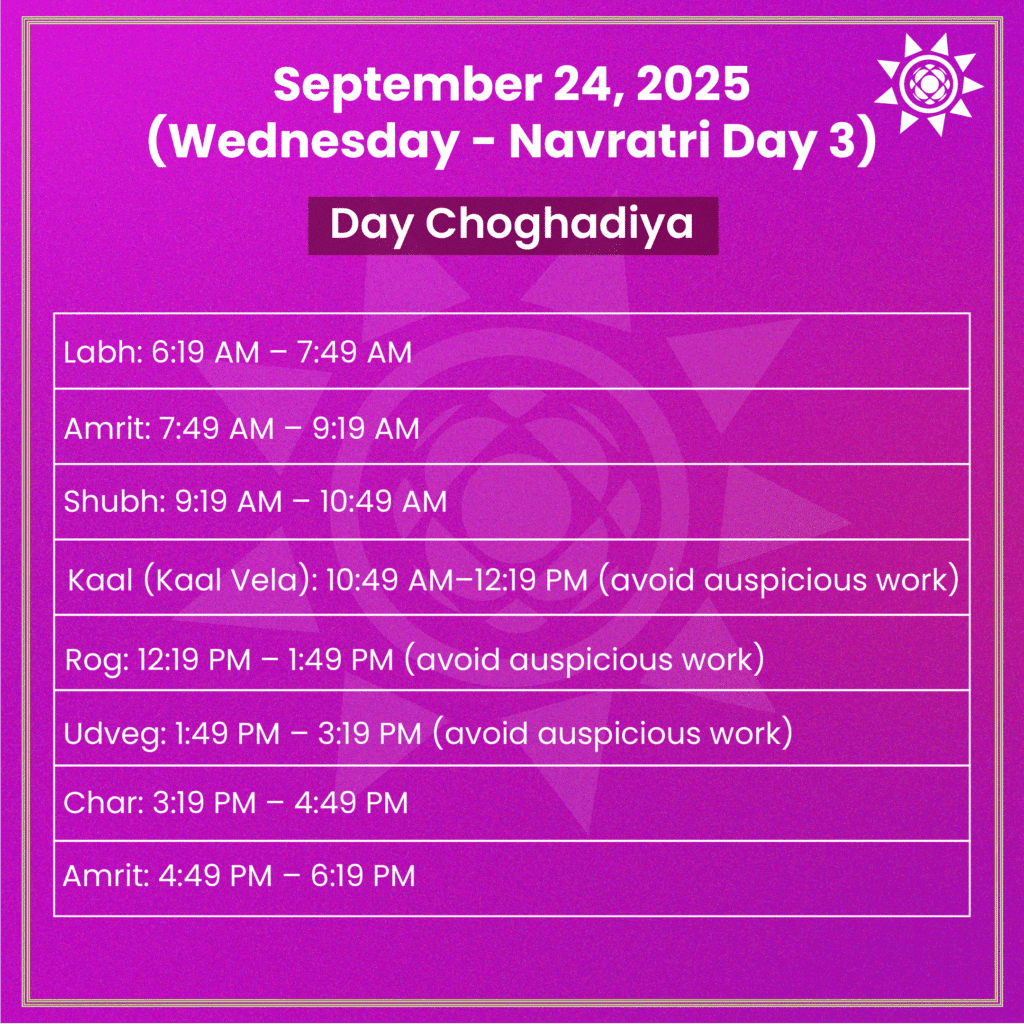
Day Muhurth for Navratri Day 3 September 24 2025
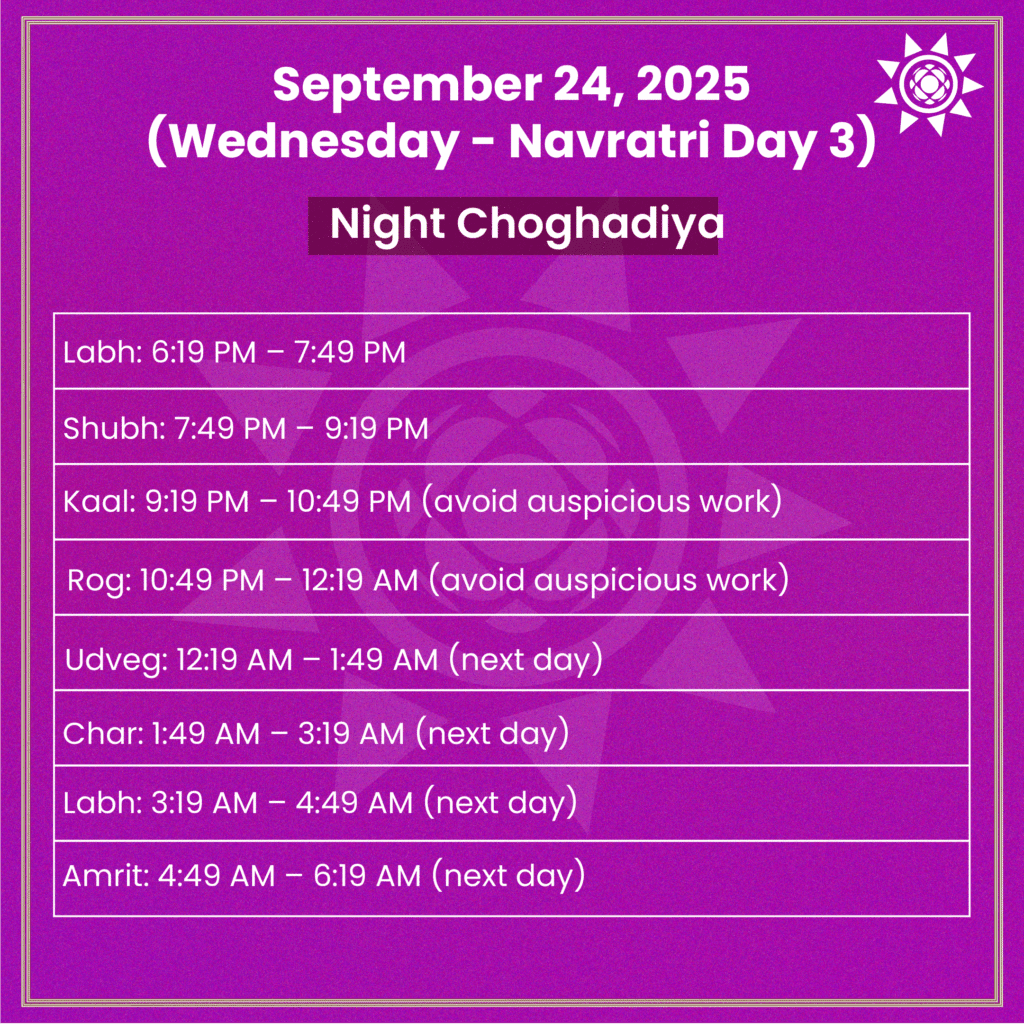
Night Muhurth for Navratri Day 3 September 24 2025

Day 4 – Chaturthi: Prosperity through Maa Kushmanda
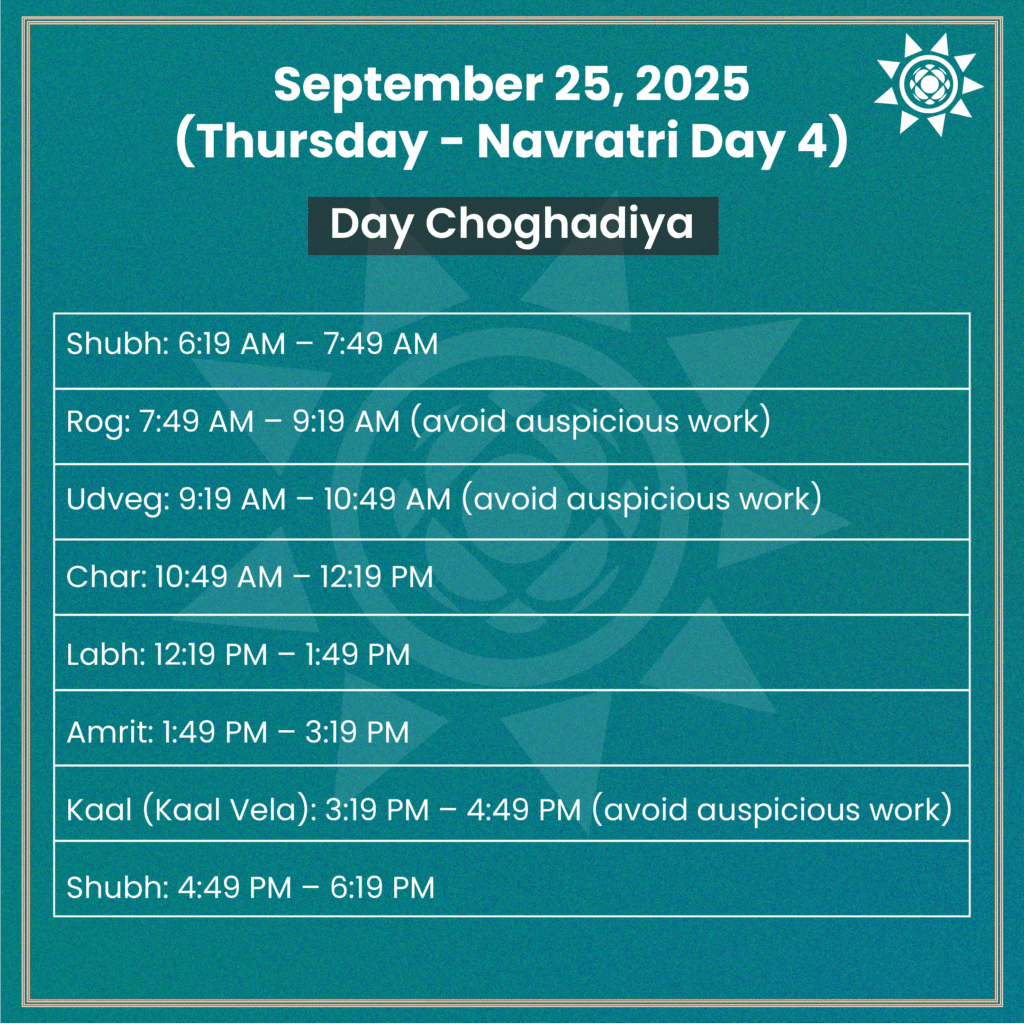
Day Muhurth for Navratri Day 4 September 25 2025
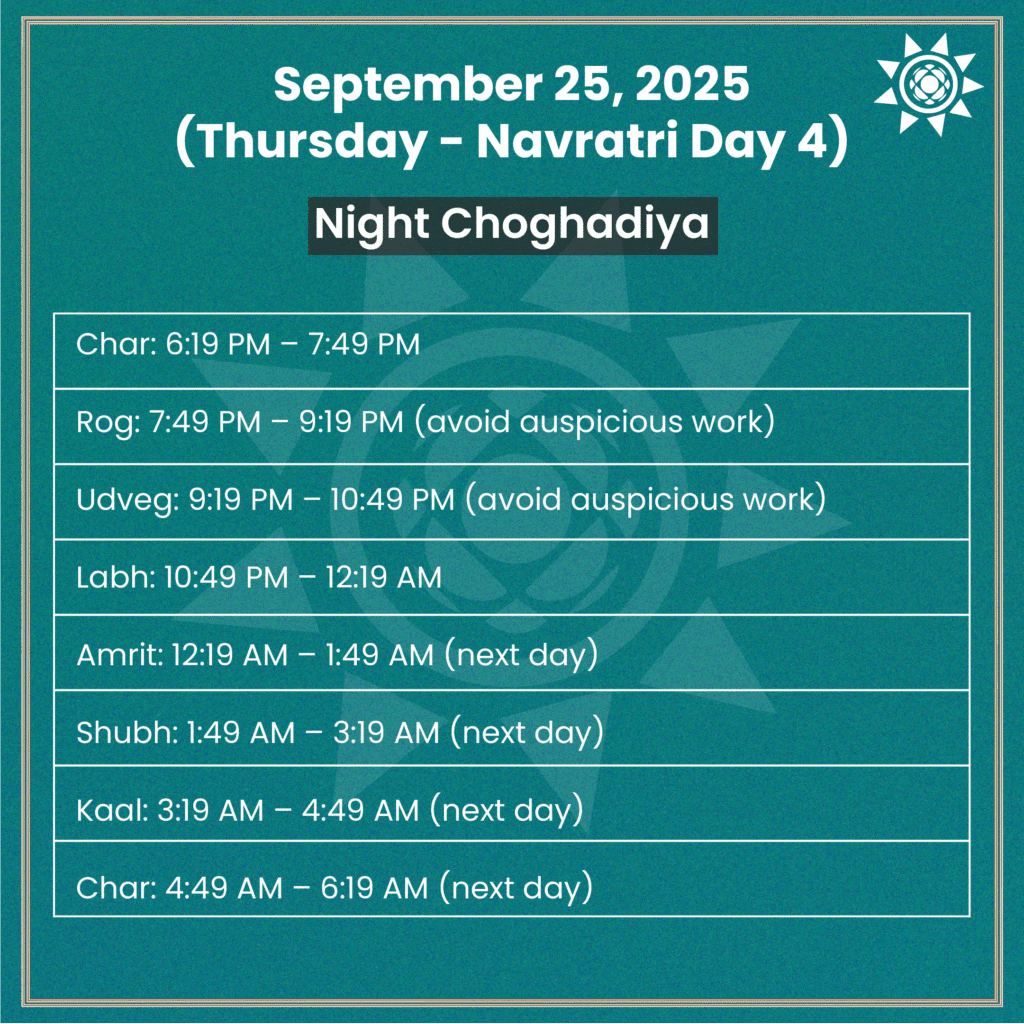
Night Muhurth for Navratri Day 4 September 25 2025

Day 5 – Panchami: Motherly love of Maa Skandmata
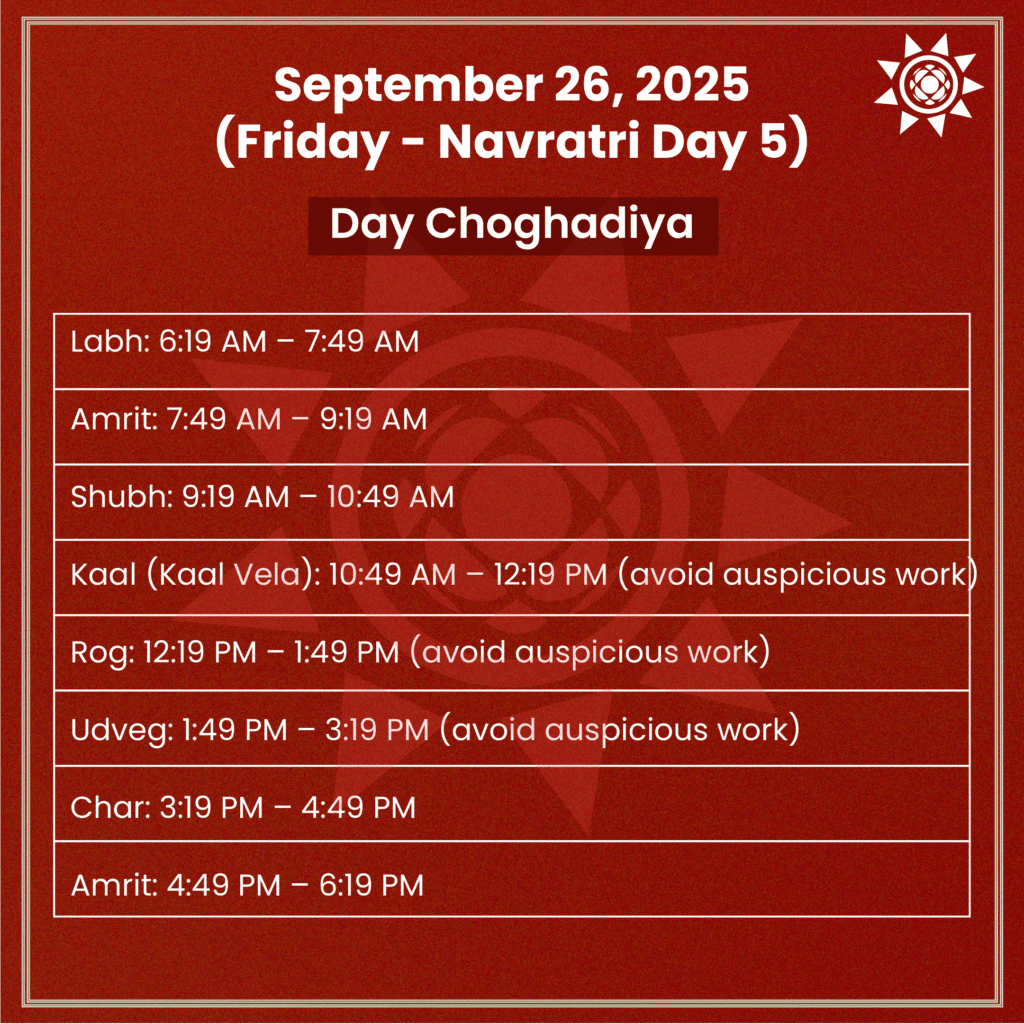
Day Muhurth for Navratri Day 5 September 26 2025
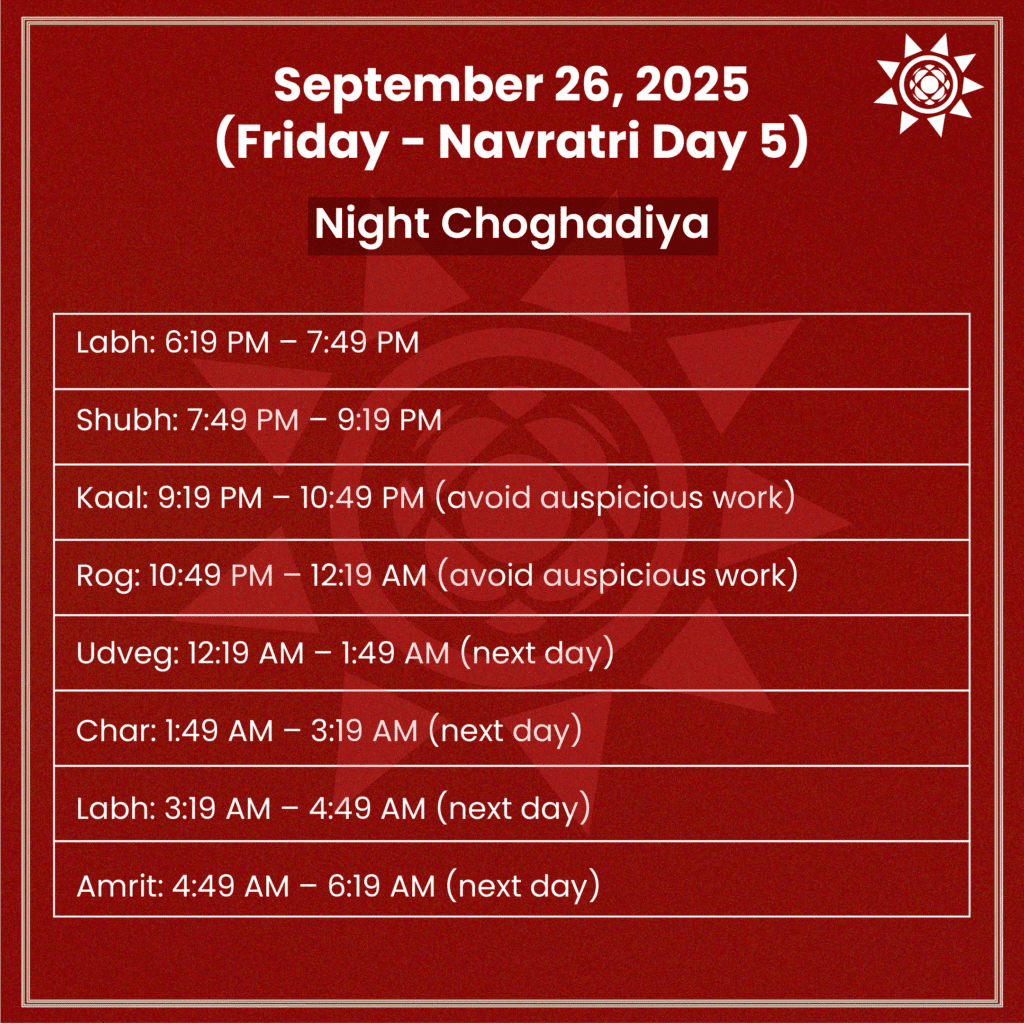
Night Muhurth for Navratri Day 5 September 26 2025

Day 6 – Shashti: Fulfillment of wishes by Maa Katyayani
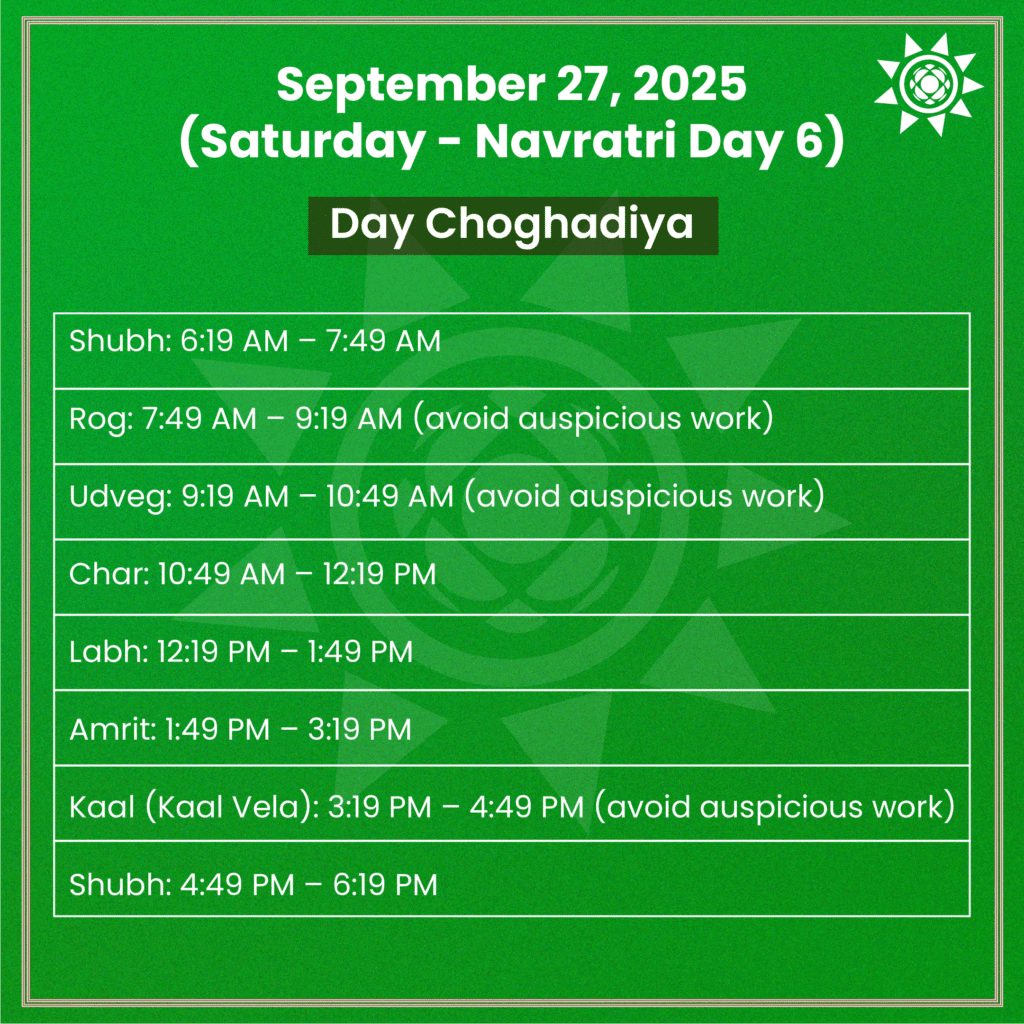
Day Muhurth for Navratri Day 6 September 27 2025
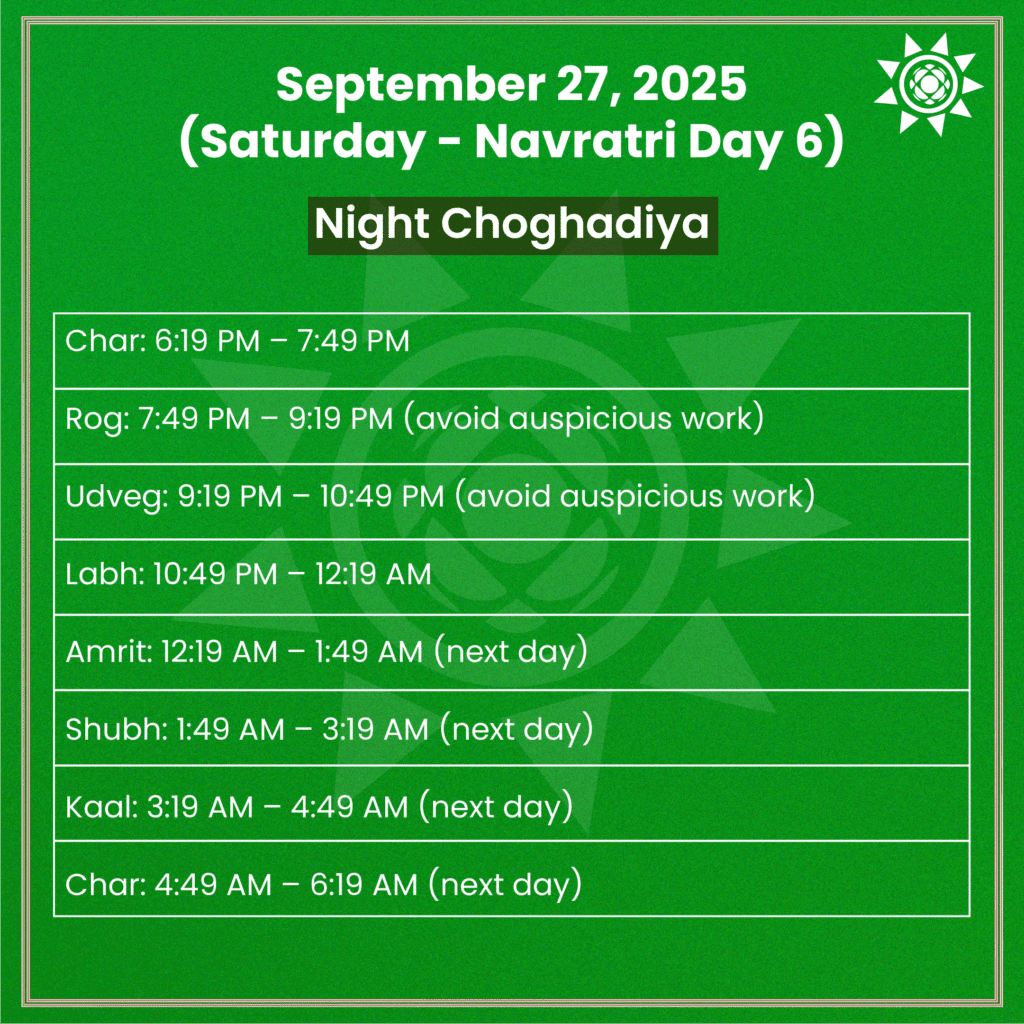
Night Muhurth for Navratri Day 6 September 27 2025

Day 7 – Saptami: Destruction of negativity by Maa Kalaratri
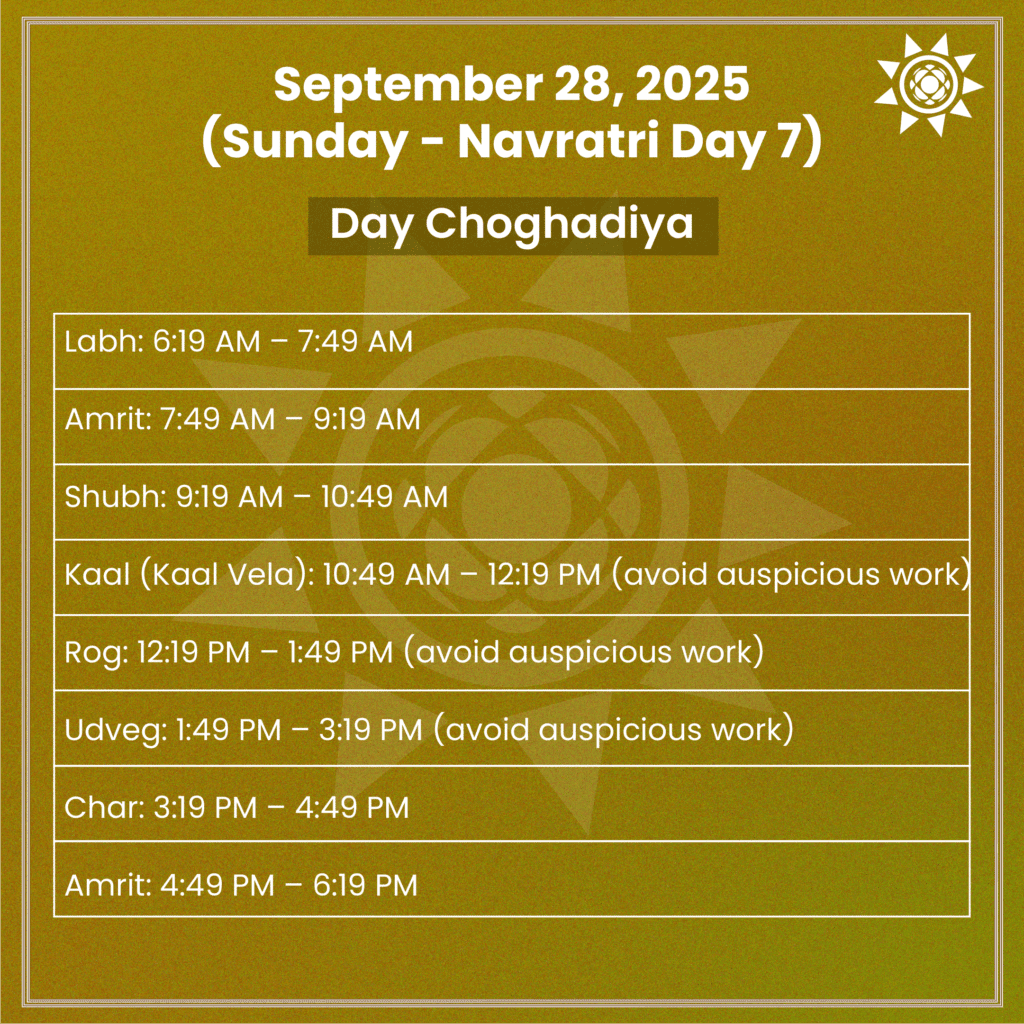
Day Muhurth for Navratri Day 7 September 28 2025
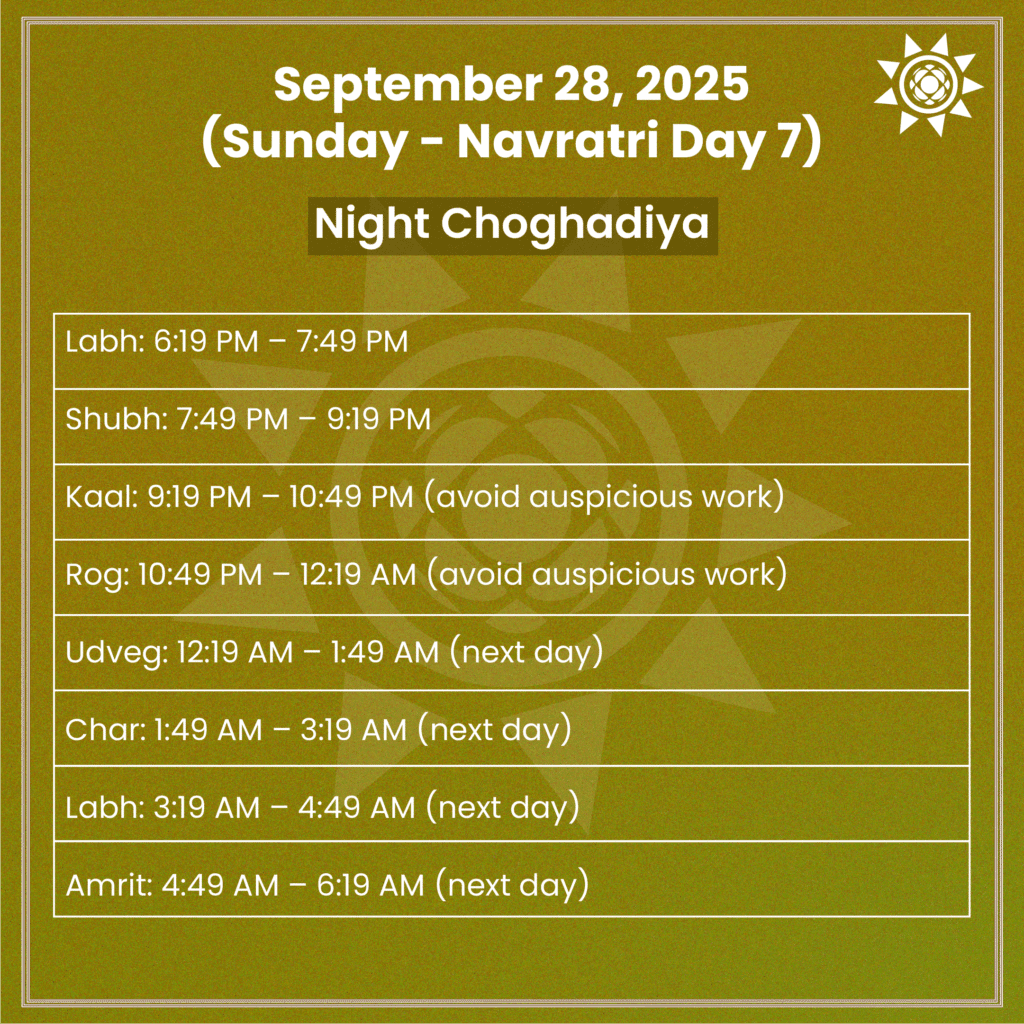
Night Muhurth for Navratri Day 7 September 28 2025

Day 8 – Ashtami: Purity and peace from Maa Mahagauri
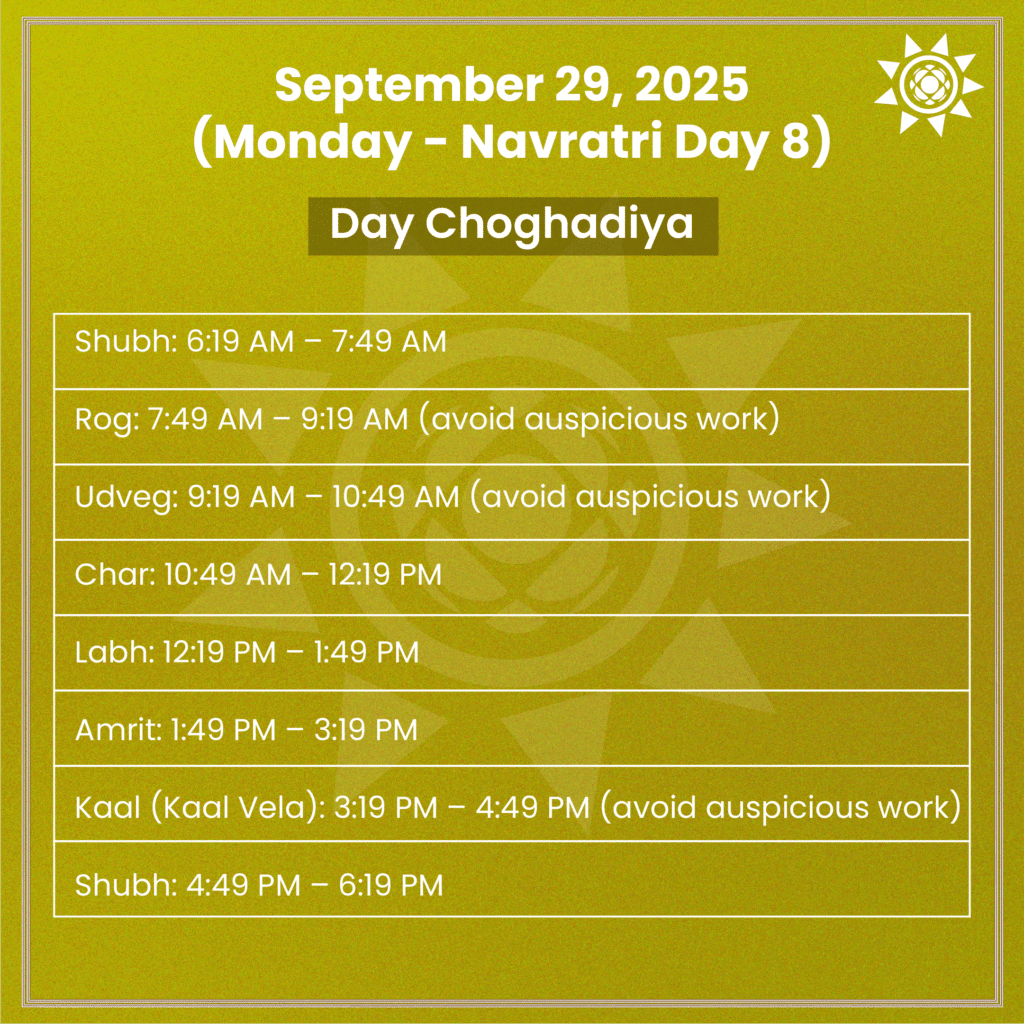
Day Muhurth for Navratri Day 8 September 29 2025
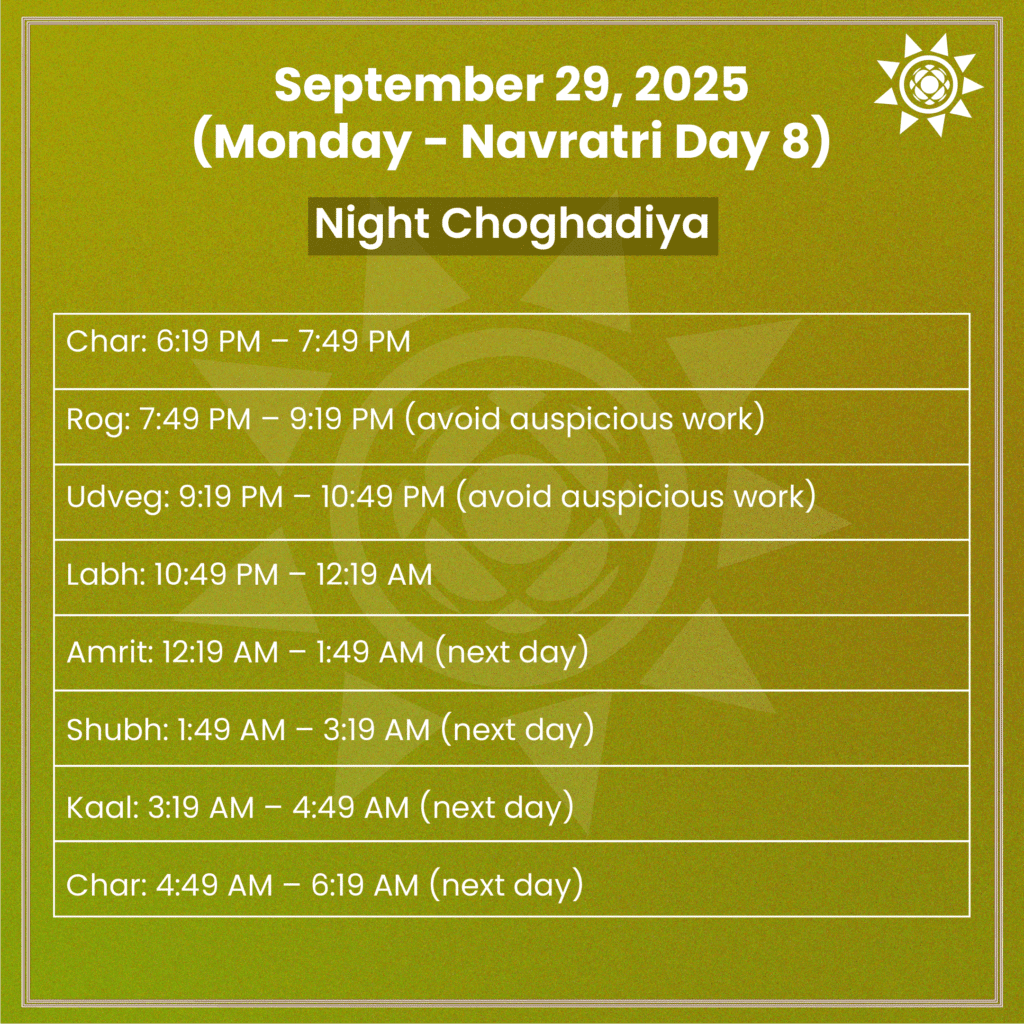
Night Muhurth for Navratri Day 8 September 29 2025

Day 9 – Navami: Blessings and siddhis from Maa Siddhidatri
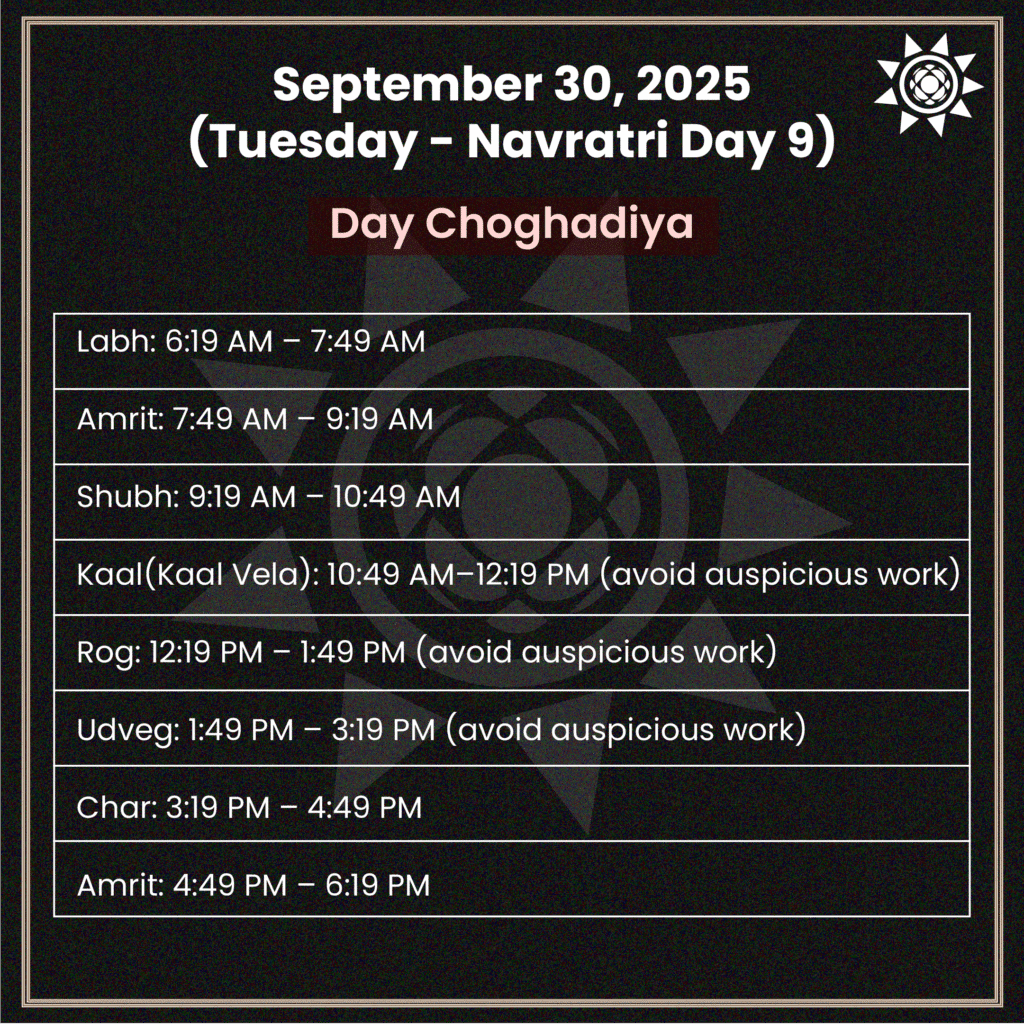
Day Muhurth for Navratri Day 9September 30 2025
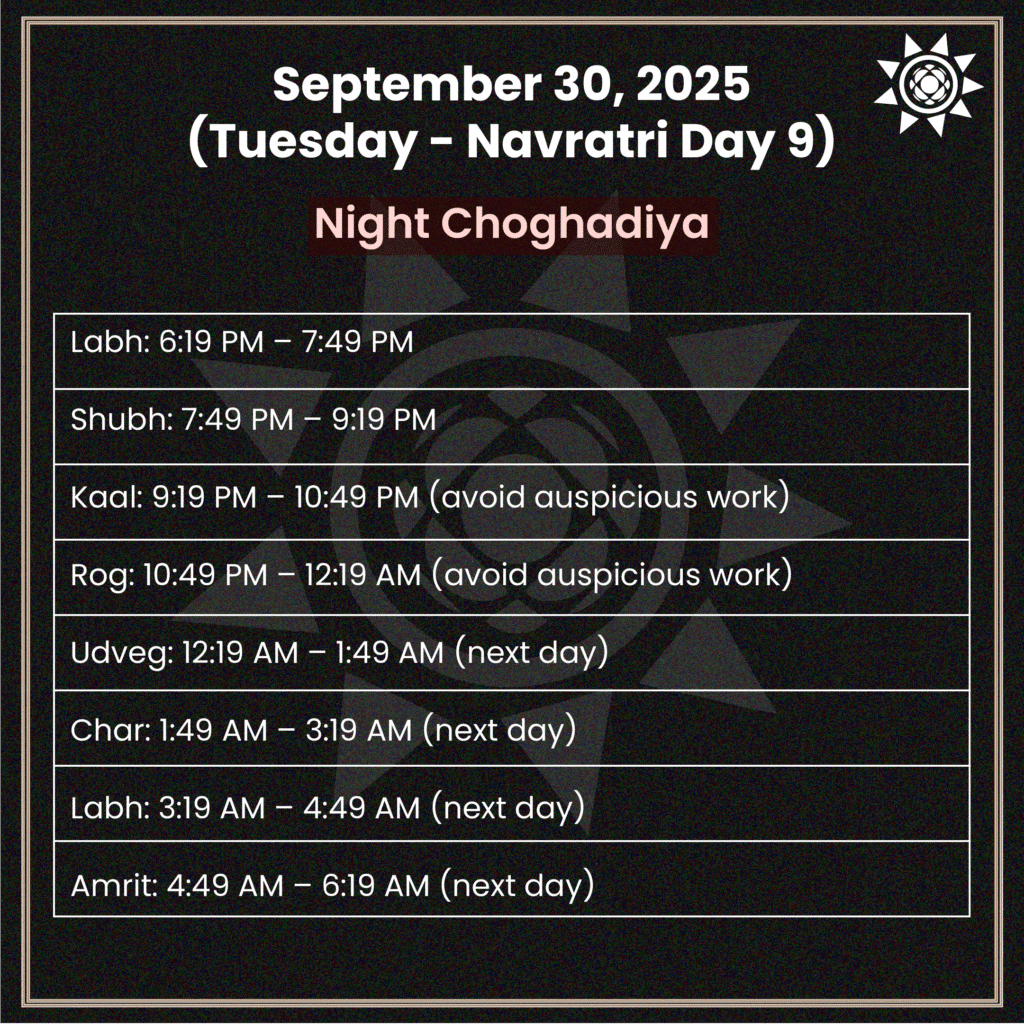
Night Muhurth for Navratri Day 9September 30 2025

Short Note on Muhurth: Performing rituals like Aarti, Garba, Havan, or Kalash Sthapana at the right muhurth ensures cosmic harmony and positive vibrations in the home.

Hanuman Chalisa: The Divine Hymn of Strength, Devotion, and Protection

The Hanuman Chalisa is one of the most beloved and recited devotional hymns in Hinduism, dedicated to Lord Hanuman—one of the most revered deities known for his unshakable devotion to Lord Ram, boundless strength, valor, and wisdom. Composed in the 16th century by the poet-saint Goswami Tulsidas in the Awadhi language, the Hanuman Chalisa consists of 40 chaupais (verses), hence the name ‘Chalisa’ meaning forty. It is a timeless spiritual treasure, attracting millions of devotees worldwide who chant it daily or during special occasions for courage, protection, and divine blessings.


The Historical Background of Hanuman Chalisa

The story of the Hanuman Chalisa’s composition is as fascinating as its verses. Tulsidas, the great poet-saint and author of the epic Ramcharitmanas, composed the Chalisa during a challenging period of his life. According to popular lore, he was imprisoned by the Mughal emperor Akbar after being summoned to the royal court. Despite harsh conditions, Tulsidas began composing the Chalisa, dedicating it to Lord Hanuman, seeking strength and solace.

Legend has it that as Tulsidas completed the last verse, Hanuman’s divine energy manifested dramatically, allowing miraculous events to unfold that led to Tulsidas’s release and growing recognition as a saint. Since then, the Hanuman Chalisa grew in stature, becoming an inextricable part of Hindu devotional practice.


Spiritual Significance and Themes

The Hanuman Chalisa is not just a hymn but a spiritual guide that sings the glory, virtues, and supernatural feats of Lord Hanuman. It highlights crucial themes such as:

  • Devotion and Loyalty: Hanuman’s unwavering devotion to Lord Ram is a model of bhakti (devotional love), inspiring devotees to cultivate unbreakable faith.
  • Strength and Protection: The Chalisa describes Hanuman’s mighty form and superhuman powers, offering spiritual protection to those who recite it.
  • Wisdom and Humility: Despite his immense power, Hanuman is depicted as humble and wise—a reminder that true strength lies in humility.
  • Overcoming Fear and Obstacles: The mantra carries a promise that chanting it helps remove fears, negativity, and life’s obstacles.

The Verses and Structure

The Chalisa begins with two introductory Dohas (couplets) invoking blessings from the Guru and praising Lord Ram. This sets a devotional tone that reverberates throughout the forty verses. Each chaupai (verse) recounts various heroic exploits, divine qualities, and benevolent acts of Hanuman.

The closing section includes a final Doha where Tulsidas invokes Hanuman’s grace and pledges eternal devotion—a perfect spiritual conclusion affirming the connection between devotee and deity.


When and How to Recite Hanuman Chalisa

The Hanuman Chalisa is traditionally chanted during:

  • Tuesdays and Saturdays: These days are considered auspicious for worshipping Hanuman in many Hindu traditions.
  • During Festivals: Hanuman Jayanti, Navratri, Diwali, and other significant festivals.
  • In Times of Trouble: Many chant it to seek courage and divine aid during hardships or health challenges.
  • Daily Routine: Devotees often integrate it into morning prayers or meditation for ongoing protection and spiritual strength.

Chanting with devotion and understanding the meaning enhances its spiritual effectiveness. The Chalisa can be recited aloud, silently, or even listened to as audio recordings.


Benefits of Reciting Hanuman Chalisa

Chanting the Hanuman Chalisa is believed to:

  • Provide mental peace and reduce anxiety by invoking Hanuman’s energizing presence.
  • Remove negative energies and protect from evil forces, black magic, and psychic attacks.
  • Improve focus and willpower, boosting confidence in personal and professional life.
  • Heal physical and emotional ailments through vibrational energy and divine grace.
  • Bring spiritual growth by strengthening faith and aligning with divine virtues.

Hanuman Chalisa’s Astrological Connection

Astrologically, Hanuman Chalisa holds significance particularly in relation to the planet Saturn (Shani), which governs discipline, karma, and challenges in life. Hanuman is believed to mitigate malefic effects of Shani, bringing relief from hardships related to Saturn’s transit and related doshas (astrological faults).

Many astrologers recommend chanting or listening to Hanuman Chalisa to neutralize harmful planetary influences and invite positive cosmic energy.


Hanuman: Symbolism and Attributes

Lord Hanuman embodies a vast array of symbolic meanings across spiritual traditions:

  • He is known as Pavanputra (Son of the Wind God), symbolizing swift action and vitality.
  • As Bajrang Bali, he represents strength as indestructible as a thunderbolt.
  • His role as the Messenger of Lord Ram signifies loyalty and dharma (righteousness).
  • Hanuman’s monkey form reminds devotees of the balance between intellect and primal energy.
  • He is often depicted with a mountain in hand, symbolizing his ability to remove obstacles.

How Hanuman Chalisa Unites Devotees

Across India and the world, the Hanuman Chalisa forms a unifying spiritual thread among diverse Hindu communities. From rural villages to metropolitan cities, its recitation brings families and communities together, reinforcing cultural identity and shared devotion.

Its universal theme of courage, service, and divine love resonates widely—not only spiritually, but also psychologically, acting as a meditative tool to calm the mind and uplift the spirit.


Conclusion: Embracing the Divine Power of Hanuman Chalisa

The Hanuman Chalisa stands as a monument of devotional literature, spirituality, and cultural heritage. Reciting it is an act of surrender to divine grace, a call for strength in adversity, and an embrace of timeless wisdom.

Whether seeking protection in turbulent times or aspiring towards spiritual growth, the Hanuman Chalisa offers a path illuminated by faith, courage, and divine love.

What Love Has in Store for You? | Valentine’s Day

Valentine’s Day – The Season of Love

Youngsters wait for this festival with much anticipation. The feeling of love is both nervous and all consuming. Valentine’s Day is an ode to this smooth & gleeful feeling. Valentine’s day is celebrated all over the world. February 14 is celebrated as Valentine’s Day. However, the start of Valentine’s Day wasn’t the way it is celebrated today, nevertheless, beginnings are still considered romantic.

History of Valentine’s Day

Valentine's Day - The Season of Love

Just like many international festivals, Valentine’s Day has its origin in Ancient Rome. The Valentine’s Day got its name from the famous saint valentine – priest in Rome in 3rd century AD. There was a king named Emperor Claudius II who had banned marriage because he though married man would make weak soldiers. Saint Valentine though this as unfair so he started to arrange marriage in secret.

When Claudius got to know about it, he sentenced the Saint Valentine to death. Saint Valentine, when in jail, fell in love with jailer’s daughter and when he was to be killed i.e. on February 14th he send the jailer’s daughter a love letter signed as Yours Valentine.

Hence, the day came to be known as Valentine’s Day.

Valentine’s Day Week

The celebration of valentine continues for a week. The 7 days are celebrated in a different manner, the name of the days are:

  • February 7 – Rose Day
  • February 8 – Propose Day
  • February 9 – Chocolate Day
  • February 10 – Teddy Day
  • February 11 – Promise Day
  • February 12 – Hug Day
  • February 13 – Kiss Day
  • February 14 – Valentine’s Day

Nowadays, this festival has also become a way to find your life partner, why there are some couples on this festival who wait for this festival throughout the year to speak their mind to their life partner

What stars have in store for you this season of love?

  • Aries: Aries people need to be patient on this day. There is no need to make decision in hurry. The love of the people of the Aries born is true & with courage you will surely be successful. Gift red roses to your love interest.

  • Taurus: Taurus born is very serious about their partner. Take care not to flirt with him or not as this can prove to be the opposite for you. On this day, you can gift white things to your partner, such as white flowers or white clothes.

  • Gemini: Gemini born people will get mixed results on this day. According to the position and status, your new affair will start. You should offer pink flowers to your lover or girlfriend.

  • Cancer: The Cancer born may have to face a little humiliation. On this day, do not bring too much passion and insanity in your love affairs. You can gift white flowers as a gift of your love.

  • Leo: It may prove good for the Leo natives to travel with your partner. This will give you strong energy and you can also gift vermillion colored flowers to your love interest.

  • Libra: Libra born is romantic by heart and does everything with great care and in expensive manner to satisfy their loved ones. Give lily flowers to your Valentine.

  • Scorpio: The native of Scorpio zodiac will be in a little doubt on this day. Saturn is bound to create confusion for the Scorpio born throughout the day. If you are planning to meet your love interest, give them blue colored flowers.

  • Sagittarius: Couples of the sagittarius zodiac can get a lot of success in love affairs on this day in the pilgrimage and religious ceremonies. Offer a bouquet of spring flowers to your beloved. The Jupiter’s grace will make everything alright.

  • Capricorn: The wealth of the lovers of the capricorn zodiac may be inclined towards spirituality. But understand the partner’s feelings and spend the whole day with them. Give bouquets of bright red and pure white color to the partner.

  • Aquarius: For the Aquarius born natives, Venus is making a fortune to keep it full of luxury. The lord of the zodiac will give success in love affairs by sitting in the house of fortune. Meet all kinds of flowers, luck is with you.

  • Pisces: Although February 14, is a very favorable day for Pisces born, but avoid some love proposals from Taurus and Libra as they can be deceived in love. Give yellow colored flowers to the native.

What is Prashna Kundli in astrology?

In astrology, Prashna Kundli (also spelled as Prashna Kundali or Prasna Kundali) is a branch of predictive astrology that focuses on answering specific questions posed by a person (querent) based on the time of asking the question. It is also known as “Horary Astrology” or “Question Astrology.”

Unlike traditional birth chart analysis, where the astrologer uses the date, time, and place of birth of an individual to create a natal chart, Prashna Kundli is based on the moment the question is asked. The astrologer creates a chart for that precise time to gain insights into the querent’s query.

The process of creating a Prashna Kundli involves several steps:

  1. Question: The querent asks a specific question, which should be well-defined and clear.
  2. Time: The astrologer notes the exact time when the querent asks the question. This is crucial because even a slight difference in time can result in a different Prashna Kundli and interpretation.
  3. Location: The location of the querent at the time of asking the question is also considered to determine the astrological chart.
  4. Chart Creation: The astrologer then creates the Prashna Kundli based on the time and location provided by the querent. The chart is typically a representation of the positions of the planets and other celestial bodies at that moment.
  5. Analysis: The astrologer interprets the Prashna Kundli to provide insights and answers to the querent’s question. Various astrological techniques and principles are applied to arrive at predictions and conclusions.

Prashna Kundli is often used when the querent does not have accurate birth details or when they have an urgent or specific question they want answers to. It is believed that the Prashna Kundli can reveal valuable information and offer guidance to the querent regarding their concerns.

However, it’s essential to approach astrology, including Prashna Kundli, with an open mind and understanding that it is a belief system that may not have scientific evidence to support its claims. The accuracy of astrological predictions can vary widely depending on the astrologer’s expertise and the individual’s beliefs in astrology.

recent

Categories