loading

Blog

Auspicious Yogas in Kundali: Top 10 Positive Yogas

Everyone has, at least once, listened to a Vedic Astrologer speaking of ‘Yoga in Kundali Birth Chart’. But what are Yogas? Yogas are the positive planetary placements and conjunction in the kundali. They often tend to give positive results to the native. These yogas are considered highly beneficial in the kundali and when they are formed in the kundali, they can have a very positive impact on the native such as accumulation of wealth, reaching heights in career, getting success in life, etc. You can also calculate the yogas in your kundali through this “Auspicious Yogas in Kundli Calculator.

Following is a list of some of the Auspicious Yogas in Vedic Astrology:

Shankha Yoga:

This yoga forms through the 5th and 6th house lords are placed in each others’ Kendras, as well as, having the lagna or ascendant lord in the strong position. The person with Shankha Yog tends to be kind-hearted, virtuous, learned, blessed with a spouse and children, morally sound, versed in sacred scriptures, owns lands, enjoys prosperity and lives a long life. The person with Shankha Yoga has the authority to discipline or punish others. Planets that influence this yoga are Sun, Moon, Mars, Mercury, Jupiter, Venus and Saturn.

Musala Yoga:

Positive and favorable planets occupy or aspect the 12th house and the lord of the 12th house, not being combust, is in an auspicious house, in own sign or exalted. The impact of Musala Yoga can be that the person will accumulate wealth but after great difficulty. But the wealth may not be long lasting. The person will suffer humiliation and have an unsteady mind even may not be very bright. People with Musala Yoga are also very calculative when they have to spend money and they always spend it on legitimate purpose.

Parijat Yoga:

Parijat Yoga is formed when the lord of ascendant is sitting in their zodiac sign or in the higher zodiac sign. Parijat Yoga is also formed when the favorable planets are sitting in the best places of kundali that are absolutely beneficial for the native. A person born in Parijat Yoga has good family bondings, a native with this yoga is wealthy and also participates in auspicious work. Native with Parijat Yoga also tends to be a good listener of virtuous stories and a scholar and devotional person who is devotional.

Khyati Yoga:

Khyati Yoga is formed when an auspicious planet is sitting in the 10th house or aspect the auspicious planet in the 10th house. Khyati Yoga is also formed when the lord of the 10th house is sitting in the higher zodiac, then the native will be famous with high self respect. By taking birth in Khyati Yoga, the person performs good deeds and accumulate praise for his work, such a person, like a king, protects his subjects well and gets fame in the public.

Bhagya Yoga:

Bhagya Yoga is formed when an auspicious planet is placed in the 9th house, or is aspecting the 9th house. If a favorable planet is sitting in the best place and not sitting in negative zodiac sign then the native with the Bhagya Yoga tends to be lucky. With Bhagya Yoga, the person receives the wealth and blessings of Lakshmi. People respect the native of Bagh or Luck. He always keeps his parents happy by worshiping the ancestors, Brahmins and Gods. He keeps his family happy and also tends to be a philanthropist and humanitarian.

Shasha Mahapurusha Yoga:

Shasha Mahapurusha Yoga is formed when Saturn is located in its higher zodiac sign or in the center of Ascendant. Due to Shasha Mahapurusha Yoga, many people who love forests and mountains like Jataka Raja or Raja are the rulers, who are skilled in the trade of metal with a cruel intellect. Native with Shasha Mahapurusha Yoga are humorous in a debate, wrathful, a fiery sight of his mother.

Malavya Mahapurusha Yoga:

If Venus is situated in its high zodiac or self-sign, in the center of the lagna, then there is Malavya Yoga, born in Malavya Yoga, its gesture like a woman (wringing hands, walking, doing the play of shame) etc. Beautiful attractive eye, beautiful body, virtuous (rich in many virtues) stunning, rich with woman, son, vehicle, scholar, enthusiast, lord of power, minister, smart, native resists and lives till the age of 70. Yogic Planet for Malavya Mahapurusha Yoga: Venus

Swan Yoga:

If Jupiter is in its higher zodiac sign or in the center of the lagna, then swan yoga is formed. The person born in Hans Yoga has a red-faced face, high nose, auspicious phase, swan-like tone, Kapha imparting nature, Gaur Varna, Sukumar wife, beautiful like Kamadeva, happy, scriptural knowledge, Parayan, superfine, virtuous, perfect work and performing. Is one and he is 84 years old. Yogic Planet for Swan Yoga: Jupiter

Bhadra Mahapurusha Yoga:

If Buddha is situated in his higher zodiac or self-sign in the center of the lagna then Bhadra Yoga is done. Jataka born in Bhadra Yoga has a face similar to a lion, a movement like an elephant, an athletic femur, advanced chest and arms are long, round and strong, the person is adept, versed in the benevolence of the exiles, like the Vipul Pragya, Yash, the king of wealth and is 80 years of age. Yogic Planets for Swan Yoga: Buddha

Ruchika Yoga:

If Mars is located in its higher zodiac sign or in the center of the lagna then it is interesting. Jataka born in Ruchika Yoga, forceful body, Lakshmi, Shastri (Shastra Nishanta), chanting and chanting mantras, skilled in chanting or abhinachara, like king or king, lavana-rich, body, joyful red-eyed, soft tanu, conqueror of enemies, Tyagi, rich, Sukhi, attaining the age of 70, is the master of army and horses. Yogic Planets for Ruchika Yoga: Mars

Kuldeepak Yoga:

When any of Mars, Mercury, Guru, and Venus in the center of the horoscope (1.4.7.10) is in the center, either alone or with other planets, then it becomes Kuldeepak Yoga. If there is a Mercury planet in the lagna, Guru in the center and Mars in the tenth place, then such a child is Kuldeepak. Or if there is Mars in the lagna or in the seventh place, Sun in the fifth place and Rahu in the twelfth place, then still the child is Kuldeepak. When there is Sun, Mars, Mercury, Guru, or Venus in the center of the horoscope i.e. lagna, fourth, seventh and twelfth house, then this yoga is called Kuldeepak. People with this yoga are the source of great progress in their family or family. They are moving forward for the welfare of not only their families. Kuldeepak Yogi arising in compassionate virtue, scholar, son, wealth, longevity with women and conduct is good, interested in humanitarian work, religious, scholar and pleasure, long life with wife, children and land. Behavior towards is sweet and gentle and is successful in family terms.
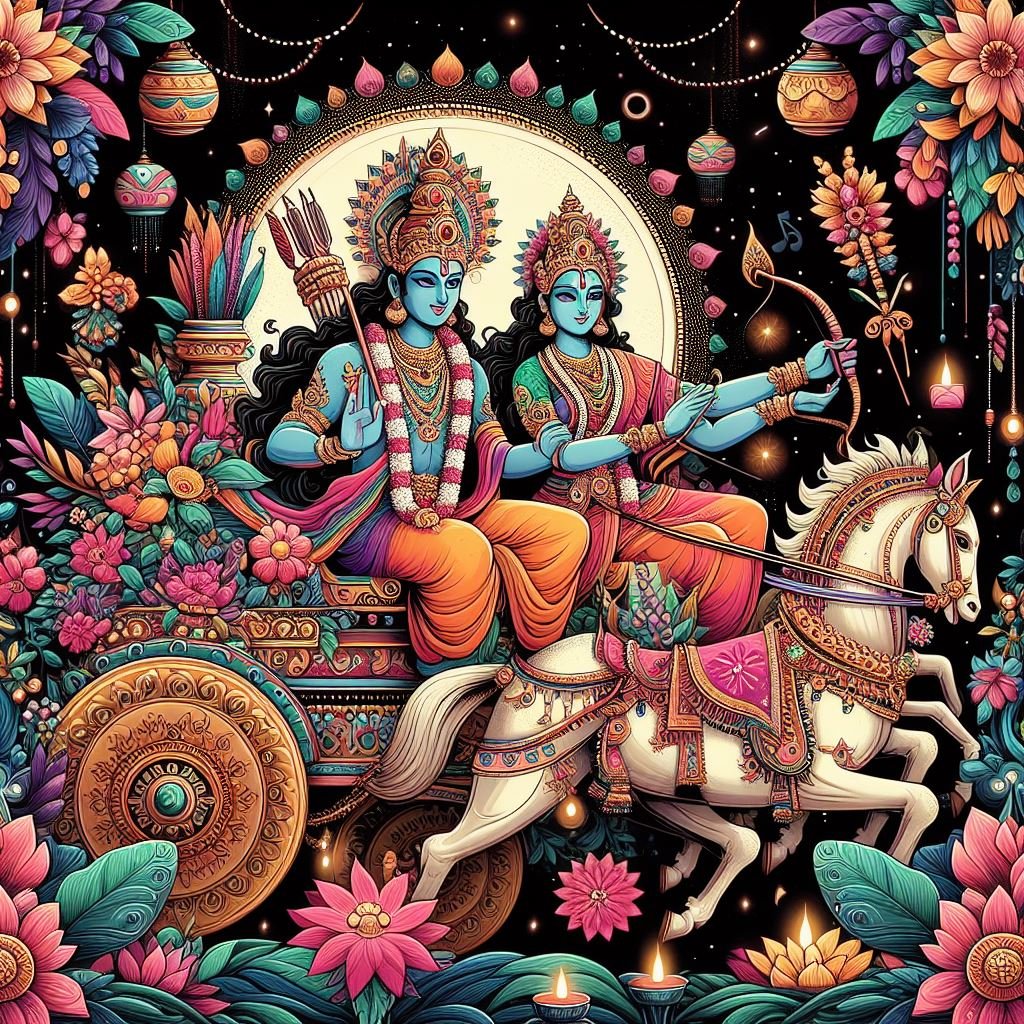
Vijaya Ekadashi – Story and Rituals 

Hindu religion is the most diversified religion with various manner of atonement and methods of fasting. Ekadashi is also one of the most important fasts in Hinduism.

Vijaya Ekadashi is falling on February 19, 2020. This Ekadashi falls during the Krishna Paksha of the Phalgun month. Vijaya means ‘victory’ and this Ekadashi is all about being victorious. It is one of the most widely observed Ekadashi fast in India. As per the Padma Purana & Skanda Purana, observing the fast of ‘Vijaya Ekadashi’ can help an individual achieve victory against evil and all the obstacles that may come in life. It is believed that people who keep ‘Vijaya Ekadashi’ fast conquer all the obstacles that they may face in life. Hence, the reason this Ekadashi is widely known as ‘Vijaya Ekadashi’.

Our ancestors used to observe the ‘Vijaya Ekadashib’ fast for good luck and victory during the countless wars that they fought. By observing this fast, they have managed to garner various victories on the battlefield. It is believed that a person fasting on this day gets success in every task and gets the desired results. Apart from this, this Ekadashi has also been considered an Ekadashi, which can eliminate all sins.

The Puja Vidhi & Other Rituals, Traditions of ‘Vijaya Ekadashi’

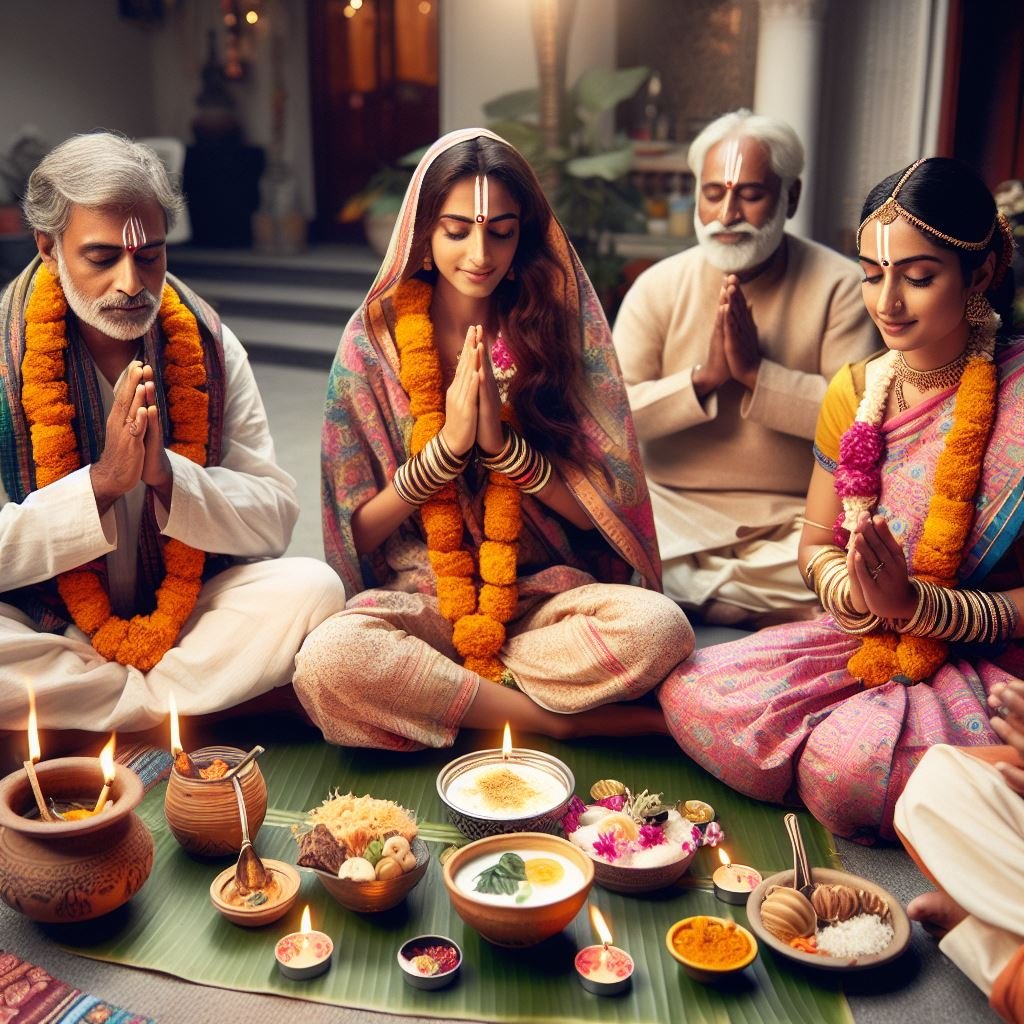
On the first day of Ekadashi i.e. on Dashami, make an altar and keep ‘saptdhana’ on it, then according to your ability, make an urn of gold, silver, copper or clay and install it on it. On the day of Ekadashi, establish the idol of Lord Vishnu by placing it in the ‘Panchapallava Kalash’ and worship with incense, lamp, sandalwood, fruits, flowers, and basil. Along with fasting, recite and listen to the Lord Vishnu Katha and at night do bhajan awakening in the Lord Vishnu’s name. On the day of Dwadashi, give food, etc. to the Brahmin. Then observe the fast. On the first night of fast, only sattvic food should be taken and celibacy should also be observed. In this way, by fasting methodically, the worshiper gets the victory over the most difficult situations.

The Story of Vijaya Ekadashi

Once upon a time, Narada Muni pleaded with his father Brahma, “O Brahma! Please tell me the importance of Vijaya Ekadashi and the method of worship. After listening to Narad Muni, Brahmaji opens his eyes, “O son! The fast of Vijaya Ekadashi has the power to defeat the sins of a person’s previous birth, by observing this fast and worshiping, one gets the victory in all the difficult situations & get over any obstacles.

Then, Lord Brahma narrated the story of Lord Rama to Narada Muni.

Lord Rama, along with wife Sita and brother Lakshman were exiled for fourteen years to follow the words of father Dasharatha. Lord Ram, along with his wife and brother, started living in huts near Panchvati River. The demon king Ravana heard about the beauty of Goddess Sita in Lanka, he reaches Panchavati with the aim of abducting Sita.

Ravana takes the help of maternal uncle Maricha to get Ram away from the hut and Sita is abducted by Demon King Ravan and taken to Lanka. After not finding Sita in the hut, Lord Rm started vigorously looking for Sita throughout the forest. While wandering the jungle, they reach the dying Jatayu. Jatayu narrates the entire story to him and departs towards heaven leaving his life in the lap of Shri Ram. Extremely saddened by this incident, Lord Ram made started towards Lanka and together with Sugriva and Hanuman, built an army. When Lord Ram arrives at the seashore with an army of apes, he faces the challenge of crossing the vast sea. Ram says to Laxman – “O Laxman! How will we cross this vast sea filled with many crocodiles and other dangerous creatures?”

Listening to Lord Ram, Lakshman said, “Brother, you are omniscient, nothing is hidden from you. Half a day away from here is the ashram of Kadalbhya Muni on the island of Kumari. He will surely help us and pave the way to victory. ”Lord Ram did the same and went to the ashram of sage Kadalbhya and begged him. Vakdalbhya Muni asked- ‘O Ram! For what purpose have you sanctified my hut, please say your purpose, Lord. ”Hearing the sweet words of the sage, Ram said,“ O sage! Ravana has taken my wife Sita to Lanka. I want to cross the sea with my army of monkeys. Please tell me any way to cross the sea.”

Maharishi Vakdalbhya says, “I will tell you about a fast that can help you win over this obstacle and reach Lanka. Maharishi Vakdalbhya told Ram gives about the importance of Vijaya Ekadashi and the rituals and traditions to observe the fast. After observing the fast, Lord Ram found a way to reach Lanka and also won the mighty battle with Ravan and also rescued Sita.

Talk to our Expert Astrologers on Phone and get guidance for all your problems.

Papmochani Ekadashi Vrat & Katha

Papmochani Ekadashi

There are 24 Ekadashis in a year. The belief behind Papmochani Ekadashi is that those who believe in this Ekadashi and observe a fast may find respite from all sorts of sins from previous and present lifetimes. People worship Lord Vishnu on Papmochani Ekadashi. This falls in the Krishna paksha and has greater significance than other Ekadashis that fall in a month.

Papmochani Ekadashi Vrat & Pooja

On the day of Papmochani Ekadashi, one should worship Lord Vishnu and should also meditate on it. In the morning, light earthen lamps in front of the idol of Lord Vishnu. Pray to Lord Vishnu on Papmochani Ekadashi to absolve you of all the sins. Listen to Papmochani Ekadashi Vrat Katha, and break your fast on the next day of Papmochani Ekadashi.

In addition to this, devotees on Papmochani Ekadashi also have sattvic food on the tenth day of the Chaitra month. Shower on the 12th day of the month and resume your food.

Importance of Papmochani Ekadashi

Papmochani Ekadashi falls between Holika Dahan and the Navaratri of Chaitra Month. The ancient Hindu mythologies and Puranas say that if the people are looking to seek the absolution of their sins, then this is the day that can help them achieve it. It is also believed that whosoever observes a fast on Papmochani Ekadashi achieves salvation. On the day of Papmochani Ekadashi grace of Lord Vishnu is achieved. Papmochani Ekadashi is derived from the narrative fiction of Arjuna and King Mandhata. He was sage from when asked that the Lord it indicates that humans who go inadvertently sinning, karma have their own way of absolution. Hence, Papmochani Ekadashi should be observed to gain absolution from all the suns.

Papmochani Ekadashi Vrat Katha

Dharma raja Yudhishthir said – O Janardan! What is the name of Ekadashi of Krishna Paksha of Chaitra month and what is its method? Please tell me. Sri Bhagavan said, O Rajan, the name of Ekadashi of Krishna Paksha of Chaitra month is Papamochani Ekadashi. With the effect of its fast, all the sins of man are destroyed. This is the best fast of all fasts. All sins are eradicated by listening and reading the greatness of this Papamochani Ekadashi. At one time, Devarshi Naradji said to Lord Brahma, Maharaj! Tell me Ekadashi Vidhan of Krishna Paksha of Chaitra month. Brahma started saying, O Narada! Ekadashi of Krishna Paksha of Chaitra month is celebrated as Papamochani Ekadashi. Lord Vishnu is worshiped on this day. According to its legend, in ancient times there was a delightful forest called Chitraratha. Devraj Indra Gandharva used to live in this forest with girls and gods. Once a sage named Medhavi was also doing penance there. They were sage Shiva worshipers and apsaras Shiva Drohini Anang Maid (Anuchari). Once Cupid sent an apsara named Manjughosha to him to dissolve the asceticism. The young Muni Apsara was fascinated by the work on her expressions, dances, songs, and sarcasm. 57 years passed while playing. One day Manjughosha asked for permission to go to Devaloka. When he asked for permission, Muni was aware and realized that the only reason to take me to the abyss is Apsara Manjugosha. Enraged, he cursed Manjugosha to be a vampire. Listening to the curse, Manjugosha shook and asked the sage the remedy of salvation. Then Munishree asked to observe the fast of Papamochani Ekadashi. And telling Apsara the way of salvation, the father went to Chyavan’s ashram. Hearing the curse on the face of the son, Chyavan Rishi condemned the son and ordered him to fast for the Papamochani Chaitra Krishna Ekadashi. Manughosh Apsara freed from the vampire body due to the effect of the fast and went to heaven. So O Narada! Any person who will perform this fast lawfully, his sins are sure to be redeemed. And whoever reads and hears the greatness of this fast gets freedom from all the troubles.

Gudi Padwa – Celebration & Tradition

Gudi Padwa or Samvatsar Padavo is celebrated by the Marathi and Konkani community as the first day of the year. From this day the new Samvatsara, which is a cycle of sixty years, also begins. All sixty Samvatsaras are identified by a different name. Gudi Padwa is celebrated as Ugadi in Karnataka and Andhra Pradesh.

Chaitra Navratri, Gudi Padwa and Ugadi are all celebrated on the same day. Gudi Padwa is a Marathi New Year according to the Ludi-Solar calendar. The luni-solar calendar is known to divide the position of the moon and the sun into months and days. The separate side of this is the solar calendar which considers only the position of the sun to divide the year into months and days. For this reason the Hindu New Year is celebrated twice with different names and at two different times of the year. The Hindu New Year based on the solar calendar is known as Puthandu in Tamil Nadu, Bihu in Assam, Vaisakhi in Punjab, Paan Sankranti in Orissa and Naba Barsa in West Bengal.

Chaitra is described as the first month of the year, based on the Hindu calendar. It was Chaitra Pratipada who inspired Brahma to create the universe and from this day itself is considered to be the beginning of creation, hence it is also considered as the beginning of new year. On this day, the great mathematician Bhaskaracharya prepared the almanac by calculating the day, month and year from sunrise to sunset. Therefore, Panchang is also worshiped on this day.

History of Ugadi or Gudi Padwa Festival

Gudi Padwa - Celebration & Tradition

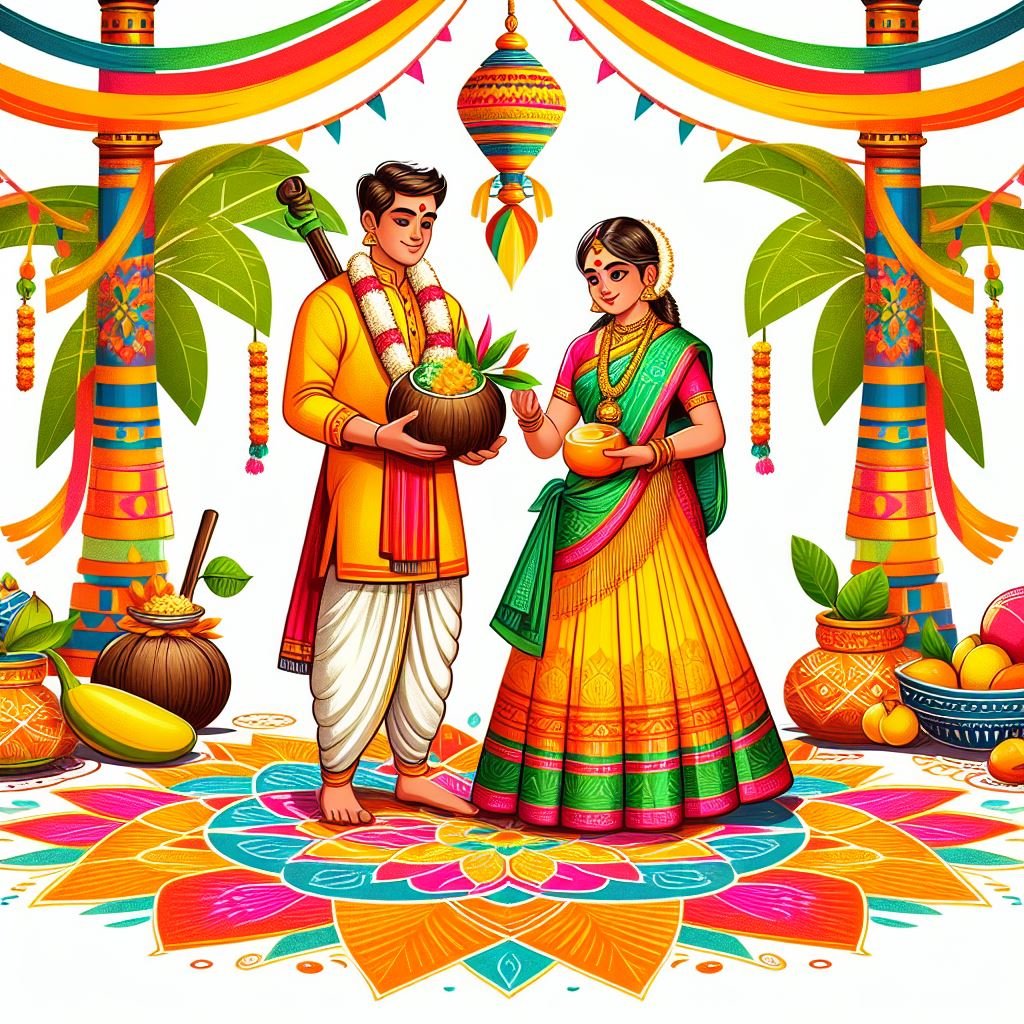
Gudi is basically decorated with fresh mango buds with brightly colored cloth on a wood. It is also made by wrapping cloth using other types of things like sugar crystals, neem leaves, mango leaves and garlands of red flowers. A silver or copper vessel is placed inverted on wood and cloth, forming a gudi. Gudi is placed on the right side of the house in a high place, from where everyone can see it. This festival symbolizes victory against evil, including good luck and prosperity. Beautiful flowers of red and yellow color are used to decorate the rangoli at the entrance.

Recipe and special dish for Ugadi Pujan

On this day, those who celebrate Gudi Padwa pray to Lord Bhaskar and wish for happiness, peace and prosperity at home. On the day of Ugadi Puja, people take bath and get ready in the morning. On this day special dishes are made in homes. Of which, especially Ugadi Pachadi, which is the name of the dish of Telangana, it is made. The ingredients used to make it are neem, good, green chillies, salt, turmeric etc. It is made by mixing all these. People there believe that such a mixed dish, which tastes salty, sweet, sour and spicy, like sour, sweet, pungent taste in life and especially on New Year’s day is a joy of sorrow. Arrival keeps on happening. Puran Poli is one of the most special delicacies of Andhra Pradesh and Telangana.

What is Gudi Padwa?

Gudi is planted in Maharashtra. For this, a bamboo, urn of silver, copper or brass is placed inverted and decorated with saffron color or silk cloth. After this Gudi is decorated with gathi, neem leaves, mango stalks and red flowers. Gudi is placed in a high place, so that it can be seen even from a distance.

It is believed that after the defeat of Shakas by Emperor Shalivahana, people expressed happiness by putting Gudi on the houses. Gudi is also commemorated in the victory of Chhatrapati Shivaji. It is believed that Brahma Ji created the universe on this day. That is why Gudi is also considered Brahmadhvaj. Somewhere, the festival of Gudi Padwa is celebrated in the joy of coming back to Ayodhya by Lord Rama after completing 14 years of exile. It is believed that applying Gudi brings prosperity to the house.

Farmers celebrate this festival in the joy of sowing again after harvesting the rabi crop. Three and a half Muhurats are considered auspicious during the whole year among Hindus, Gudi Padwa is also one of them. Apart from this, Akshaya Tritiya and Dussehra are considered as Purna and Diwali as Ardh Muhurta.

Gudi Padwa Mythology

It is believed that on this day Maryada Purushottam Lord Rama had liberated the people of the South from the tyrannical rule of Bali. After Bali was freed from the tragedy, people celebrated in their homes and all hoisted the Gudi (flag) in the courtyard of their house. Gudi is decorated in every house in Maharashtra as a symbol of victory on this day. It is also believed that a potter boy named Shalivahana formed an army of mud soldiers and sprinkled water on it and burnt life in them and defeated powerful enemies with the help of this army.

The Maha Shivratri Fast

Benefit of Maha Shivaratri Fast

It is said in the Skanda Purana that any who is a devotee of Lord Shiva and observes the Maha Shivratri fast becomes divine. He consumes all the great pleasures and finally attains salvation. According to Ishaan Samhita, it annihilates the sins of 12 years or 24 years. This fast gives complete enjoyment and salvation.

Maha Shivratri is called the night of union of Shiva and Shakti. There are 12 Shivaratris in a year. But Shivaratri which falls in Phalgun month is given more importance in Hinduism and it is also known as Maha Shivratri. On this day people observe fast to get blessings of Lord Shiva. It is believed that worshiping Lord Shiva with a true heart on this day removes all the troubles of life and Shiva devotees get all the comforts of life.

On the day of Maha Shivratri, a large crowd of Shiva devotees visit the temples to see their deities. Chanting of songs in temples begin from mornings. In many places, cannabis is distributed as Prasad on this day because hemp is very dear to Lord Shiva. On the day of Maha Shivratri, all types of doshas end in the horoscope and troubles related to the planets also end. According to the scriptures, Lord Shiva wanders all over the world on the day of Maha Shivaratri and whoever wakes up at night on this day and worships Lord Shiva; receives the infinite grace of Lord Shiva.

Maha Shivratri – Festival

The Maha Shivratri Fast

This Hindu festival is celebrated with great enthusiasm and pious spirit by all ardent devotees of Lord Shiva. The festival of Maha Shivaratri starts from early morning and continues till late night. Devotees observe a day-long fast and spend their time in worship and remembrance of Lord Shiva. It is believed that worshiping Shiva and his emblem can overcome one of his past sins and help him attain salvation. People flock to temples on this day to worship God.

How to worship on Maha Shivratri as per your Zodiac Sign?

  • Aries: For Aries people, it is of special importance to anoint them with honey, jaggery, sugarcane juice and to offer red flowers after consecration.
  • Taurus: It is of special importance for Taurus people to anoint with raw milk, curd and white flower for consecration.
  • Gemini: For Gemini people, it is of special importance to anoint the green fruit juice, anointed with lentil, and after the ablation of bael leaves.
  • Cancer: For Cancer sign, anointing with raw milk, butter, lentil and bael leaves anointing has special significance.
  • Leo: For Leo zodiac signs, consecration with honey, jaggery, pure ghee and offering red flowers after consecration is of special importance.
  • Virgo: For the Virgo zodiac, it is of special importance to anoint with green fruit juice, bael leaves, lentil and to offer green and blue flowers after consecration.
  • Libra: For Libra people, it is of special importance to anoint with milk, curd, ghee, butter, sugar candy and post bael leaves after consecration.
  • Scorpio: For Scorpio people, it is of special importance to offer honey, pure ghee, anointing with dolls, and to increase the bael leaves, red flowers after consecration.
  • Sagittarius: For Sagittarius people, anointing with pure ghee, honey, sugar, almonds and offering yellow flowers, yellow fruits after consecration is of special importance.
  • Capricorn: For the Capricorn sign, anointing should be done with mustard oil, sesame oil, raw milk as well as anointing with berries is considered auspicious. Also offering blue flowers, Bael leaves after consecration are of special importance for Capricorn people.
  • Aquarius: For the Aquarius sign, it is of special importance to anoint with raw milk, mustard oil, sesame oil and to offer blue flowers, Bael leaves after consecration.
  • Pisces: For Pisces people, anointing with sugarcane juice, honey, almonds are very auspicious. It is also considered auspicious that you planet yellow flowers, yellow fruits after consecration. They are considered of special importance.

Saraswati Puja: What is the Significance of Basant Panchami?

The Celebration of Basant Panchami/Saraswati Puja

This is the day when the education and books are celebrated and revered. Basant Panchami is celebrated every year in the month of Magh & is dedicated to Goddess Saraswati.

Why is Basant Panchami Celebrated?

Basant Panchami means the ‘Fifth Day of the Spring Season’. It is believed to be the birthday of Goddess Saraswati that is the Goddess of knowledge, wisdom, and music. Hence, the spirit of knowledge and wisdom have special importance on the day of Vasant Panchami. This day is also considered very auspicious for Gupta Navaratri. The story of Basant Panchami is also observed in Puranas. The lore of Goddess Saraswati is described in the 10th Mandala of Rig Veda. In Indian culture, this day is considered very auspicious.

Shri Panchami

The goddess of wealth, Lakshmi (also called Shri) and Lord Vishnu are also worshiped on this day. Some people worship Goddess Lakshmi and Goddess Saraswati together. Generally, people from the business class worship Goddess Lakshmi. Recitation of Sri Sukta and worshipping Goddess Lakshmi is considered very auspicious and beneficial.

The Significance and Celebration of Basant Panchami

This day is considered very auspicious in Hinduism. ‘Basant Panchami’ is the fifth day of the ‘Spring Season’ and hence the aura of the Basant or Spring is totally different with flowers starting to blossom and a different vibrancy in the atmosphere.

Goddess Saraswati is worshipped on this day, and it is celebrated with great enthusiasm by students in schools & colleges. This day is also considered very well for any kind of auspicious work or an event. A start a new business on this day is also considered very beneficial. It is believed by Vedic Astrologers, that the day of ‘Basant Panchami’ is very auspicious for the start of something new. Hence, that is especially important in Hinduism. The season of spring is denoted with yellow color. People often wear yellow colored clothes on the day of Basant Panchami, especially in North India. The mustard crops get ready for harvest in this season and thus, the yellow color is also associated with the day of Basant Panchami. The vibes on this day are full of enthusiasm and the weather is neither extremely cold nor extremely warm. Goddess Saraswati is worshipped on this day, and hence, this day is also observed in various educational fields such as science, art, literature, etc. The schools also observe this festival and encourage children to focus on studies.

The Story of Basant Panchami

The story of basant panchami is very deeply associated with the Indian Mythology & folklore.

It is believed that Lord Vishnu ordered Lord Brahma to create the universe. Lord Brahma created the Universe and then went on to create humans very meticulously. But, even this creation could not satisfy Lord Brahma. He felt that there is something amiss in this world for everything was so silent.

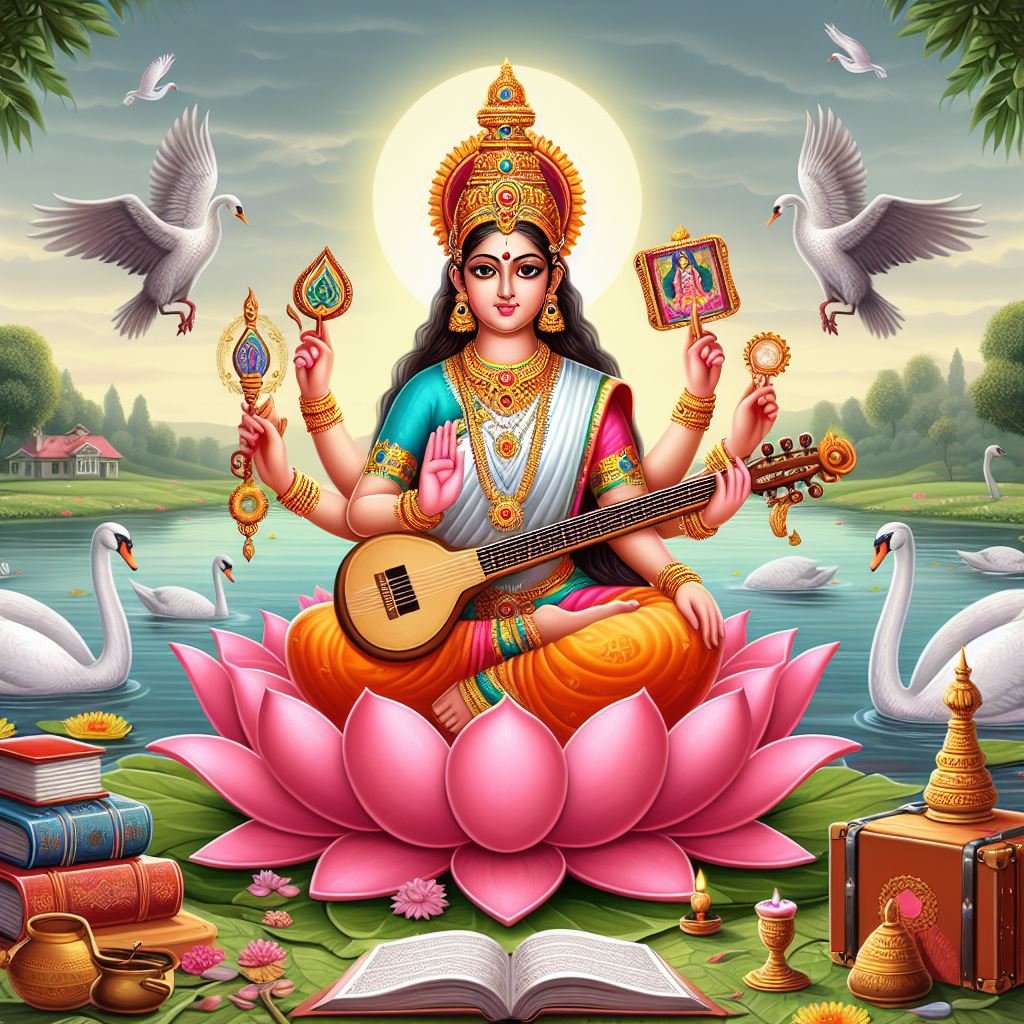
Lord Brahma decided to share his observation with Lord Vishnu. Hearing this, Lord Vishnu gave Lord Brahma permission to make changes to the Universe. Lord Brahma sprinkled water on Earth which gave birth to Goddess Saraswati. She was born with Sitar in one hand, books in the other, and since became the epitome of knowledge and wisdom in the Hindu mythology. With her birth, every matter on earth received the power of sound for the winds started to whistle, the water started to splash and the leaves started to rustle, creating a beautiful harmony. This enlivens the Earth & ever since, the Goddess Saraswati is worshipped on the day of Basant Panchami.

The Auspicious Time for Basant Panchami/Saraswati Pooja

Dishes Cooked on Basant Panchami

Sweet dishes are definitely made in every household on the day of Basant Panchami. The offerings of sweets made with milk are offered to Goddess Saraswati. Many people also offer yellow colored sweets made with milk to Goddess Saraswati. Yellow-colored food made with pulses and lentils is also preferred on this day.

What Love Has in Store for You? | Valentine’s Day

Valentine’s Day – The Season of Love

Youngsters wait for this festival with much anticipation. The feeling of love is both nervous and all consuming. Valentine’s Day is an ode to this smooth & gleeful feeling. Valentine’s day is celebrated all over the world. February 14 is celebrated as Valentine’s Day. However, the start of Valentine’s Day wasn’t the way it is celebrated today, nevertheless, beginnings are still considered romantic.

History of Valentine’s Day

Valentine's Day - The Season of Love

Just like many international festivals, Valentine’s Day has its origin in Ancient Rome. The Valentine’s Day got its name from the famous saint valentine – priest in Rome in 3rd century AD. There was a king named Emperor Claudius II who had banned marriage because he though married man would make weak soldiers. Saint Valentine though this as unfair so he started to arrange marriage in secret.

When Claudius got to know about it, he sentenced the Saint Valentine to death. Saint Valentine, when in jail, fell in love with jailer’s daughter and when he was to be killed i.e. on February 14th he send the jailer’s daughter a love letter signed as Yours Valentine.

Hence, the day came to be known as Valentine’s Day.

Valentine’s Day Week

The celebration of valentine continues for a week. The 7 days are celebrated in a different manner, the name of the days are:

  • February 7 – Rose Day
  • February 8 – Propose Day
  • February 9 – Chocolate Day
  • February 10 – Teddy Day
  • February 11 – Promise Day
  • February 12 – Hug Day
  • February 13 – Kiss Day
  • February 14 – Valentine’s Day

Nowadays, this festival has also become a way to find your life partner, why there are some couples on this festival who wait for this festival throughout the year to speak their mind to their life partner

What stars have in store for you this season of love?

  • Aries: Aries people need to be patient on this day. There is no need to make decision in hurry. The love of the people of the Aries born is true & with courage you will surely be successful. Gift red roses to your love interest.

  • Taurus: Taurus born is very serious about their partner. Take care not to flirt with him or not as this can prove to be the opposite for you. On this day, you can gift white things to your partner, such as white flowers or white clothes.

  • Gemini: Gemini born people will get mixed results on this day. According to the position and status, your new affair will start. You should offer pink flowers to your lover or girlfriend.

  • Cancer: The Cancer born may have to face a little humiliation. On this day, do not bring too much passion and insanity in your love affairs. You can gift white flowers as a gift of your love.

  • Leo: It may prove good for the Leo natives to travel with your partner. This will give you strong energy and you can also gift vermillion colored flowers to your love interest.

  • Libra: Libra born is romantic by heart and does everything with great care and in expensive manner to satisfy their loved ones. Give lily flowers to your Valentine.

  • Scorpio: The native of Scorpio zodiac will be in a little doubt on this day. Saturn is bound to create confusion for the Scorpio born throughout the day. If you are planning to meet your love interest, give them blue colored flowers.

  • Sagittarius: Couples of the sagittarius zodiac can get a lot of success in love affairs on this day in the pilgrimage and religious ceremonies. Offer a bouquet of spring flowers to your beloved. The Jupiter’s grace will make everything alright.

  • Capricorn: The wealth of the lovers of the capricorn zodiac may be inclined towards spirituality. But understand the partner’s feelings and spend the whole day with them. Give bouquets of bright red and pure white color to the partner.

  • Aquarius: For the Aquarius born natives, Venus is making a fortune to keep it full of luxury. The lord of the zodiac will give success in love affairs by sitting in the house of fortune. Meet all kinds of flowers, luck is with you.

  • Pisces: Although February 14, is a very favorable day for Pisces born, but avoid some love proposals from Taurus and Libra as they can be deceived in love. Give yellow colored flowers to the native.

Nadi Dosha: Effects and Remedies in Kundali Milan

Nadi Dosha in Kudali Milan

Kundali Milan or Kundali Match Making is an important and ancient tradition in hinduism. In kundali match making, 8 factors are taken into consideration to ascertain the possibility of a good match. These 8 factors are Varna, Vasya, Tara, Yoni, Graha Maithi, Gana, Bhakoot and Nadi.

Nadi Dosha occurs when the Nadi’s of two people are the same. Nadi Dosha is the most unpropitious and inauspicious yoga in the Kundli Milan or Kundali Match Making. When this yoga exists in the kundali, it brings about disharmony in the relationships as well as possibility of not having children.

What is Nadi Dosha?

Nadi Dosha: Effects and Remedies in Kundali Milan

Nadi is one of the eight gunas that are considered during the kundali milan. There are 36 points in the kundali matching out of which Nadi carries the maximum weightage. If Nadi Dosha exists in anybody’s kundali, then the couple would have to suffer through various ill effects of Nadi Dosha. Presently in the event that there is any contention between the Nadi of two people; at that point they need to experience the ill effects of Nadi dosha.

Nadi is one of the most powerful koot or the test in Vedic Astrology’s kundali match making. It also holds the highest number of points in the kundali. For the horoscope to match, both the natives need to have different nadis. The score can only be 8 when the nadi of two individuals differ. Otherwise, it can only be zero. Therefore, creating Nadi Dosha in the kundali.

There are three kinds of Nadi – Arya Nadi, Madhya Nadi, and Antya Nadi. This can be identified by looking at the native’s kundali or the birth chart. It can be checked by the position of the moon. Out of the all out 27 Nakshatras, nine extraordinary groups of stars have one of the Nadi of the local because of the nearness of the Moon.

Kinds of Nadi in Vedic Astrology

The 27 nakshatras in vedic astrology have been properly divided into 3 Nadis.

  • Adi Nadi: Arda, Ashiwni, Hasta, Jyeshtha, Moola, Poorvabhadra, Punarvasu, Satabhisha, Uttaraphalguni
  • Madhya Nadi: Anuradha, Bharani, Chitra, Dhanishtha, Mrigasira, Poorvaphalguni, Poorvashadha, Pushyami, Uttarabhadrapada
  • Antya Nadi: Aslesha, Krittika, Magha, Revathi, Rohini, Sravana, Swati, Uttarashada, Visakha

Nadi Dosha Exceptions

In the event that the Nakshatra of male and female of the equivalent Rashi is distinctive then that Nadi dosha is cancelled. Nadi dosha gets cancelled when the zodiac signs or the moon signs of the two individuals are the same.

On the off chance that two people have the equivalent Nakshatra yet unique Rashi; at that point likewise it is considered as Nadi dosha special case.

In Brahmins and Vaishyas, Nadi Dosh is considered as significant as Mangal Dosh. In the event that it exists in Kundli, at that point the vast majority of the celestial prophets will say direct no to that marriage on the grounds that the cutting edge will be more fragile or there will be odds of not having the children by any stretch of the imagination. In any case, as per some different celestial prophets, this dosha isn’t that significant as to check whether the couple will have solid children additionally relies on different variables like a situation in the fifth house, etc.

Effects of Nadi Dosha

  • The cutting edge will be undesirable or anomalous. There will be odds of not having the children by any stretch of the imagination.
  • Issues in their marriage life. In particular, wellbeing related issues.
  • Such a marital relationship doesn’t keep going long.
  • The couple may need to confront any terrible mishap. They need to confront numerous sorts of misery.

Getting hitched? Check your similarity score.

Remedies for Nadi Dosha

  • The love of Nadi Dosha goes with the lucky man and lady both. In this puja, you should recite one and a half million Mahamrityunjaya mantras.
  • On the main day of love, 5 to 7 Brahmins, admirers, love Lord Shiva by sitting together in the love house or sanctuary. In the wake of venerating the Shiva family, the boss Panditji turned into his collaborators.
  • After this, you ought to do a havan at the appropriate time. Also, the gift is offered by the interview of crystal gazers.
  • For the most part, if there is Nadi Dosha in the horoscope of the lady of the hour and man of the hour, at that point it is prudent not to wed. Be that as it may, in specific conditions, this imperfection can illuminate by taking essential measures. For this, the cow ought to give to Brahmin.
  • Gift of gold to a Brahmin.
  • Giving food equivalent to your weight on your birthday.
  • As indicated by the Piyush area, in the event that an individual has a Nadi Dosha in his marriage, at that point he ought to give gold, give garments, give food. By making the state of a snake with gold; love it with legitimate custom and by reciting the Mahamrityunjaya Mantra, the Nadi Dosha is

The Fasting of Aja Ekadashi

Aja Ekadashi Fast

Aja Ekadashi comes on the day of Shravana Krishna Paksha means it comes on the 26th day of Shravana Month. Aja Ekadshi comes exactly after Shravan Poornima. In some parts of India it is celebrated In Bhado month. This Ekadashi has the story of King Harishchandra who was famous for his truthfulness. He was the person of SATYA i.e. TRUTH. In his whole life, he had never uttered a single wrong word.

Aja Ekadashi is done for Lord Vishnu. The person who fasts on this day get blessings from both Lord Vishnu and Goddess Lakshmi. This Ekadashi is also known by the name of Annada Ekadashi.

Aja Ekadashi Katha

When Dharmaraja Yudhishthir asks to Lord Krishna about Aja Ekadashi. He explained the story of King Harishchandra. It is said that King Harishchandra was known for his honesty and truthfulness. One day, Gods decided to test King Harishchandra. The King saw in his dream that he has donated his kingdom to Rishi Vishwamitra.

When the next day, King Harishchandra handed over all his kingdom to Vishwamitra, Rishi Vishwamitra also asked King Harishchandra to gave him 500 gold coins as donation. He told Rishi Vishwamitra that he could ask him for more than just 500 gold coins. On this discussion, Rishi Vishwamitra laughed and reminded him that he has already donated his treasury along with his kingdom, so donation once made cannot be donated again.

Then, the King sold his wife and son to obtain gold coins, but it wasn’t enough, so he sold himself as well and donated all gold coins to Vishwamitra. The person to whom he sold himself was the Chandala of a Crematorium. He assigned his task of collecting taxes for cremation to King Harishchandra.

When many years passed in this way, he was feeling very sad at such type of responsibility and karma. He was started looking for ways to get rid of it. He always started worrying about what should I do? How can I get rid of this evil act? Once upon a time, he was in same tension with the same concern. That time Gautam Rishi reached him. Harishchandra bowed him down and started narrating his sad story.

One day, King Harishchandra fasted for Ekadashi. It was midnight and he was guarding the entrance of Crematorium. The night was completely dark when a crying helpless woman carrying dead body of her son, Rohitashva came there. She was King Harishchandra’s wife, Taramati and son Rohitashwa was King Harishchandra’s own son.

Although by following his duty, King Harishchandra demanded tax from his wife Taramati for cremating their son Rohitashwa. As she had not the money to pay tax, she tore down a piece of her saree and gave it to the King Harishchandra. At the same time the God appeared and blessed, “Dear KIng Harishchandra! You have established the best example of following truth and honesty in life. Your commitment is noble and you will always be remembered.” At that time, the King’s son Rohitash came back to life. With God’s permission, Vishwamitra also returned Harishchandra’s kingdom to him.

When many years passed in this way, he felt very sad at this lowly deed and started looking for ways to get rid of it. He always started worrying about what should I do? How can I get rid of this evil act? Once upon a time, he was seated with the same concern that Gautam Rishi reached him. Harishchandra saluted him and started narrating his sad story.

Hearing the sad story of King Harishchandra, Maharishi Gautama was also very sad and he said to the king: Dear King, The name of Ekadashi of Krishna Paksha of Shravan/Bhadon month is Aja. You should fast on that Ekadashi and awaken at night. This will destroy all your sins. Maharishi Gautam became aloof by saying so.

On the day of Ekadashi named Aja, King Harishchandra performed a fast and nightly awakening according to Maharishi’s instructions. All the sins of the king were destroyed by the effect of this fast. At that time, the drums began to ring in heaven and flowers started to rain. He found Brahma, Vishnu, Mahesh and so many Gods standing in front of him. He saw his deceased son, Rohitashwa alive and his wife, Taramati full of royal clothes i.e. robes and heavy jewellery.

The king regained his kingdom with the effect of fasting. In fact, a sage had done all this to test the king, but with the effect of fasting of Aja Ekadashi, all the illusion created by the sage ended and in the end Harishchandra went to heaven with his family.

The devotee who keeps fasting on Aja Ekadashi, must donate grains to the needy people or Brahmin on Dwadashi. One must perform fasting with devotion. On Ekadashi day, only falahar is done. No grains can be taken. ‘OM NAMO BHAGAWATE VASUDEVAY’ must be chanted.

Why is Varaha Jayanti Celebrated?

Varaha Jayanti Vrat & Katha

Why is Varaha Jayanti Celebrated?

According to Hinduism, Varaha Jayanti festival is celebrated on Tritiya Tithi of Shukla Paksha of Bhadrapada month. On this day, Lord Vishnu worships the third avatar, Varaha Avatar. On the occasion of Varaha Jayanti, devotees follow the hymns of Lord Vishnu – Kirtan, fasting and fasting etc. and wish for happiness and prosperity.

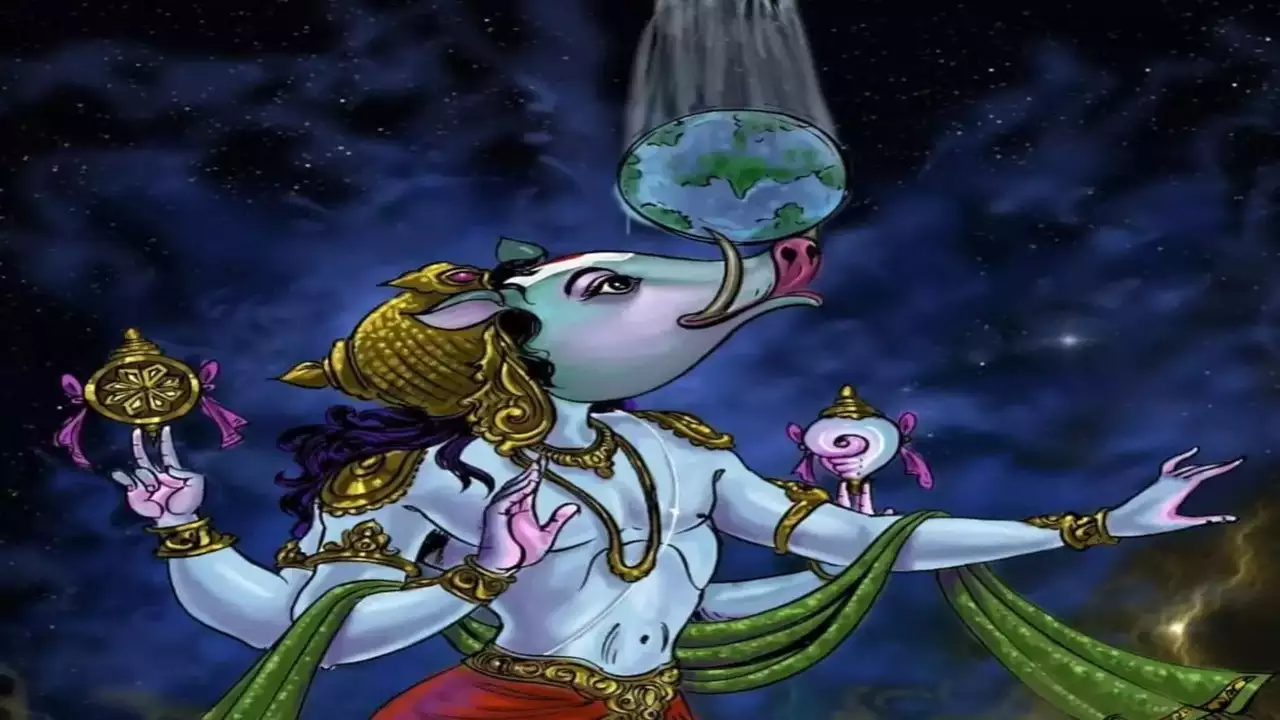
Lord Vishnu was incarnated as half human and half pig. His entire body was blue and his eyes were huge. Lord Varaha defeated Hiranyaksha. Therefore, devotees worship Lord Varaha on this day and pray to get rid of all evils.

Story of Varaha Jayanti

Varaha Jayanti festival

According to Padam Purana, there used to be two gatekeepers named Jai and Vijay in Baikuntha Dham. Once, Sanakadi Yogishwar went to Baikunth Dham with the desire to see Lord Vishnu along with Shri Lakshmi. The gatekeepers named Jai and Vijay intercepted him and treated him indecently.

Sanakadi became very angry with this and cursed both of them – Dwarpals, both of you abandon this abode of God and go to the death world and be born as an asura. With the effect of curse, Kashyapa sage and his wife Diti’s Hiranyaksha. And there were two great sons named Hiranyakashipu.

The tendencies of both were extremely devilish and they had pleased Brahmaji by performing rigorous penance and attained immense powers. On the strength of Hiranyaksha powers, panic started spreading around, his body had become very big. He destroyed this earth with thousands of arms, mountains, seas, islands and whole creatures, and by lifting his power, he took the earth and hid it in the abyss, and then even Varun Dev for war. Varun Dev challenged where Lord Sri Hari is Vishnu who has the ability to fight with you.

Hearing this, Hiranyaksha came out in search of Lord Vishnu, and Shri Hari brought Lord Vishnu from the abyss on his teeth and set him back on Sheshnag. On the other hand Hiranyaksha approached Shri Hari and started to fight for the war, there was a fierce war between Lord Vishnu and that monster. God defeated Hiranyaksha and killed him.

Method of Worship and Mantra

The idol of Lord Vishnu or Lord Varaha is kept in a sacred metal urn and the urn is filled with water, later decorated with mango leaves with coconut, then all these things are donated to the Brahmin by doing pooja etc.

On this day, bathing etc. is done in the morning and donations are given to the needy and fasting is done.

Lord Varaha is pleased by offering butter, honey, milk and yogurt.

Varaha Jayanti Mantra

  • Om Varahay Namaha
  • Om Sukrai Namah
  • ॐ Dhritsukararupa Keshvay Namah

recent

Categories